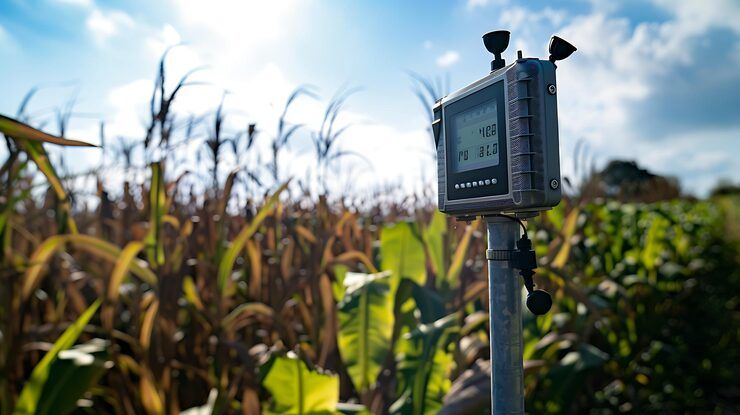
Agricultural weather sensors are devices used to measure and monitor environmental conditions that affect farming activities. These sensors collect data such as temperature, humidity, rainfall, wind speed, and soil moisture. The information helps farmers understand weather patterns and make informed decisions about planting, irrigation, and crop management.
The concept of agricultural weather sensors developed alongside advancements in meteorology and digital technology. Early farming relied heavily on observation and traditional knowledge, but modern agriculture increasingly depends on data-driven approaches. Sensors placed in fields or connected through networks can now provide real-time updates, helping farmers respond quickly to changing conditions.
These systems are often part of broader precision agriculture practices. Precision agriculture focuses on using technology to improve efficiency and reduce resource waste. Agricultural weather sensors play a central role by providing accurate, localized data rather than relying only on general weather forecasts.
Importance
Agricultural weather sensors are important because weather conditions directly influence crop growth, soil health, and water usage. Even small changes in temperature or rainfall can affect yields. By monitoring these variables closely, farmers can better manage risks and improve productivity.
One key challenge in agriculture is unpredictability. Sudden weather changes, such as unexpected rainfall or heat waves, can damage crops. Sensors help address this issue by providing early warnings and continuous monitoring. This allows farmers to adjust irrigation schedules or protect crops when needed.
Another area where agricultural weather sensors matter is resource management. Water is a limited resource in many regions, including parts of India. Sensors that track soil moisture and rainfall help farmers use water more efficiently. This reduces waste and supports sustainable farming practices.
Agricultural weather sensors also benefit small-scale farmers. Access to localized data enables better decision-making, even in areas where traditional weather forecasts may not be highly accurate. Over time, this can contribute to improved crop quality and more stable agricultural output.
Recent Updates
Recent years have seen several developments in agricultural weather sensors, particularly in terms of connectivity and data integration. One major trend is the use of Internet of Things (IoT) technology. Sensors can now transmit data to mobile devices or cloud platforms, allowing farmers to monitor conditions remotely.
Another development is the integration of artificial intelligence (AI) and data analytics. These systems can analyze sensor data to identify patterns and provide insights. For example, they may suggest optimal irrigation timing based on weather forecasts and soil conditions.
Miniaturization of sensors has also improved accessibility. Smaller and more durable devices can be deployed across larger areas without requiring complex infrastructure. This makes it easier to collect data from multiple points within a field.
In addition, there has been a focus on climate adaptation. Agricultural weather sensors are increasingly used to track long-term climate trends, helping farmers adjust to changing environmental conditions. This includes monitoring extreme weather events and understanding seasonal shifts.
Laws or Policies
Agricultural weather sensors are influenced by various policies related to agriculture, data use, and environmental management. In India, government programs encourage the use of technology in farming, including sensor-based systems.
One relevant initiative is the Digital Agriculture Mission, which promotes the use of digital tools to improve agricultural productivity. This includes support for data collection systems such as weather sensors. The mission aims to provide farmers with access to reliable information for better planning.
Data privacy and sharing are also important considerations. As agricultural weather sensors collect and transmit data, there are guidelines on how this information can be used. Policies ensure that data is handled responsibly and that farmers retain control over their information.
Environmental regulations may also play a role. For example, policies related to water conservation encourage the use of tools that improve irrigation efficiency. Agricultural weather sensors that monitor soil moisture and rainfall can support compliance with such regulations.
Tools and Resources
There are several tools and resources that complement the use of agricultural weather sensors. These tools help interpret data and apply it effectively in farming practices.
Some commonly used resources include:
- Weather monitoring platforms, which collect and display data from multiple sensors, allowing users to track trends over time
- Mobile applications, which provide real-time updates and alerts based on sensor readings
- Farm management software, which integrates weather data with other agricultural information such as crop cycles and soil conditions
- Government portals, which share regional weather data and advisories for farmers
Below is a simple table showing common types of agricultural weather sensors and their functions:
| Sensor Type | Measures | Purpose in Agriculture |
|---|---|---|
| Temperature | Air temperature | Determines crop suitability |
| Humidity | Air moisture levels | Assesses disease risk |
| Rain gauge | Rainfall amount | Guides irrigation planning |
| Wind sensor | Wind speed/direction | Helps with spraying and protection |
| Soil moisture | Water in soil | Optimizes irrigation use |
These tools and sensors work together to provide a clearer picture of environmental conditions, supporting more informed decisions in farming.
FAQs
What are agricultural weather sensors used for?
Agricultural weather sensors are used to monitor environmental conditions such as temperature, humidity, rainfall, and soil moisture. This data helps farmers manage crops, plan irrigation, and respond to changing weather conditions.
How do agricultural weather sensors improve farming?
They improve farming by providing accurate, real-time data. This allows farmers to make better decisions about watering, planting, and protecting crops, which can lead to more efficient resource use.
Are agricultural weather sensors suitable for small farms?
Yes, agricultural weather sensors can be used on farms of different sizes. Smaller devices and mobile-based systems make it possible for small-scale farmers to access and use weather data effectively.
What data do agricultural weather sensors collect?
These sensors collect data such as air temperature, humidity levels, rainfall amounts, wind speed, and soil moisture. This information helps in understanding local weather patterns and their impact on crops.
Can agricultural weather sensors help with climate changes?
Agricultural weather sensors can help track long-term trends and extreme weather events. This information supports farmers in adapting their practices to changing climate conditions.
Conclusion
Agricultural weather sensors provide valuable insights into environmental conditions that affect farming. By collecting and analyzing data, they support better decision-making and resource management. Advances in technology have made these tools more accessible and connected. Policies and programs continue to encourage their use in modern agriculture. Overall, they play an important role in helping farmers respond to both daily weather changes and long-term climate trends.