Dubai Villas: A Guide to Communities, Features, and Living Options
Dubai villas are an important part of the city’s housing landscape. They are known for larger layouts, private outdoor space, and community-focused living. While Dubai is often associated with high-rise towers and apartment districts, villas play a major role in residential development across the emirate. They appeal to families, long-term residents, and people looking for more room, privacy, and a quieter setting than dense urban neighborhoods usually provide.
Over the past few years, interest in villas has remained strong in Dubai. This shift is tied to several factors, including lifestyle preferences, population growth, and the continued expansion of master-planned communities. For many households, a villa is not just a type of home; it is also a way of living that includes access to green spaces, schools, walking paths, and community amenities. In a city that continues to grow and change quickly, villas have become a key part of the broader conversation around housing, urban planning, and residential demand.

What Is a Dubai Villa?
In simple terms, a villa in Dubai is a low-rise residential home that usually includes multiple bedrooms, separate living areas, and some form of private outdoor space such as a garden, courtyard, terrace, or pool area. Villas can be detached, semi-detached, or arranged in rows depending on the community design.
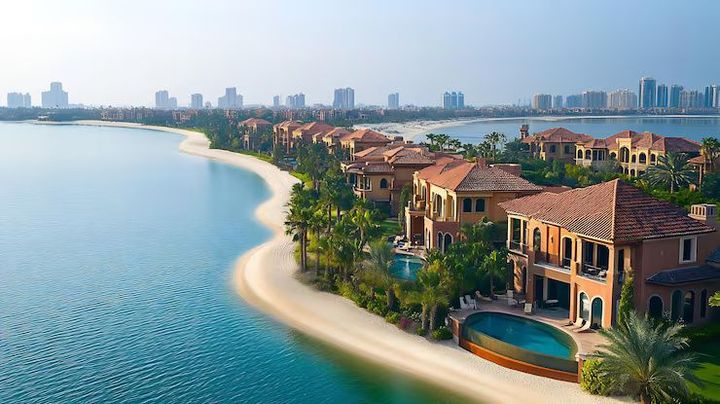
Dubai’s villa communities vary widely in style. Some focus on family living with parks, schools, and neighborhood retail. Others are designed around golf courses, waterfront settings, or resort-style layouts. There are also newer suburban developments that combine villas and townhouses in large master-planned districts.
Although the word “villa” often suggests luxury, the category in Dubai is broad. It includes everything from mid-sized family homes in established communities to very large waterfront residences in premium areas.
Why Villas Matter in Dubai’s Housing Market
Dubai’s housing market includes apartments, townhouses, and villas, but villas stand out because they meet a different set of needs. Apartments are often chosen for central city access and compact living, while villas are more closely linked with space, privacy, and family-oriented neighborhoods.
This difference has become more visible in recent years. Research and market reporting from 2025 and 2026 show continued attention on Dubai’s villa segment, with demand supported by residents who want larger homes, outdoor areas, and community infrastructure. Several reports also note that villas account for a smaller share of total residential transactions than apartments, yet they represent a significant portion of total transaction value because of their larger size and location patterns. In 2025, villas made up 5.6% of Dubai’s total property transactions, with an average transaction value of AED 12.56 million, according to a 2026 Dubai villa community market guide. Market reports and local coverage have also pointed to sustained interest in family-focused communities and limited supply in some established villa districts.
In practical terms, this means villas are not a niche part of the market. They are one of the main residential formats shaping how Dubai grows outward, how new communities are planned, and how families choose where to live.
Common Features of Dubai Villas
Dubai villas can look very different from one area to another, but several features are common across many communities.
Larger Internal Layouts
Compared with apartments, villas usually provide more internal space. It is common to find separate living and dining areas, multiple bedrooms, maids’ rooms, storage areas, and parking within the property boundary.
Private Outdoor Space
Gardens, terraces, courtyards, and pools are a major attraction. In a city where outdoor living is part of the lifestyle for much of the year, this extra space matters to many residents.
Community Living
Most villa developments in Dubai are part of planned communities. These communities often include landscaped streets, play areas, sports courts, retail clusters, walking routes, and schools nearby. The idea is to create a self-contained neighborhood rather than just a group of individual houses.
Architectural Variety
Some villa communities use Mediterranean, Arabic, or contemporary design themes. Newer projects often feature modern facades, open-plan interiors, and large windows, while older established areas may have more traditional layouts and mature landscaping.
Parking and Access
Villas typically include private parking, garages, or covered carports. Since many villa communities are outside the central high-rise districts, road access and commute times are also important factors when comparing locations.
Popular Types of Villa Communities in Dubai
Dubai does not have one single villa model. Instead, villa communities tend to fall into a few broad categories.
Established Family Communities
These are mature neighborhoods that have been occupied for years and usually have developed landscaping, schools, and a settled residential atmosphere. They are often favored by households that want predictable community infrastructure and easy daily routines.
Golf and Leisure Communities
Some villa districts are planned around golf courses, clubhouses, lagoons, or large recreational spaces. These communities are often designed to combine residential living with leisure amenities and open green views.
Waterfront and Premium Districts
A smaller segment of the market includes waterfront villas and large premium homes in highly visible areas. These communities often attract attention because of their location, privacy, and design standards.
New Master-Planned Suburban Areas
Dubai continues to expand with large suburban developments that include villas, townhouses, schools, parks, and retail zones. These areas are important because they represent the next stage of the city’s residential growth and often attract residents looking for newer layouts and modern infrastructure.
Why Demand for Dubai Villas Has Stayed Strong
There is no single reason behind the continued interest in villas. Instead, it reflects a mix of practical and lifestyle factors.
One important factor is space. Families with children often prefer extra bedrooms, private outdoor areas, and more flexible room arrangements. Another factor is privacy. Detached or semi-detached homes create a different living experience from apartment towers, especially for households that spend more time at home.
There is also a planning element. Many villa communities are built around schools, parks, and neighborhood facilities, which makes them appealing to residents who want a more residential pace of life. At the same time, Dubai’s continued population growth and development pipeline keep attention on housing formats that can support long-term family living.
Recent reporting has also shown that villa demand remains tied to supply constraints in some communities. Khaleej Times reported in 2026 that residents were increasingly prioritizing space, privacy, and family living, while multiple market analyses in 2025 and 2026 pointed to strong performance in villa communities compared with other residential segments. Reuters also reported in June 2026 that Dubai recorded more than 270,000 real estate transactions worth around $250 billion in 2025, reflecting the scale of activity across the wider market as new residential districts continue to be planned.
What to Look at When Comparing Dubai Villas
For someone researching Dubai villas, the most useful approach is to compare communities through a practical lens rather than focusing only on appearance.
Location and Daily Travel
How far is the community from schools, workplaces, and major roads? A large home may feel less convenient if daily travel becomes difficult.
Community Infrastructure
Look at parks, retail areas, clinics, schools, and general walkability. In many villa areas, the surrounding infrastructure is just as important as the home itself.
Plot Size and Layout
Two villas with the same bedroom count can feel very different depending on plot size, storage, garden area, and room design.
Age of the Community
Established areas may have mature landscaping and a settled feel, while newer districts may have updated layouts and future development potential.
Maintenance Responsibilities
Villa living often involves more upkeep than apartment living because of gardens, pools, facades, and larger interiors. This is an important practical consideration for households comparing housing types.
How Dubai Villas Fit Into the City’s Future
Dubai’s villa market is closely linked to how the city expands. As new districts are planned, villas remain a major part of residential development, especially in suburban and mixed-use master communities. This reflects a broader urban pattern: central areas continue to grow vertically through towers, while outer districts provide more low-rise housing options for families and long-term residents.
That does not mean every villa community is the same, or that all areas move in the same direction. Some are mature and well-known, while others are still developing their long-term identity. But overall, villas continue to play an important role in Dubai’s housing mix because they meet a need that apartments do not fully replace: larger homes in community-oriented settings.
Final Thoughts
Dubai villas represent more than one type of property. They are part of a broader residential system shaped by family living, urban growth, lifestyle preferences, and long-term planning. Some communities are established and leafy, others are new and expanding, and each comes with a different balance of location, layout, and amenities.
For readers trying to understand Dubai’s residential landscape, villas are worth looking at not only as individual homes but also as part of the city’s changing geography. They help explain how Dubai accommodates different household needs, why certain communities attract sustained interest, and how housing preferences are shifting toward space, privacy, and neighborhood infrastructure.
In that sense, Dubai villas are not just about architecture or square footage. They are also about how people choose to live in one of the world’s fastest-evolving urban environments.