Guide to Wrapping Machines: Basics, Methods, and Industry Applications
Wrapping machines are mechanical systems designed to enclose products in protective materials such as plastic film, paper, or foil. These machines are commonly used in manufacturing, logistics, and packaging environments to ensure items are securely covered for storage, transport, or display. Over time, wrapping machines have evolved from simple manual tools to automated systems capable of handling large volumes with consistency.
The concept of wrapping products dates back to early trade practices, where goods were covered using natural materials like cloth or leaves. With industrialization, packaging became more standardized, and wrapping machines were developed to increase efficiency and reduce manual effort. Today, these machines are an integral part of modern packaging lines across many industries.
Wrapping machines are used for a wide range of products, including food items, consumer goods, electronics, and industrial materials. Their role is not only to protect products but also to maintain hygiene, improve shelf life, and support safe transportation.
Importance
Wrapping machines play a key role in ensuring that products remain intact and protected throughout the supply chain. They help reduce physical damage, contamination, and exposure to environmental factors such as moisture and dust. For industries dealing with fragile or perishable goods, wrapping machines are especially important.
These machines also contribute to operational efficiency. Automated wrapping systems can process large quantities of items quickly, reducing the need for manual handling. This can lead to more consistent packaging results and fewer errors.
Another important aspect is standardization. Wrapping machines apply uniform layers of material, which helps maintain consistent packaging quality. This is particularly relevant in industries where packaging appearance and integrity are closely monitored.
Common challenges addressed by wrapping machines include:
- Protecting items during transport, especially in long-distance shipping
- Reducing material waste through controlled wrapping processes
- Maintaining hygiene standards in food and pharmaceutical packaging
- Improving storage efficiency by securing products tightly
Recent Updates
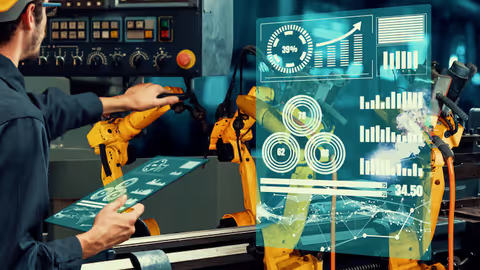
In recent years, wrapping machines have seen several technological advancements. One noticeable trend is the integration of automation and digital controls. Many modern machines now include programmable settings that allow operators to adjust wrapping parameters based on product size and material type.
Another development is the use of environmentally conscious materials. Manufacturers are exploring biodegradable and recyclable wrapping films to reduce environmental impact. This has influenced the design of wrapping machines, which are increasingly being adapted to handle a wider variety of materials.
Smart features are also becoming more common. Some wrapping machines are equipped with sensors and monitoring systems that track performance and detect issues during operation. These features can help improve reliability and reduce downtime.
Additionally, there is growing interest in compact and modular machine designs. These systems are suitable for facilities with limited space and can be integrated into existing production lines with minimal disruption.
Laws or Policies
Wrapping machines are subject to various regulations depending on their application and location. In many countries, packaging equipment must comply with safety standards to ensure safe operation for workers. These standards often cover aspects such as machine guarding, emergency stop functions, and electrical safety.
For food and pharmaceutical industries, additional regulations apply. Packaging processes must meet hygiene and contamination control requirements. Materials used in wrapping must also comply with guidelines related to food contact safety.
Environmental policies are another important factor. Governments in several regions have introduced rules to reduce plastic waste and encourage the use of recyclable materials. This has led to changes in how wrapping machines are designed and used.
In industrial settings, operators may need to follow workplace safety guidelines, including proper training and maintenance procedures. Compliance with these policies helps ensure that wrapping machines are used safely and effectively.
Tools and Resources
Various tools and resources are available to support the use and understanding of wrapping machines. These resources can help individuals and organizations improve their packaging processes and stay informed about industry practices.
Examples include:
- Packaging calculators, which estimate material usage based on product dimensions
- Industry standards documentation, providing guidelines on packaging safety and quality
- Training manuals and instructional videos, explaining machine operation and maintenance
- Simulation software, allowing users to test wrapping configurations before implementation
- Technical forums and knowledge platforms, where professionals share insights and solutions
The following table outlines common types of wrapping machines and their typical applications:
| Machine Type | Description | Common Applications |
|---|---|---|
| Stretch Wrapping | Uses stretchable plastic film to secure items | Pallets, bulk goods |
| Shrink Wrapping | Applies heat to shrink film tightly around items | Food packaging, retail products |
| Flow Wrapping | Wraps products horizontally using continuous film | Snacks, small consumer goods |
| Orbital Wrapping | Wraps long or irregular items | Pipes, furniture, construction items |
| Overwrapping | Encloses products with folded film | Boxes, cartons, printed materials |
FAQs
What are wrapping machines used for?
Wrapping machines are used to cover products with protective materials such as plastic or paper. They help secure items for storage, transport, and display while maintaining product quality and safety.
What are the main types of wrapping machines?
Common types include stretch wrapping, shrink wrapping, flow wrapping, orbital wrapping, and overwrapping. Each type is designed for specific product shapes and packaging needs.
How do wrapping machines improve packaging efficiency?
Wrapping machines automate the packaging process, allowing for faster and more consistent application of wrapping materials. This reduces manual effort and helps maintain uniform packaging standards.
Are wrapping machines suitable for food packaging?
Yes, many wrapping machines are designed for food packaging. They must comply with hygiene and safety regulations to ensure that food products are protected from contamination.
What industries commonly use wrapping machines?
Wrapping machines are widely used in industries such as food processing, pharmaceuticals, manufacturing, logistics, and retail packaging.
Conclusion
Wrapping machines are essential tools in modern packaging systems, providing protection, consistency, and efficiency across various industries. Their development reflects changes in technology, materials, and regulatory requirements. As industries continue to evolve, wrapping machines are being adapted to meet new challenges, including environmental considerations and automation needs. Understanding their basic functions and applications helps provide a clearer view of their role in everyday products and supply chains.