Industrial Digesters Overview: Essential Technologies, Components, and Industrial Applications
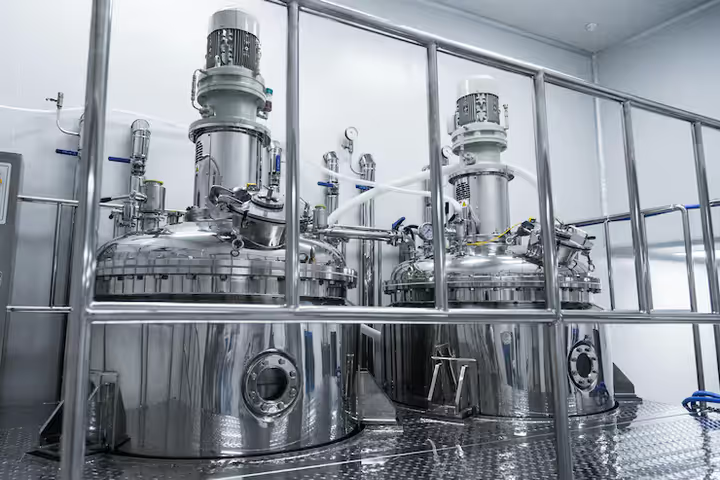
An industrial digester is a large pressure vessel used in manufacturing processes that require heat, pressure, and chemicals to transform raw materials into usable products.
One of its most common applications is in the pulp and paper industry, where pulp mill digester equipment converts wood chips into pulp by separating cellulose fibers from lignin.
The development of industrial digesters began alongside the growth of commercial papermaking during the nineteenth century. As paper demand increased, manufacturers required larger and more efficient equipment capable of processing significant quantities of wood while maintaining consistent pulp quality. Over time, batch digester systems evolved into continuous digester equipment, allowing many mills to maintain uninterrupted production.
Today, industrial digesters are also used in certain chemical processing applications, although pulp manufacturing remains one of their primary uses. Modern equipment combines advanced mechanical engineering with digital monitoring and automated process controls to improve consistency throughout production.
How Industrial Digesters Work
The pulping process begins with wood chips entering the digester. Inside the vessel, controlled amounts of heat, pressure, steam, and chemical solutions break down lignin, the natural material that binds wood fibers together.
As lignin dissolves, cellulose fibers remain largely intact, creating pulp suitable for additional washing, bleaching, and paper production. The entire process requires careful control of temperature, pressure, cooking time, and chemical concentration.
Modern pulp mill digester equipment continuously monitors these conditions using sensors connected to automated control systems.
Types of Industrial Digesters
Industrial digesters generally fall into two primary categories.
- Batch digester systems process one complete batch of wood chips before unloading and preparing for another production cycle.
- Continuous digester equipment operates without stopping, allowing wood chips to move steadily through the system while pulp exits continuously.
Each design supports different manufacturing requirements depending on production capacity, raw materials, and operational planning.
Importance
Supporting Paper Manufacturing
Paper is used daily in packaging, books, notebooks, tissues, newspapers, food packaging, and many industrial applications. Industrial digesters represent one of the first major production stages that determine the quality of finished pulp.
Proper digestion creates cleaner fibers that can later undergo bleaching, refining, and papermaking.
Improving Fiber Recovery
A properly controlled digestion process removes lignin while preserving as much cellulose fiber as possible. Maintaining fiber quality contributes to stronger and more consistent paper products.
Modern continuous pulp digester systems improve process stability through automated control.
Supporting Large-Scale Production
Large paper mills process significant volumes of wood each day. Continuous digester equipment allows manufacturing operations to continue around the clock without repeated stopping and restarting.
This uninterrupted production supports efficient coordination between pulping, washing, bleaching, and paper formation.
Enhancing Manufacturing Efficiency
Modern industrial chemical digesters integrate sensors, automated valves, and computerized monitoring to optimize cooking conditions.
Automation helps operators maintain stable operating conditions throughout the production process.
Supporting Environmental Objectives
Modern pulp production increasingly focuses on reducing water consumption, improving energy efficiency, and recovering chemicals used during pulping.
Improved digester design contributes to these broader environmental objectives by supporting controlled manufacturing processes.
Batch and Continuous Digester Systems
Batch Digester Systems
Batch pulp digester equipment processes one complete load of wood chips at a time.
The process generally includes:
- Loading wood chips
- Adding cooking chemicals
- Heating the vessel
- Maintaining pressure
- Completing digestion
- Discharging pulp
- Preparing for the next batch
Batch digesters provide operational flexibility and may process different wood species or production grades.
Continuous Digester Equipment
Continuous pulp digester systems maintain an uninterrupted flow of material.
Wood chips enter from the top while pulp exits from the bottom after completing the cooking process.
Continuous operation reduces downtime between production cycles and supports large manufacturing facilities.
Comparison of Digester Types
| Digester Type | Typical Operation |
|---|---|
| Batch digester systems | One production cycle at a time |
| Continuous digester equipment | Continuous material flow |
| Batch pulp digester | Flexible production scheduling |
| Continuous pulp digester | High-volume manufacturing |
Both systems remain widely used depending on production requirements.
Main Components of Pulp Mill Digester Equipment
Modern industrial digesters include numerous integrated components.
Common equipment includes:
- Pressure vessel
- Steam distribution system
- Chemical circulation equipment
- Wood chip feeding system
- Blow tank
- Heat recovery equipment
- Pumps
- Valves
- Temperature sensors
- Pressure monitoring systems
- Process automation software
Each component contributes to maintaining stable digestion conditions.
Typical Manufacturing Sequence
| Manufacturing Stage | Purpose |
|---|---|
| Wood chip preparation | Size consistency |
| Chip feeding | Supply raw material |
| Chemical cooking | Separate lignin from fibers |
| Pressure control | Maintain process stability |
| Pulp discharge | Remove cooked pulp |
| Washing | Remove dissolved chemicals |
| Bleaching | Improve pulp brightness |
Each stage forms part of the complete pulp manufacturing process.
Recent Updates
Expanded Automation
Between 2024 and 2026, many paper manufacturers have continued expanding automation throughout pulp production.
Modern control systems monitor temperatures, chemical concentration, pressure, flow rates, and pulp quality in real time.
AI-Powered Digester Process Control
AI-powered digester process control is becoming increasingly integrated into large manufacturing facilities.
Artificial intelligence analyzes production information collected from numerous sensors and identifies operating patterns that help maintain stable process conditions.
Rather than replacing operators, these systems provide additional information for production management.
Digital Twin Technology
Some industrial facilities have introduced digital twin models that simulate digester operation using production data.
These models help engineers understand process performance before implementing operational adjustments.
Improved Sensor Technology
Modern industrial chemical digesters increasingly incorporate advanced pressure, temperature, flow, and consistency sensors.
Improved monitoring provides more detailed production information throughout the cooking process.
Greater Focus on Sustainability
Manufacturers continue improving energy recovery, steam utilization, chemical recovery, and water management throughout pulp production.
Digester modernization remains part of broader manufacturing improvement programs.
Laws or Policies
Environmental Regulations
Pulp manufacturing facilities typically operate under environmental regulations covering wastewater discharge, air emissions, chemical management, and waste handling.
Specific requirements vary among countries.
Pressure Vessel Standards
Industrial digesters operate under high pressure and must comply with engineering standards governing pressure vessel design, inspection, testing, and maintenance.
These standards help maintain safe industrial operations.
Workplace Safety Regulations
Industrial facilities follow workplace safety regulations covering confined spaces, steam systems, high-pressure equipment, rotating machinery, and chemical handling.
Regular inspections support ongoing operational safety.
Forestry Policies
Many pulp manufacturers obtain wood from forests managed according to national forestry regulations or recognized forest certification programs.
Responsible forestry supports long-term raw material availability.
Tools and Resources
Engineers, students, researchers, and manufacturing professionals use many educational resources related to industrial digesters.
Useful resources include:
- Pulp and paper engineering textbooks
- Process simulation software
- Manufacturing execution systems
- Industrial automation platforms
- Pressure vessel engineering standards
- Technical journals
- University research publications
- Digital process monitoring software
- Process instrumentation manuals
- Industry conference publications
These materials explain equipment operation, manufacturing processes, and process control technologies.
FAQs
What is an industrial digester?
An industrial digester is a pressure vessel that uses heat, pressure, and chemicals to separate cellulose fibers from lignin during pulp manufacturing or other industrial processing applications.
What is the difference between batch digester systems and continuous digester equipment?
Batch digester systems process one production cycle at a time, while continuous digester equipment allows raw materials and pulp to move continuously through the manufacturing process.
How does a continuous pulp digester improve production?
A continuous pulp digester supports uninterrupted manufacturing by maintaining a steady flow of wood chips and cooked pulp throughout the production process.
What is AI-powered digester process control?
AI-powered digester process control uses artificial intelligence to analyze production information collected from sensors and assist operators in maintaining stable operating conditions.
Where is pulp mill digester equipment commonly used?
Pulp mill digester equipment is primarily used in facilities that manufacture pulp for paper, packaging materials, tissue products, paperboard, and related fiber-based products.
Conclusion
Industrial digesters remain one of the most important pieces of equipment in modern pulp manufacturing. Both batch digester systems and continuous digester equipment convert wood chips into pulp through carefully controlled chemical and thermal processes. Advances in automation, AI-powered digester process control, and digital monitoring continue improving manufacturing consistency and operational efficiency. These technologies support the ongoing development of modern pulp production facilities.