Industrial Facility Cleaning Services: Insights Into Methods, Equipment, Safety and Maintenance Routines
Industrial facility cleaning refers to organized cleaning activities carried out in factories, warehouses, processing plants, workshops, distribution centers, and other industrial environments.
Unlike routine household cleaning, industrial cleaning often involves large floor areas, production equipment, storage zones, ventilation systems, loading areas, and materials that require controlled handling.
The purpose is not simply to make a facility look orderly. Cleaning programs can help manage dust, residues, spills, waste materials, and other contaminants that may accumulate during industrial operations. The exact approach depends on the type of facility, the materials present, production processes, and applicable safety requirements.
Industrial environments can contain different forms of contamination. These may include ordinary dust, metal particles, oil residues, food materials, chemical residues, packaging debris, and process waste. Each type requires an appropriate method of removal and disposal.
How Industrial Cleaning Has Developed
Earlier industrial cleaning practices often depended heavily on manual sweeping, washing, wiping, and basic mechanical equipment. As factories became larger and production processes became more complex, cleaning programs became more structured.
Modern facilities may combine manual methods with industrial vacuum systems, pressure washers, scrubber-dryers, automated equipment, specialized filtration systems, and digital inspection records. The objective is to match cleaning methods with the physical and operational characteristics of each area.
A typical industrial cleaning program may include:
Routine floor cleaning
Equipment and machinery cleaning
Dust and debris removal
Spill response
Waste-area cleaning
Warehouse cleaning
High-level surface cleaning
Sanitation in applicable production areas
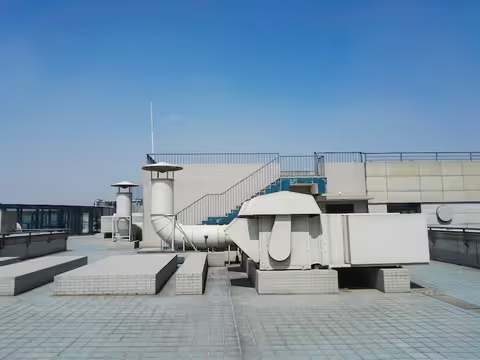
Ventilation and air-handling area maintenance
Post-maintenance cleaning
The frequency and method can vary substantially between facilities.
Importance
Why Facility Cleaning Matters
Industrial facilities are workplaces where people, machinery, raw materials, finished products, and waste can occupy the same environment. Accumulated dust or residue can interfere with movement, visibility, equipment operation, or material handling.
A structured cleaning program also supports workplace organization. Clearly defined cleaning zones and schedules can help employees understand which areas require attention and which methods are appropriate for particular materials.
Cleaning is especially relevant in environments where contamination could affect production processes. Food processing, pharmaceutical manufacturing, electronics production, metalworking, chemical processing, and other industries can have different environmental requirements.
Common Cleaning Challenges
Industrial facilities present several challenges that differ from ordinary buildings. Large floor areas can require mechanical cleaning equipment, while machinery may contain narrow spaces that are difficult to access.
Other challenges include:
Heavy dust accumulation
Oil or lubricant residues
Metal chips and particles
Chemical residues
Restricted-access areas
High ceilings and elevated surfaces
Moving production equipment
Wet or slippery surfaces
Waste segregation requirements
The cleaning method must account for the material being removed and the potential hazards associated with it. For example, using compressed air to move combustible dust can create additional risks in certain environments.
Cleaning Methods by Facility Area
| Facility Area | Common Cleaning Approach | Main Consideration |
|---|---|---|
| Production floors | Vacuuming, sweeping, scrubbing | Traffic and machinery |
| Warehouses | Mechanical sweeping and floor cleaning | Storage layout |
| Machinery | Wiping, vacuuming, approved cleaning agents | Equipment condition |
| Loading areas | Sweeping and pressure washing where appropriate | Outdoor contamination |
| High surfaces | Elevated-access equipment | Fall prevention |
| Food production areas | Controlled washing and sanitation | Hygiene requirements |
| Workshops | Industrial vacuuming and debris removal | Particles and residues |
| Offices within plants | Routine indoor cleaning | General workplace hygiene |
These methods are examples rather than universal procedures. Facility managers normally determine cleaning requirements according to site conditions and applicable regulations.
Recent Updates
Increased Use of Mechanical Equipment
From 2024 through 2026, industrial facilities have continued incorporating mechanized cleaning equipment into routine maintenance programs. Industrial vacuum systems, ride-on scrubber-dryers, robotic floor-cleaning equipment, and automated monitoring technologies are increasingly discussed as part of facility management.
Mechanization can be useful in large areas where repeated manual movement would be difficult. However, equipment still requires appropriate setup, inspection, operator training, and maintenance.
Digital Cleaning Records
Another developing trend is the use of digital records to track cleaning activities. Tablets, mobile applications, barcode systems, and facility management platforms can record completed tasks, inspection findings, equipment conditions, and scheduled activities.
Digital records can also make it easier to identify recurring issues. For example, repeated dust accumulation in one area may indicate a ventilation, material-handling, or process-control issue rather than simply a cleaning requirement.
Greater Attention to Dust Management
Dust control remains an important topic across industrial environments. Some facilities use localized extraction, industrial vacuum systems, filtration equipment, and controlled housekeeping procedures to limit the movement of airborne particles.
The appropriate approach depends on the material involved. Combustible dust requires particular attention because certain dust-air mixtures can create fire or explosion hazards under specific conditions.
Resource and Waste Considerations
Industrial cleaning also involves water, cleaning chemicals, electricity, disposable materials, and waste handling. Facilities are therefore examining methods that can reduce unnecessary resource consumption while still meeting operational and regulatory requirements.
The environmental effect depends on the cleaning method, chemical composition, wastewater management, equipment efficiency, and disposal practices.
Laws or Policies
Workplace Safety in India
In India, industrial facility cleaning is influenced by workplace safety requirements, environmental rules, waste-management regulations, and industry-specific standards. The applicable requirements depend on the facility's activities, materials, location, and regulatory classification.
The Occupational Safety, Health and Working Conditions Code, 2020 provides a national framework concerning occupational safety and working conditions, subject to its implementation and applicable rules. Industrial workplaces may also fall under state-specific requirements and sector-specific provisions.
Chemical and Waste Handling
Cleaning activities involving chemicals require appropriate storage, labeling, handling, and disposal procedures. Certain industrial wastes may fall under specific waste-management rules administered through India's environmental regulatory framework.
Facilities may also need to manage wastewater generated by washing or industrial cleaning. Requirements can depend on the type of wastewater, treatment arrangements, discharge location, and applicable permissions.
Personal Protective Equipment
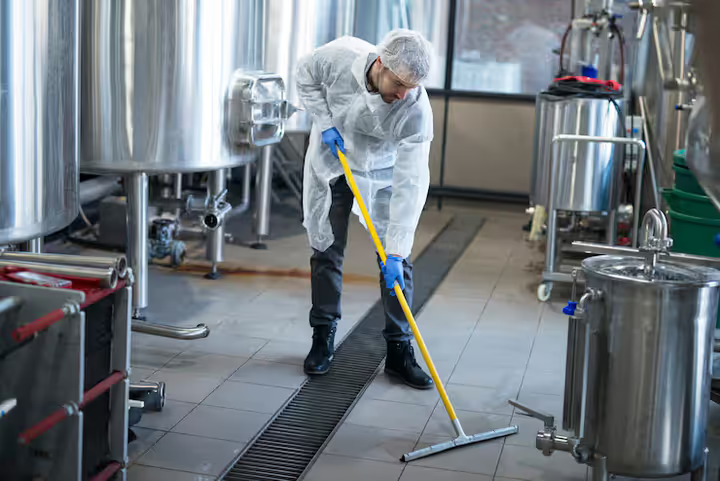
Workers performing industrial cleaning may encounter dust, chemicals, sharp materials, noise, wet surfaces, or other hazards. Depending on the task, protective equipment can include gloves, protective footwear, eye protection, respiratory protection, hearing protection, or protective clothing.
The required equipment should be selected according to a documented hazard assessment and applicable workplace rules. Personal protective equipment does not replace engineering controls or safe work procedures.
Tools and Resources
Industrial Cleaning Equipment
Industrial facilities use different equipment according to the cleaning task. Common examples include industrial vacuum cleaners, floor scrubbers, sweepers, pressure washers, wet-dry vacuum systems, microfiber cleaning tools, and specialized extraction equipment.
For areas containing potentially hazardous dust, the equipment should be appropriate for the material and environment. Equipment specifications can include filtration efficiency, capacity, electrical classification, and compatibility with particular substances.
Cleaning Schedules and Checklists
A written cleaning schedule can divide a facility into areas and establish the required frequency for each task. A simple checklist may record the location, cleaning method, responsible personnel, inspection result, and date of completion.
A useful schedule can distinguish between:
Daily cleaning activities
Weekly cleaning activities
Periodic deep cleaning
Equipment-specific cleaning
Spill response procedures
Shutdown-period cleaning
Inspection and verification
Facility Management Resources
Facility managers can consult government workplace-safety publications, environmental authority guidance, equipment manuals, industrial hygiene references, and relevant standards organizations. Manufacturers' technical documentation can also provide information about compatible cleaning methods for particular equipment.
Risk assessments, safety data sheets, maintenance records, and waste-management documentation are useful resources when cleaning activities involve chemicals or potentially hazardous materials.
FAQs
What is industrial facility cleaning?
Industrial facility cleaning is the organized removal of dust, debris, residues, spills, and other unwanted materials from factories, warehouses, workshops, plants, and related industrial environments. Methods vary according to the facility and the materials present.
How often should industrial facility cleaning be performed?
There is no single schedule for every facility. Frequency depends on production activity, dust generation, material handling, contamination risk, traffic levels, regulatory requirements, and the characteristics of individual work areas.
What equipment is used for industrial facility cleaning?
Common equipment includes industrial vacuum cleaners, mechanical sweepers, floor scrubbers, pressure washers, wet-dry vacuum systems, and specialized extraction equipment. Equipment selection depends on the material being removed and the conditions of the work area.
Is industrial cleaning important for workplace safety?
Cleaning can contribute to workplace organization and help control hazards such as accumulated debris, spills, dust, and blocked access routes. It is one part of a broader workplace safety program that also includes engineering controls, procedures, training, and appropriate protective equipment.
How is hazardous industrial waste handled during cleaning?
Hazardous waste should be identified, segregated, stored, transported, and disposed of according to the applicable regulations. Cleaning personnel should follow the facility's waste-management procedures and relevant safety documentation rather than treating all industrial waste as ordinary refuse.
Conclusion
Industrial facility cleaning encompasses structured activities for controlling dust, debris, residues, spills, and other unwanted materials across industrial workplaces. Modern facilities may combine manual techniques, mechanical equipment, digital records, and specialized contamination controls according to their operating conditions. From 2024 through 2026, greater attention has been placed on mechanized cleaning, digital documentation, dust management, and resource use. In India, workplace safety, environmental protection, waste handling, and industry-specific requirements can all influence how cleaning activities are planned and carried out.