Laser cutting is a manufacturing and design method that uses a focused beam of light to cut, engrave, or shape materials. The process works by directing a high-energy laser beam through optics and computer-controlled systems, allowing precise interaction with metals, plastics, wood, and other materials. Laser cutting explained in simple terms refers to how light energy is concentrated to create accurate cuts without direct physical contact between the tool and the material.
The origins of laser technology trace back to scientific research in the mid-20th century. Over time, developments in optics, electronics, and computer control systems made it possible to apply lasers to industrial manufacturing and product design. Today, laser cutting technology is widely used in fields such as manufacturing, architecture, electronics, and product development.
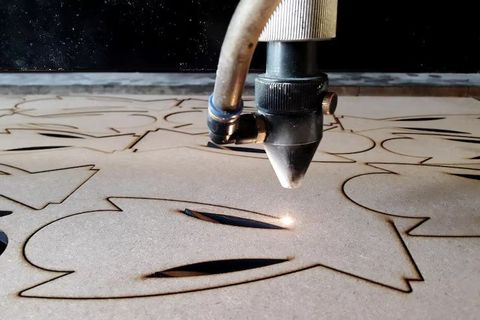
One of the key features of laser cutting is its ability to follow digital design instructions. Computer-aided design (CAD) files guide the cutting path, allowing machines to reproduce shapes with very high design accuracy. Software platforms such as AutoCAD and SolidWorks are commonly used to create the digital models that laser machines interpret.
Laser cutting explained in educational discussions often focuses on the interaction between energy, material, and computer guidance. The laser beam heats the material rapidly, causing melting, burning, or vaporization along the cutting path. A controlled stream of gas may assist in removing melted material, helping maintain clean edges and precise results.
Because the process is digitally controlled, the same design can be reproduced consistently across many pieces. This consistency makes laser cutting important in industries that rely on accurate patterns and repeatable shapes.
Basic Components of a Laser Cutting System
Several components work together to make laser cutting possible:
- Laser source: Generates the focused beam of light used for cutting.
- Optical system: Mirrors and lenses guide and focus the beam.
- Motion control system: Moves the cutting head or workpiece according to programmed paths.
- Computer control unit: Interprets design files and manages machine movement.
- Assist gas system: Directs gas through the cutting area to remove melted material.
Each component plays a role in ensuring design accuracy and repeatable performance.
Importance
Laser cutting has become significant because it enables detailed designs and efficient production processes across many industries. The ability to cut complex shapes with minimal mechanical contact helps reduce material stress and supports intricate design patterns.
In manufacturing environments, laser cutting supports the creation of components used in electronics, transportation equipment, and architectural structures. Designers also rely on the technology for prototype development, allowing rapid transformation of digital ideas into physical objects.
Several characteristics explain why the technology remains widely discussed in engineering and design education:
- Design precision: Computer guidance allows machines to follow complex shapes with consistent accuracy.
- Material versatility: Many materials can be processed, including metals, acrylic, wood, paper, and textiles.
- Reduced mechanical contact: The laser beam performs the cutting action, lowering physical wear on tools.
- Digital integration: Designs created in software can move directly into the cutting process.
Laser cutting explained in terms of everyday applications often includes items such as decorative panels, machine parts, signage elements, and electronics components. Even small design studios and educational laboratories use compact laser machines to experiment with prototypes and creative projects.
Industries Where Laser Cutting Appears
Laser cutting is present across many sectors. Examples include:
- Manufacturing: Sheet metal components and mechanical parts.
- Architecture and interior design: Decorative panels and structural elements.
- Electronics production: Precise circuit components and housings.
- Education and research: Prototyping and experimental design.
- Creative design: Engraved patterns and artistic fabrication.
These varied uses demonstrate how design accuracy and digital control make laser cutting relevant to both technical and creative fields.
Recent Updates
Between 2024 and 2026, laser cutting technology has continued evolving through improvements in automation, software integration, and energy efficiency. Modern machines increasingly combine cutting systems with sensors and monitoring tools that track performance and cutting conditions.
Integration With Digital Manufacturing
One recent trend involves stronger integration with digital manufacturing environments. Laser machines now connect with production management software that coordinates multiple machines and tracks material usage.
Design files produced in platforms such as Adobe Illustrator or CorelDRAW can move directly into cutting workflows through automated file processing systems. This digital link helps maintain consistency between design intent and physical output.
Automation and Smart Monitoring
Another development involves machine monitoring systems that observe temperature, beam alignment, and material behavior during cutting. These systems help operators identify irregularities and maintain stable cutting conditions.
Automation features also allow machines to adjust cutting parameters depending on material thickness or composition. This capability supports improved accuracy and reduces manual adjustments.
Compact and Educational Systems
Educational institutions and small fabrication laboratories increasingly use compact laser cutting machines designed for learning environments. These machines allow students to explore digital design, materials science, and manufacturing processes within controlled settings.
As digital fabrication tools become more common in education, laser cutting explained in academic contexts often includes hands-on experimentation combined with theoretical lessons about optics and engineering.
Laws or Policies
Laser cutting equipment and industrial manufacturing processes are influenced by safety standards and regulatory frameworks. These rules aim to ensure safe operation, worker protection, and environmental responsibility.
In many countries, workplace safety regulations address laser equipment because high-energy beams can pose risks without proper controls. Protective enclosures, emergency stop systems, and operator training procedures are common requirements.
International safety standards published by organizations such as International Organization for Standardization define guidelines for laser safety classifications and machine design. These standards help manufacturers design equipment that meets consistent safety expectations across global markets.
In India, manufacturing equipment and industrial processes may align with guidelines developed by the Bureau of Indian Standards. These standards address safety practices, equipment specifications, and quality management.
Government technology initiatives also influence digital manufacturing tools. Programs supported by the Ministry of Electronics and Information Technology encourage innovation in advanced manufacturing technologies, including automation and digital design systems.
Safety Considerations in Laser Cutting
Regulations typically focus on the following areas:
- Protective machine enclosures
- Operator safety training
- Laser classification labeling
- Ventilation and material emission control
- Emergency shutdown systems
These measures help reduce hazards while allowing the technology to be used responsibly in industrial and educational settings.
Tools and Resources
Understanding laser cutting technology often involves a combination of software tools, educational materials, and simulation platforms. These resources help learners and professionals explore design processes before operating machines.
Design and Modeling Software
Digital design software plays a central role in laser cutting workflows. Examples include:
- AutoCAD – used for precise 2D and 3D design models.
- SolidWorks – commonly used for mechanical design and engineering simulations.
- Adobe Illustrator – widely used for vector drawings that guide cutting paths.
- CorelDRAW – used for preparing artwork and patterns for laser engraving or cutting.
These programs allow designers to create shapes, adjust dimensions, and export files compatible with laser machine control systems.
Online Learning Platforms
Several educational platforms provide tutorials about laser technology, digital fabrication, and engineering principles. Universities, research institutions, and technical training organizations publish learning materials that explain how lasers interact with materials.
Example Materials Used in Laser Cutting
| Material Type | Common Applications | Key Characteristics |
|---|---|---|
| Stainless steel | Industrial components | High strength and heat resistance |
| Acrylic | Signage and display panels | Smooth edges and transparency |
| Wood | Decorative patterns and prototypes | Natural texture and easy engraving |
| Paper and cardboard | Packaging models | Thin material suited for detailed cuts |
| Textiles | Fashion and design patterns | Flexible and lightweight |
Understanding material properties helps determine how laser energy interacts with each surface.
FAQs
What is laser cutting and how does it work?
Laser cutting is a method that uses a focused beam of light to cut or engrave materials. Computer software guides the beam along a digital path, allowing precise shapes and patterns to be produced with minimal physical contact.
Why is laser cutting known for design accuracy?
Laser cutting achieves design accuracy because the machine follows computer-generated paths from digital design files. The focused beam can follow detailed curves and small shapes that may be difficult with mechanical cutting tools.
Which materials can be used in laser cutting processes?
Many materials can be processed with laser cutting technology. Common examples include metals, acrylic, wood, paper, textiles, and certain plastics. The exact material compatibility depends on machine type and laser power.
What software is commonly used for laser cutting design?
Design files are often created using CAD and vector graphics programs. Platforms such as AutoCAD, SolidWorks, Adobe Illustrator, and CorelDRAW allow designers to produce shapes that machines interpret as cutting paths.
Is laser cutting explained in educational courses or training programs?
Yes. Many engineering and design programs include lessons about laser cutting explained through topics such as optics, materials science, and digital manufacturing techniques. Educational laboratories often use compact machines for demonstrations and experimentation.
Conclusion
Laser cutting explained from a general perspective highlights the relationship between light energy, digital design, and precise material shaping. The technology has evolved from scientific research into an important tool used in manufacturing, design, and education. Modern systems combine computer control, automation, and safety standards to support accurate production processes. As digital manufacturing tools continue developing, laser cutting remains an important example of how technology transforms design ideas into physical objects.