Mass Spectrometry: A Guide to Ionization, Mass Analyzers, Detection and Molecular Analysis
Mass spectrometry is an analytical technique used to identify and study chemical substances by measuring the mass-to-charge ratios of ions. It is used in chemistry, biology, environmental research, materials science, food analysis, pharmaceutical research, and many other scientific fields.
The technique does not simply weigh a substance in the conventional sense. Instead, a sample is converted into electrically charged particles called ions. These ions are separated according to their mass-to-charge ratio, and a detector records their abundance to produce a mass spectrum.
Mass spectrometry developed from early investigations into charged particles and atomic masses. Over time, improvements in vacuum systems, ion sources, mass analyzers, detectors, electronics, and computer software transformed it into a widely used laboratory technique.
How mass spectrometry works
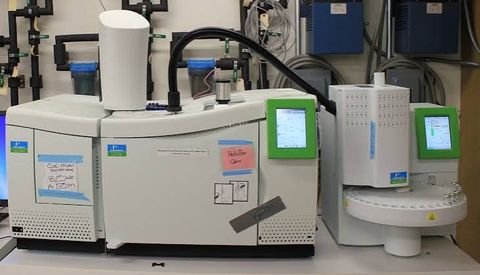
A basic mass spectrometer contains several connected stages. The sample first enters an ion source, where molecules are converted into ions. The ions then travel through a mass analyzer, which separates them according to their mass-to-charge ratios.
A detector measures the separated ions and sends the resulting information to a computer. The resulting spectrum contains peaks that represent detected ions, with peak position related to mass-to-charge ratio and peak intensity related to relative abundance.
The basic sequence can be summarized as:
Sample introduction brings the material into the instrument.
Ionization converts molecules or atoms into charged particles.
Mass analysis separates ions according to their mass-to-charge ratios.
Detection records the ions that reach the detector.
Data analysis converts the measurements into a spectrum for interpretation.
Different instruments use different combinations of ion sources, mass analyzers, and detectors. The selected configuration depends on the type of sample and the scientific question being investigated.
Important terminology
Several terms are commonly used when discussing mass spectrometry. The mass-to-charge ratio, written as m/z, describes an ion's mass relative to its electrical charge. The molecular ion or related ion can provide information about the molecular mass, while fragment ions can provide clues about molecular structure.
The mass spectrum is the graphical representation of detected ions. A peak at a particular m/z value indicates that ions with that mass-to-charge ratio were detected.
Importance
Why mass spectrometry matters
Mass spectrometry is important because it can provide detailed information about the composition of complex samples. A single sample may contain many chemical compounds, and mass spectrometry can help distinguish them based on their ion signals.
The technique is used in areas such as:
Chemical identification
Molecular structure research
Protein and peptide analysis
Metabolomics
Environmental monitoring
Food composition studies
Materials characterization
Forensic analysis
Clinical research
Pharmaceutical research
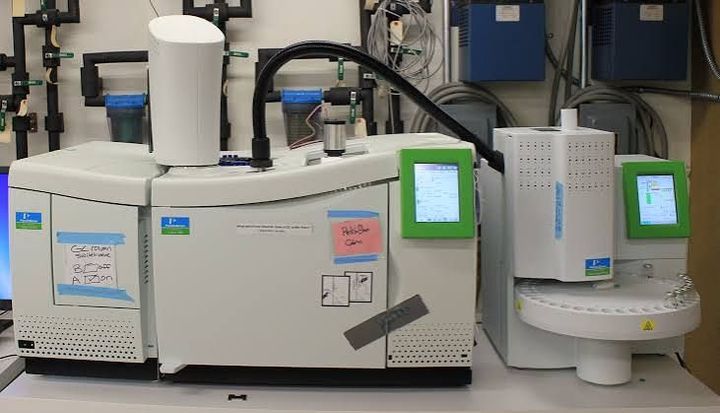
Mass spectrometry is frequently combined with another separation technique. Liquid chromatography-mass spectrometry, or LC-MS, separates compounds in a liquid sample before they enter the mass spectrometer. Gas chromatography-mass spectrometry, or GC-MS, separates volatile compounds before mass analysis.
Qualitative and quantitative analysis
Mass spectrometry can support both qualitative and quantitative investigations. Qualitative analysis focuses on determining which compounds may be present, while quantitative analysis determines how much of a particular substance is present under defined analytical conditions.
Quantitative work generally requires calibration standards, controlled sample preparation, suitable internal references, and appropriate data-processing procedures. The reliability of the result depends on the entire analytical workflow rather than the detector alone.
Main instrument components
| Component | Main function |
|---|---|
| Sample inlet | Introduces the sample into the instrument |
| Ion source | Converts sample molecules into ions |
| Mass analyzer | Separates ions according to m/z |
| Detector | Measures ions reaching the detection region |
| Vacuum system | Maintains conditions needed for ion movement |
| Data system | Processes and displays analytical results |
Different instrument designs may combine these components in different ways. For example, tandem mass spectrometry uses multiple stages of mass analysis to obtain additional structural information.
Recent Updates
Developments from 2024–2026
Mass spectrometry continues to develop through improvements in sensitivity, mass accuracy, speed, automation, and data interpretation. Modern instruments increasingly combine sophisticated hardware with software capable of handling large and complex datasets.
High-resolution mass spectrometry has become particularly important for research involving complex mixtures. Accurate mass measurements can help researchers distinguish between compounds with similar nominal masses and can support the investigation of molecular formulas.
Tandem mass spectrometry and advanced analysis
Tandem mass spectrometry, commonly written as MS/MS, provides another level of molecular information. An initial ion can be selected and fragmented, after which the resulting fragments are analyzed.
The pattern of fragment ions can help researchers investigate molecular structures. In proteomics, for example, MS/MS data can contribute to peptide identification and characterization.
Another continuing trend is the integration of mass spectrometry with chromatography and other separation methods. Combining separation with mass analysis can make it easier to examine samples containing many different chemical compounds.
Automation and data processing
Laboratory automation is also influencing mass spectrometry workflows. Automated sample handling, instrument control, quality checks, and data processing can reduce repetitive manual tasks and support consistent laboratory procedures.
Computational methods are increasingly important because modern mass spectrometers can generate large datasets. Software may be used for peak detection, spectral comparison, compound annotation, quantitative calculations, and statistical analysis.
Artificial intelligence and machine-learning methods are also being investigated for applications such as spectral interpretation, pattern recognition, compound classification, and biomolecular analysis. These approaches remain dependent on the quality of the underlying data and the analytical method.
Laws or Policies
Regulatory context
Mass spectrometry is a scientific measurement technique rather than a regulated activity by itself. However, laboratories using it may operate under different regulatory requirements depending on the purpose of the analysis, the type of sample, and the country or institution involved.
In India, laboratory activities can be influenced by organizations and frameworks such as the National Accreditation Board for Testing and Calibration Laboratories, or NABL. Laboratories seeking accreditation generally need to demonstrate appropriate technical competence, documented procedures, equipment controls, and quality-management practices.
Environmental and workplace considerations
Laboratories using mass spectrometers may handle solvents, compressed gases, biological materials, chemicals, or other substances requiring appropriate safety controls. Applicable environmental and workplace rules depend on the materials involved and the laboratory's activities.
Instrument operation also involves technical considerations such as electrical systems, vacuum equipment, gases, high temperatures in certain ion sources, and chemical exposure. Laboratory personnel normally follow documented safety procedures appropriate to the specific equipment and materials.
Data and analytical integrity
Scientific and regulated laboratories may also maintain records relating to sample identification, calibration, instrument maintenance, analytical methods, and data handling. Traceable records help establish how a measurement was produced and interpreted.
The precise requirements vary according to the laboratory's purpose. Research laboratories, environmental laboratories, clinical facilities, and industrial laboratories may operate under different quality frameworks.
Tools and Resources
Laboratory instruments
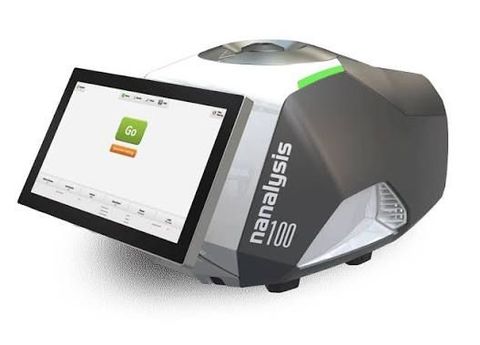
Several mass spectrometry configurations are available for different analytical purposes. Common mass analyzers include quadrupole, time-of-flight, ion trap, and Orbitrap systems. Hybrid instruments can combine more than one analyzer to provide additional analytical capabilities.
Ionization methods also vary. Electrospray ionization is commonly used for molecules that can be analyzed from liquid solutions, while electron ionization is widely associated with gas chromatography-mass spectrometry.
Software and reference resources
Mass spectrometry analysis often depends on specialized software. Programs can assist with spectral visualization, peak detection, compound identification, library comparison, calibration, and quantitative analysis.
Reference databases and spectral libraries can also help researchers compare measured spectra with previously characterized compounds. The reliability of an identification depends on factors such as spectrum quality, library coverage, sample preparation, and analytical context.
Method development resources
A mass spectrometry workflow may include:
Sample preparation protocols
Chromatography methods
Calibration standards
Internal reference compounds
Spectral libraries
Instrument control software
Data-processing software
Quality-control samples
Laboratory documentation
Selecting the appropriate combination depends on the sample type, expected concentration range, molecular characteristics, and purpose of the analysis.
FAQs
What is mass spectrometry used for?
Mass spectrometry is used to identify and characterize chemical compounds and to measure selected substances in complex samples. Applications include molecular research, environmental analysis, food studies, materials research, proteomics, and pharmaceutical research.
How does mass spectrometry work?
A mass spectrometer converts molecules into ions, separates those ions according to their mass-to-charge ratios, and detects them. The resulting mass spectrum is then interpreted to obtain information about the sample.
What is the difference between LC-MS and GC-MS?
LC-MS combines liquid chromatography with mass spectrometry and is commonly used for compounds that can be separated in a liquid phase. GC-MS combines gas chromatography with mass spectrometry and is generally suited to compounds that can be converted into a suitable gas-phase form without decomposition.
What is tandem mass spectrometry?
Tandem mass spectrometry, or MS/MS, uses multiple stages of mass analysis. Selected ions can be fragmented, and the resulting fragments are measured to provide additional information about molecular structure.
What does m/z mean in mass spectrometry?
m/z means mass-to-charge ratio. It represents the mass of an ion relative to its electrical charge and is the principal quantity used to describe ion positions in a mass spectrum.
Conclusion
Mass spectrometry is an analytical technique that measures ions according to their mass-to-charge ratios and can provide information about chemical composition and molecular structure. Its applications range from environmental and materials research to proteomics, food analysis, and pharmaceutical research. Developments from 2024–2026 have continued to emphasize high-resolution measurements, tandem analysis, automation, and computational data interpretation. Reliable results depend on appropriate sample preparation, instrument configuration, calibration, analytical methods, and careful interpretation of the resulting data.