Material Handling Automated Systems: Complete Guide to Smart Material Movement and Warehouse Efficiency
Material Handling Automated Systems have become an important part of modern warehouses, factories, and distribution centers.
As industries manage larger volumes of materials and products, automation helps move, store, and organize items with greater speed and accuracy. Instead of relying entirely on manual handling, automated equipment supports smoother operations throughout the supply chain.
From manufacturing facilities to logistics centers, these systems improve the flow of materials while reducing repetitive tasks. This guide explains what Material Handling Automated Systems are, how they work, their main components, common types, practical applications, benefits, challenges, and future developments.
What Are Material Handling Automated Systems?
Material Handling Automated Systems are integrated solutions that move, store, sort, retrieve, and transport materials with minimal manual intervention. They combine mechanical equipment, sensors, control technology, and digital monitoring to keep materials flowing efficiently throughout a facility.
These systems are designed to improve productivity while maintaining organized material movement between different stages of production, storage, and distribution.
They are commonly found in:
- Manufacturing facilities
- Warehouses
- Distribution centers
- Food processing plants
- Pharmaceutical facilities
- E-commerce fulfillment centers
- Airport baggage handling areas
Each environment uses automation differently depending on its operational requirements.
How Material Handling Automated Systems Work
Material movement follows a structured workflow from receiving goods to final dispatch.
Receiving Materials
Materials arrive at the facility and are identified using labels, barcodes, or RFID tags. This information helps the system recognize each item and determine where it should go.
Material Transportation
Automated equipment transports materials between different work areas. The movement may involve conveyors, automated vehicles, robotic systems, or lifting equipment, depending on the facility layout.
Storage and Retrieval
After transportation, materials are placed into designated storage locations. When needed, the system automatically retrieves the required items and delivers them to the next processing stage.
Sorting and Distribution
Materials are sorted according to destination, product category, production schedule, or shipping requirements. Automated sorting helps maintain organized workflows and reduces handling time.
Shipment Preparation
Before leaving the facility, products are collected, packed, and prepared for transportation. Automated systems help coordinate these activities while maintaining accurate inventory records.
Main Components of Material Handling Automated Systems
Several technologies work together to create an efficient automated material handling process.
Conveyor Systems
Conveyors move products continuously between different locations within a facility. They are widely used because they provide consistent and controlled material movement.
Automated Storage and Retrieval Systems
These systems automatically place materials into storage locations and retrieve them when needed. They help maximize storage space while improving inventory organization.
Automated Guided Vehicles
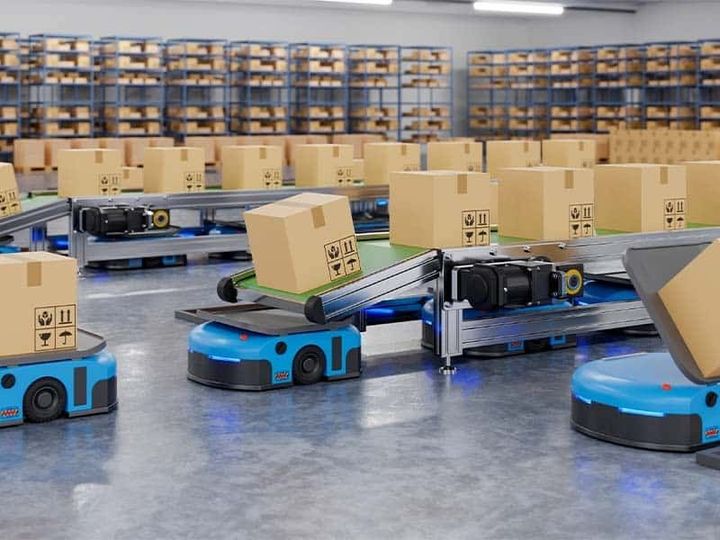
Automated Guided Vehicles (AGVs) transport materials along predefined routes using sensors and navigation technology. They are commonly used in warehouses and manufacturing facilities.
Autonomous Mobile Robots
Unlike AGVs, autonomous mobile robots can adjust their routes dynamically as they move through changing environments, making them suitable for flexible warehouse operations.
Robotic Arms
Robotic arms perform repetitive handling activities such as picking, placing, stacking, and palletizing materials with high precision.
Sensors and Identification Systems
Barcodes, RFID tags, scanners, and sensors help identify materials, monitor movement, and update inventory information throughout the handling process.
Common Types of Material Handling Automated Systems
Different facilities use different automation solutions depending on the materials being handled.
Conveyor-Based Systems
These systems continuously transport materials between workstations and storage areas.
Robotic Material Handling
Industrial robots assist with repetitive material movement, packaging, sorting, and palletizing activities.
Automated Warehouse Systems
Automated warehouse solutions combine storage, retrieval, inventory tracking, and transportation into one coordinated system.
Vertical Lift Systems
Vertical lift equipment stores materials vertically, helping facilities make better use of available floor space.
Sortation Systems
Sortation equipment automatically directs products toward the correct destination based on identification information.
Benefits of Material Handling Automated Systems
Material Handling Automated Systems provide several advantages for organizations managing large volumes of materials.
One major benefit is improved operational efficiency. Automated equipment performs repetitive movement tasks consistently, allowing materials to move smoothly throughout the facility.
Automation also improves inventory accuracy. Digital tracking helps maintain updated inventory records while reducing manual data entry.
Another important advantage is better space utilization. Automated storage systems organize materials efficiently, allowing facilities to maximize available storage capacity.
Workplace safety can also improve because automation reduces the need for repetitive lifting and frequent manual transportation of heavy materials.
These systems also support better workflow coordination by connecting receiving, storage, production, packaging, and shipping activities into one organized process.
Common Applications
Material Handling Automated Systems support many industries where efficient material movement is essential.
Manufacturing facilities use automation to transport raw materials and finished products between production stages.
Warehouses rely on automated systems to organize inventory, retrieve products, and prepare shipments.
Distribution centers use automated sorting and transportation equipment to process large numbers of packages quickly.
Food processing facilities move packaged products efficiently while maintaining organized workflows.
Pharmaceutical facilities use automated handling to improve product identification and inventory management.
Airports depend on automated baggage handling systems to transport luggage between check-in areas, sorting facilities, and aircraft.
Common Challenges
Although automation provides many advantages, successful implementation requires careful planning.
Facility layout may need modification before automated equipment can be installed effectively.
Equipment maintenance is important because reliable operation depends on regular inspections and timely repairs.
System integration may require coordination between existing warehouse equipment and newer automation technologies.
Employee training also plays an important role, helping workers understand how to operate and monitor automated systems safely.
Organizations should also prepare for future expansion by selecting automation solutions that can adapt to changing operational requirements.
Best Practices for Effective Implementation
Successful automation projects usually follow several practical approaches.
Begin by evaluating current material handling workflows to identify opportunities for improvement.
Select equipment that matches the size, weight, and movement requirements of the materials being handled.
Maintain accurate inventory information to support efficient automated operations.
Inspect equipment regularly and follow preventive maintenance schedules.
Provide training so employees understand both normal operation and emergency procedures.
Monitor system performance continuously and review operational data to identify opportunities for ongoing improvement.
Future Trends in Material Handling Automated Systems
Automation technology continues to evolve as industries seek greater efficiency and flexibility.
Artificial intelligence is helping automated systems make smarter routing decisions and improve inventory forecasting. Internet-connected sensors provide real-time monitoring of equipment performance and material movement throughout facilities.
Collaborative robots are increasingly working alongside employees, assisting with repetitive handling activities while supporting safer workplaces.
Advanced data analytics, digital twins, and predictive maintenance are also becoming more common, helping organizations improve planning and reduce unexpected equipment downtime.
As warehouses and manufacturing facilities continue adopting smart technologies, Material Handling Automated Systems will remain a key part of modern industrial operations.
Conclusion
Material Handling Automated Systems have transformed the way materials move through warehouses, manufacturing facilities, and distribution centers. By combining automated transportation, storage, retrieval, and tracking technologies, these systems help create more organized and efficient operations.
As automation continues to advance, organizations can improve workflow coordination, inventory accuracy, workplace safety, and operational efficiency. Understanding how these systems work provides valuable insight into one of the most important technologies supporting today's supply chain and industrial environments.