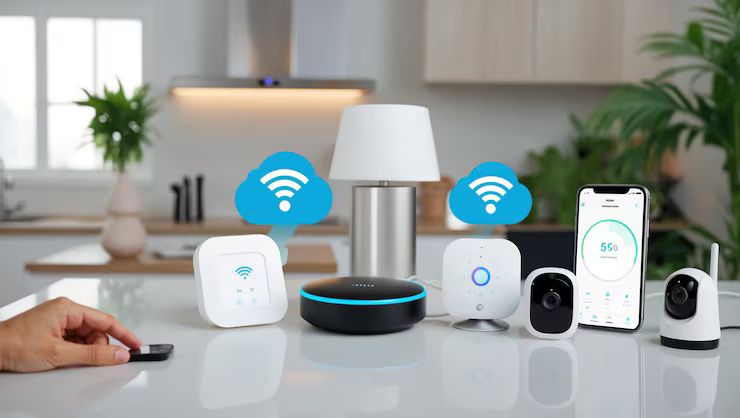
Smart Home Hubs are central devices that connect and manage multiple smart devices within a home. These hubs act as a communication bridge, allowing devices such as lights, thermostats, speakers, cameras, and locks to work together in a coordinated way. Instead of controlling each device separately through different apps, a smart home hub brings everything into one place.
The idea of Smart Home Hubs developed alongside the growth of the Internet of Things (IoT), where everyday objects are connected to the internet and can share data. Early smart devices often worked in isolation, which created confusion for users. Smart home hubs emerged to simplify this ecosystem by providing a unified control point.
Most Smart Home Hubs support wireless communication protocols such as Wi-Fi, Bluetooth, Zigbee, or Z-Wave. These protocols allow devices from different manufacturers to interact with each other through the hub. Over time, hubs have evolved to include voice control, automation routines, and remote access through mobile apps.
Today, Smart Home Hubs are used in a variety of homes, from small apartments to large houses. They help users manage lighting, security, energy use, and entertainment systems in a more organized way.
Importance
Smart Home Hubs play a significant role in modern households because they simplify how connected devices are managed. Without a hub, users may need to switch between multiple apps or interfaces, which can be time-consuming and confusing.
One key benefit is convenience. With a smart home hub, users can create routines such as turning off lights, locking doors, and adjusting the thermostat with a single command. This reduces the need for manual control and helps streamline daily activities.
Another important aspect is compatibility. Many smart devices are designed to work with specific platforms. A hub can bridge these differences, allowing devices from different ecosystems to communicate more effectively.
Smart Home Hubs also support automation. For example, a hub can trigger actions based on conditions like time of day, motion detection, or temperature changes. This helps improve efficiency and reduces the need for constant monitoring.
Energy management is another area where Smart Home Hubs are useful. By coordinating devices such as smart plugs and thermostats, users can monitor and adjust energy usage more easily.
Security is also enhanced. Hubs can integrate cameras, alarms, and sensors into a single system, making it easier to monitor a home and respond to unusual activity.
Recent Updates
Recent developments in Smart Home Hubs from 2024 to 2026 reflect a shift toward better compatibility, improved automation, and stronger privacy controls.
One major trend is the adoption of the Matter standard. Matter is a unified communication protocol designed to improve compatibility between smart devices from different brands. Many newer Smart Home Hubs now support Matter, making it easier to connect devices without worrying about compatibility issues.
Another update is the increased use of artificial intelligence in hubs. AI helps hubs learn user preferences and automate routines more effectively. For example, a hub might adjust lighting based on past behavior or suggest automation routines.
Voice control has also improved. Smart Home Hubs now integrate more natural language processing, allowing users to give commands in a more conversational way. This makes interaction easier, especially for users who are less familiar with technology.
Edge computing is another development. Instead of sending all data to cloud servers, some Smart Home Hubs process information locally. This can improve response times and reduce reliance on internet connectivity.
Privacy and data security have become more prominent concerns. As a result, many hubs now include stronger encryption and more transparent data settings, allowing users to control how their data is used.
Laws or Policies
Smart Home Hubs are influenced by various laws and policies, especially those related to data privacy and electronic communication.
In many countries, data protection regulations require companies to handle user data responsibly. For example, laws similar to the General Data Protection Regulation (GDPR) in Europe set guidelines for how personal data is collected, stored, and shared. These rules affect how Smart Home Hubs manage user information.
In India, data protection frameworks are evolving, with a focus on safeguarding personal data and ensuring transparency. Smart Home Hub manufacturers operating in India must follow these regulations when collecting or processing user data.
Wireless communication standards are also regulated. Devices that use Wi-Fi, Bluetooth, or other frequencies must comply with national telecommunications guidelines to avoid interference and ensure safe operation.
Energy efficiency policies may also apply. Some regions encourage the use of energy-efficient devices, including smart home systems, to reduce overall power consumption.
Additionally, cybersecurity guidelines are becoming more important. Governments and organizations are encouraging manufacturers to implement stronger security measures to protect connected devices from unauthorized access.
Tools and Resources
There are several tools and resources that help users understand and manage Smart Home Hubs more effectively.
- Device compatibility checkers: many platforms provide online tools to check whether a device works with a specific Smart Home Hub.
- Mobile apps: most hubs come with dedicated apps that allow users to control devices, set routines, and monitor activity.
- Voice assistants: integration with voice platforms helps users control devices using spoken commands.
- Automation builders: some hubs include visual tools that allow users to create automation routines without technical knowledge.
- Energy monitoring dashboards: these tools display data about energy usage and help users identify patterns.
Below is a comparison table of common communication protocols used in Smart Home Hubs:
| Protocol | Range | Power Usage | Common Use Cases |
|---|---|---|---|
| Wi-Fi | Medium | High | Cameras, speakers, hubs |
| Bluetooth | Short | Low | Wearables, small sensors |
| Zigbee | Medium | Low | Lights, sensors, smart plugs |
| Z-Wave | Medium | Low | Security systems, automation |
| Matter | Varies | Optimized | Cross-platform smart devices |
Online forums and knowledge bases are also helpful resources. These platforms allow users to learn from others’ experiences and find solutions to common issues.
FAQs
What are Smart Home Hubs and how do they work?
Smart Home Hubs are devices that connect and control multiple smart devices in one system. They work by using wireless protocols to communicate with devices and allow users to manage them through a single interface.
Do Smart Home Hubs require internet access?
Many Smart Home Hubs use internet connectivity for remote access and updates. However, some functions may still work locally without an internet connection, depending on the hub design.
Are Smart Home Hubs compatible with all devices?
Not all devices are compatible with every hub. Compatibility depends on supported protocols and platforms. Newer standards like Matter are improving cross-device compatibility.
Can Smart Home Hubs improve energy efficiency?
Yes, Smart Home Hubs can help manage energy usage by automating devices such as lights and thermostats. This allows users to monitor and adjust consumption more effectively.
Are Smart Home Hubs secure?
Security depends on the design and settings of the hub. Many modern Smart Home Hubs include encryption and user controls to protect data, but users should also follow basic security practices such as strong passwords and regular updates.
Conclusion
Smart Home Hubs provide a central way to manage connected devices and simplify daily routines. They support automation, improve compatibility, and help users monitor energy and security systems. Recent developments such as Matter and AI integration are making these hubs more adaptable and user-friendly. As technology evolves, Smart Home Hubs continue to play an important role in modern connected living.