Truck-Mounted Crane Guide: Types, Uses and Key Facts
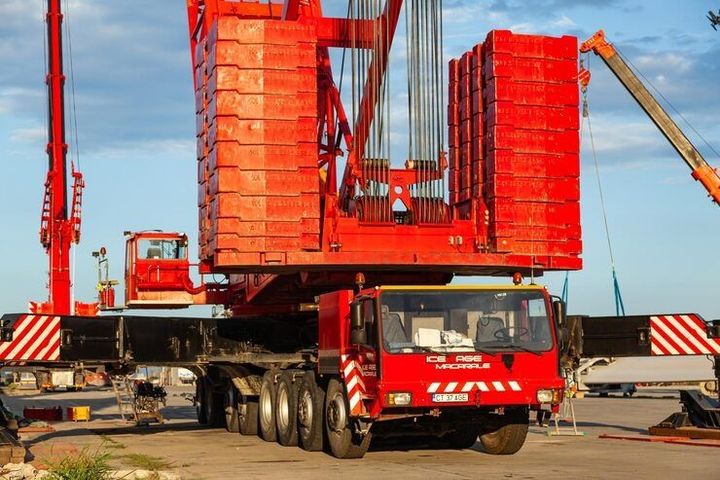
A truck-mounted crane is a lifting machine installed on a commercial truck chassis. It combines transportation and lifting functions, allowing operators to move equipment and materials between locations without requiring separate transport systems.
The concept emerged to improve efficiency in industries where materials need to be lifted and relocated frequently. Traditional stationary cranes often require significant setup time and transportation arrangements. Truck-mounted cranes address these challenges by providing mobility and lifting capabilities in one machine.
These cranes are commonly seen at construction sites, industrial facilities, utility projects, transportation hubs, and infrastructure developments. Their ability to travel on public roads and quickly begin lifting operations makes them a practical solution for many industries.
Truck-mounted cranes use hydraulic, mechanical, or electronic systems to lift and position loads. Modern models often include advanced safety controls, monitoring systems, and stabilization technologies that support safe operation in different environments.
Common Types of Truck-Mounted Cranes
Different crane designs serve different operational requirements. The most common types include:
| Crane Type | Main Feature | Typical Application |
|---|---|---|
| Hydraulic Crane | Uses hydraulic cylinders for lifting | Construction and logistics |
| Telescopic Crane | Extendable boom sections | Infrastructure projects |
| Knuckle Boom Crane | Foldable articulated boom | Material handling |
| Loader Crane | Mounted behind the truck cab | Loading and unloading cargo |
| Boom Truck Crane | Fixed boom with lifting equipment | Utility and maintenance work |
| Rough-Terrain Truck Crane | Designed for challenging surfaces | Industrial and remote projects |
How Truck-Mounted Cranes Work
Truck-mounted cranes operate through a combination of hydraulic power, structural components, and control systems.
The process generally follows several stages:
- The vehicle arrives at the work location.
- Stabilizing outriggers are deployed.
- Hydraulic systems activate lifting mechanisms.
- The boom extends or rotates toward the load.
- Operators attach lifting accessories.
- The load is lifted, moved, and positioned safely.
- The crane returns to its transport configuration.
Key Components of a Truck-Mounted Crane
Several major components work together during crane operations:
- Truck chassis
- Crane boom
- Hydraulic cylinders
- Winch system
- Outriggers
- Control panel
- Counterweight systems
- Safety monitoring devices
The hydraulic system plays a central role by converting fluid pressure into lifting force. This allows heavy materials to be raised with controlled movement and precision.
Simplified Crane Operating Flow
| Step | Function |
| Positioning | Vehicle reaches work area |
| Stabilization | Outriggers support the vehicle |
| Boom Deployment | Crane boom extends |
| Load Attachment | Rigging connects the load |
| Lifting | Hydraulic system raises load |
| Placement | Load moved to destination |
| Retraction | Crane returns to transport mode |
Why Truck-Mounted Cranes Matter Today
Modern economies depend heavily on infrastructure development, energy systems, transportation networks, and industrial production. Truck-mounted cranes contribute to these activities by enabling efficient material handling and lifting operations.
Their importance has increased due to growing urbanization and infrastructure modernization projects. Many industries require equipment that can move quickly between multiple locations while maintaining lifting performance.
The technology affects several sectors:
- Construction companies
- Infrastructure developers
- Manufacturing facilities
- Transportation operators
- Utility maintenance teams
- Telecommunications projects
- Renewable energy installations
Truck-mounted cranes help address challenges such as:
- Limited site access
- Material movement efficiency
- Reduced equipment transportation needs
- Faster project execution
- Improved operational flexibility
As projects become more complex, organizations increasingly rely on equipment capable of handling varied lifting requirements across multiple locations.
Key Applications Across Industries
Truck-mounted cranes are used for a wide range of lifting activities.
Construction Projects
Construction teams use these cranes to position structural components, building materials, machinery, and prefabricated elements.
Utility and Energy Infrastructure
Electricity distribution, telecommunications infrastructure, and energy installations often require lifting equipment that can access different locations quickly.
Industrial Operations
Factories and industrial facilities use truck-mounted cranes for machinery installation, equipment relocation, and maintenance activities.
Transportation and Logistics
Loading and unloading heavy cargo remains one of the most common applications. These cranes help move containers, equipment, and oversized materials.
Emergency Response and Recovery
Specialized lifting operations may support recovery activities following severe weather events, transportation incidents, or infrastructure damage.
Recent Developments and Industry Trends
The truck-mounted crane sector has experienced several notable developments during the past year.
Increased Digital Integration in 2025
Manufacturers continue expanding digital monitoring systems that provide real-time operational information. These technologies support load monitoring, maintenance tracking, and operational efficiency improvements.
Growth of Telematics Solutions
Throughout 2025, fleet management systems have become more common in crane operations. These systems allow operators and managers to monitor equipment performance remotely.
Enhanced Safety Technologies
Recent crane models increasingly incorporate:
- Load moment indicators
- Stability monitoring systems
- Operator assistance technologies
- Collision awareness features
- Automated safety alerts
Focus on Sustainability
Environmental considerations continue influencing equipment development. Manufacturers are exploring fuel-efficient systems, hybrid technologies, and reduced-emission operational designs.
Infrastructure Investment Trends
Many countries continued infrastructure modernization programs during 2025, increasing demand for mobile lifting equipment capable of supporting transportation, energy, and public works projects.
Regulatory Frameworks and Compliance Requirements
Truck-mounted cranes operate within regulatory environments designed to promote safety, operational standards, and workforce protection.
Although regulations vary by country, several common areas exist.
Operator Qualification Requirements
Many jurisdictions require operators to complete specialized training programs and demonstrate competency before operating lifting equipment.
Common requirements may include:
- Safety training
- Equipment knowledge
- Practical assessments
- Periodic certification renewal
Equipment Inspection Standards
Routine inspections help identify mechanical issues before they become safety concerns.
Inspection programs often include:
- Daily visual checks
- Scheduled maintenance reviews
- Structural examinations
- Hydraulic system inspections
Workplace Safety Regulations
Government workplace safety agencies typically establish standards covering:
- Load handling procedures
- Site preparation
- Operator responsibilities
- Hazard identification
- Emergency response planning
Transportation Compliance
Because truck-mounted cranes travel on public roads, operators must comply with transportation regulations related to:
- Vehicle dimensions
- Weight limitations
- Road permits
- Traffic safety requirements
Environmental and Emissions Policies
Many countries continue implementing environmental standards aimed at reducing equipment emissions and improving fuel efficiency.
Organizations operating crane fleets often monitor evolving environmental requirements to maintain compliance.
Helpful Tools and Resources
Several resources support crane operation, planning, training, and safety management.
Digital Planning Tools
Project planning software helps teams coordinate lifting activities and schedule equipment deployment.
Load Calculation Resources
Load calculation tools assist in determining safe lifting capacities based on operating conditions and equipment specifications.
Maintenance Tracking Systems
Maintenance management platforms support inspection scheduling and service documentation.
Safety Checklists
Standardized checklists help operators verify equipment readiness before use.
Examples include:
- Pre-operation inspections
- Site hazard assessments
- Load verification records
- Equipment condition reviews
Training Resources
Educational materials often include:
- Equipment manuals
- Technical guides
- Safety handbooks
- Operator training modules
- Industry best-practice documents
Important Facts About Truck-Mounted Cranes
- They combine transportation and lifting functions in one machine.
- Hydraulic systems are the most common lifting mechanism.
- Outriggers play a critical role in maintaining stability.
- Different crane types are designed for specific lifting environments.
- Regular inspection and maintenance are essential for safe operation.
- Modern cranes increasingly use digital monitoring technologies.
- Infrastructure projects remain one of the largest application areas.
Frequently Asked Questions
What is a truck-mounted crane?
A truck-mounted crane is a crane installed on a truck chassis that provides both mobility and lifting capability. It can travel on roads and perform lifting operations at various locations.
How does a truck-mounted crane stay stable during lifting?
The crane uses outriggers, which extend outward from the vehicle to create a wider support base and improve stability while handling loads.
What industries commonly use truck-mounted cranes?
Construction, logistics, manufacturing, utilities, telecommunications, transportation, and infrastructure development are among the most common sectors.
What is the difference between a telescopic crane and a knuckle boom crane?
A telescopic crane uses extendable boom sections that move outward in a straight line, while a knuckle boom crane uses articulated joints that allow greater flexibility in positioning loads.
Why are regular crane inspections important?
Inspections help identify wear, damage, and mechanical issues before they affect performance or create safety risks, supporting reliable operation and regulatory compliance.
Conclusion
Truck-mounted cranes play a significant role in modern construction, logistics, infrastructure, and industrial operations. Their ability to combine transportation and lifting functions makes them valuable for projects requiring flexibility and mobility. Understanding the various crane types, operating principles, applications, and safety requirements helps organizations and workers make informed decisions about equipment use.