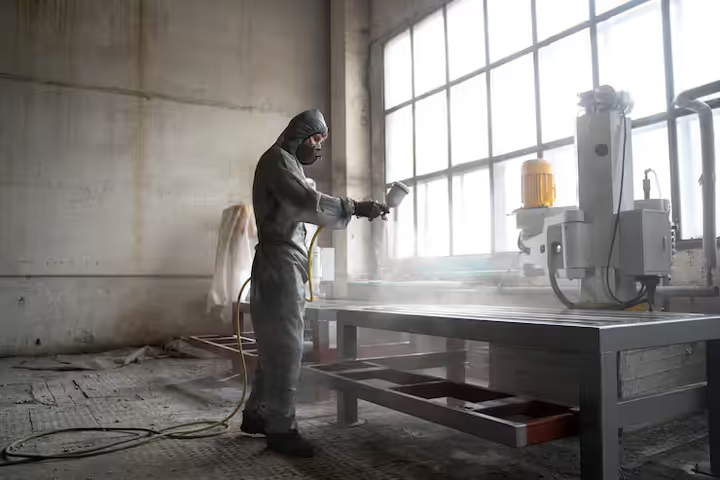
Understanding Industrial Powder Coating Machines: Types, Applications, and Benefits Guide
Industrial powder coating machines are equipment systems used to apply dry powder to metal and other suitable surfaces before the coating is cured. Unlike liquid coating methods, powder coating generally uses electrically charged powder particles that are attracted to a grounded workpiece and then heated so the particles melt and form a continuous layer.
Industrial powder coating machines are used across manufacturing environments for components such as automotive parts, appliances, metal furniture, machinery housings, electrical enclosures, and construction products.
Context
What Is Powder Coating?
Powder coating is a finishing process in which a dry coating material is applied to a prepared surface. The powder normally contains resin, pigments, additives, and other ingredients selected according to the intended coating characteristics.
During application, powder particles are given an electrical charge. The workpiece is normally grounded, creating an electrostatic attraction between the particles and the surface. After application, the coated component enters a curing oven where controlled heat causes the powder to melt, flow, and form a solid film.
Industrial powder coating machines bring several stages of this process together. A complete production line may include surface preparation equipment, powder application equipment, curing ovens, cooling areas, conveyors, recovery units, and control systems.
Why Industrial Machines Are Used
Manual powder application can be appropriate for small batches or irregular production. Industrial environments, however, may need repeatable coating thickness, controlled powder application, and continuous movement of components through different stages.
A typical industrial powder coating system may contain:
- Powder spray guns for applying charged particles.
- Powder hoppers or feed systems for holding and supplying coating material.
- Reciprocating equipment for automated spray movement.
- Booths that contain overspray during application.
- Recovery systems that collect suitable unused powder.
- Curing ovens that provide controlled heating.
- Conveyors that move components through the production stages.
- Control panels that coordinate temperature, conveyor speed, spraying, and other process parameters.
The exact arrangement depends on the material, component dimensions, production volume, coating requirements, and available factory space.
Main Process Stages
The powder coating process usually involves several connected stages. First, the workpiece is cleaned to remove contaminants such as oil, dirt, oxidation, or residues. Surface preparation is important because contaminants can interfere with coating adhesion.
After preparation, the component is dried and moved to the application area. Powder is then applied through spray equipment, after which the coated component enters the curing oven.
| Process Stage | Main Purpose | Common Equipment |
|---|---|---|
| Cleaning | Remove contaminants | Washers, chemical treatment systems |
| Surface preparation | Improve coating adhesion | Pretreatment tanks or spray systems |
| Drying | Remove moisture | Drying oven or heated chamber |
| Powder application | Apply coating particles | Electrostatic spray guns |
| Recovery | Collect suitable overspray | Cyclones or filter systems |
| Curing | Form the final coating film | Curing oven |
| Cooling | Bring components toward handling temperature | Cooling zone or ambient area |
| Inspection | Check coating condition | Thickness gauges and visual inspection tools |
Importance
Why Powder Coating Matters in Manufacturing
Industrial powder coating machines are important because surface finishing influences how manufactured components perform and appear during their intended use. A properly applied coating can provide a barrier between a substrate and its surrounding environment.
For metal products, coatings can help protect surfaces from environmental exposure, depending on the coating formulation, preparation process, application quality, and operating conditions.
Powder coating is also used where manufacturers need consistent color and surface appearance across batches. Different formulations can produce varied finishes, including smooth, textured, matte, and gloss surfaces.
Applications Across Industries
Powder coating equipment is used in many manufacturing sectors. Common applications include:
- Automotive components and accessories
- Metal furniture and storage systems
- Electrical cabinets and enclosures
- Agricultural machinery components
- Construction hardware
- Industrial equipment frames
- Household appliances
- Lighting fixtures
- Metal fencing and architectural components
- Heating and ventilation equipment
The suitability of powder coating depends on the substrate and the temperature required for curing. Metals such as steel and aluminum are common substrates because they can generally tolerate the curing process.
Types of Industrial Powder Coating Machines
Industrial systems can be classified according to how powder is applied and how much of the process is automated.
Manual Powder Coating Systems
Manual systems use an operator-controlled spray gun. The operator directs the powder toward the component and adjusts application according to the shape and requirements of the workpiece.
These systems can be useful when components vary considerably in shape or when production involves relatively small batches. However, application consistency depends partly on operator technique.
Automatic Powder Coating Systems
Automatic systems use programmed spray guns, reciprocators, or robotic equipment to apply powder. They can maintain predetermined movement patterns and application parameters.
Automation can be particularly relevant to production lines handling repeated component shapes. Human operators may still be required for setup, inspection, adjustments, and handling of components that require special attention.
Electrostatic Powder Coating Machines
Electrostatic systems charge powder particles as they leave the spray equipment. The charged particles are attracted toward the grounded workpiece.
This approach allows powder to adhere to the surface before curing. Proper grounding, equipment configuration, powder characteristics, and application conditions all influence the result.
Fluidized Bed Systems
Fluidized bed powder coating uses a container in which powder particles are suspended by controlled airflow. A heated component can be immersed into the powder, allowing particles to melt and form a coating.
This method can be suitable for particular component geometries and coating requirements. It differs from electrostatic spraying in both application method and process sequence.
Recent Updates
Greater Automation
From 2024 through 2026, industrial finishing systems have continued moving toward greater automation and process monitoring. Automated spray guns, robotic systems, programmable controls, and sensors can help coordinate repeated production activities.
Modern systems may monitor parameters such as oven temperature, conveyor movement, powder flow, and equipment status. Data collection can also support process records and troubleshooting.
Energy Management
Curing ovens are an important part of powder coating because they require controlled heat. Recent equipment development has placed greater attention on heat management, insulation, airflow, temperature control, and recovery of usable thermal energy.
Improved oven controls can help maintain more consistent conditions across the curing chamber. Actual energy use depends on oven design, component size, production rate, ambient conditions, and operating practices.
Powder Recovery and Material Efficiency
Industrial systems increasingly incorporate powder recovery equipment. Overspray that does not adhere to a component can be captured using appropriate filtration or separation systems.
Recovered powder handling requires attention to contamination, color changes, formulation differences, and the manufacturer's process specifications. Not all recovered material is necessarily suitable for unrestricted reuse.
Digital Monitoring
Connected control systems are becoming more common in industrial coating lines. Operators may be able to monitor equipment status, temperature readings, alarms, and process information through centralized interfaces.
Digital records can help identify variations in production conditions. They also create additional requirements for cybersecurity, user permissions, data management, and system maintenance.
Laws or Policies
Industrial Safety Requirements in India
In India, industrial powder coating operations are influenced by workplace safety, environmental, electrical, fire, and pollution-control requirements. The specific requirements depend on the facility, location, processes, materials, and applicable state and central regulations.
The Occupational Safety, Health and Working Conditions Code, 2020 provides a broader framework for occupational safety and working conditions, subject to its implementation and applicable rules. Industrial facilities should also consider requirements administered by relevant state authorities.
Air Emissions and Environmental Controls
Powder coating produces airborne particles during application. Spray booths, ventilation systems, filters, and powder recovery equipment are therefore important components of an industrial installation.
Pollution-control requirements can vary by location and facility category. In India, state pollution control boards may establish requirements relating to industrial emissions, waste handling, and environmental management.
Fire and Electrical Safety
Powder particles can create combustible dust hazards under particular conditions. Equipment design, ventilation, grounding, housekeeping, and ignition-source control are therefore important considerations.
Electrical equipment used in powder application areas should be appropriate for the operating environment. Fire-safety requirements may also apply to curing ovens, electrical systems, storage areas, and factory buildings.
Tools and Resources
Coating Thickness Gauges
A coating thickness gauge can measure the thickness of a cured coating without damaging the finished surface when an appropriate measurement method is used. Different instruments are designed for different substrate and coating combinations.
Temperature Monitoring Equipment
Temperature sensors and data loggers can help verify curing conditions. Oven air temperature and the actual temperature of the workpiece are not necessarily identical, so process monitoring should account for both where appropriate.
Powder Coating Booths
A powder coating booth provides a controlled area for spraying and helps manage overspray. Booth design can include ventilation, filtration, powder recovery, lighting, and access arrangements.
Technical Standards and Documentation
Manufacturers and industrial facilities can refer to technical documents from organizations such as ASTM International, ISO, and relevant Indian regulatory authorities. Powder manufacturers also provide technical information covering curing conditions, application methods, storage, and coating characteristics.
Process documentation can include:
- Powder identification and batch information
- Pretreatment procedures
- Application parameters
- Oven temperature records
- Conveyor settings
- Coating thickness measurements
- Inspection results
- Equipment maintenance records
FAQs
What are industrial powder coating machines?
Industrial powder coating machines are equipment used to apply dry coating powder to prepared components and cure that powder into a solid surface layer. A complete system can include spray guns, booths, recovery equipment, conveyors, ovens, and control systems.
How do industrial powder coating machines work?
Many industrial powder coating machines use electrostatic spraying. Powder particles receive an electrical charge and are attracted to a grounded workpiece, after which controlled heating melts and cures the coating.
What types of industrial powder coating machines are available?
Common categories include manual electrostatic systems, automatic spray systems, robotic application systems, and fluidized bed equipment. The appropriate configuration depends on component shape, substrate, production requirements, and coating formulation.
What materials can be coated using powder coating equipment?
Steel and aluminum are frequently used substrates. Other materials may be suitable when they can withstand the required curing conditions and provide appropriate surface characteristics.
What safety measures are important for powder coating equipment?
Important considerations include ventilation, grounding, dust control, electrical safety, fire prevention, housekeeping, appropriate protective equipment, and correct operation of curing ovens. Facility-specific regulations and equipment documentation should also be followed.
Conclusion
Industrial powder coating machines combine powder application, surface preparation, curing, recovery, and process control into manufacturing systems used across many industries. Manual, automatic, electrostatic, and fluidized bed technologies provide different approaches for different production requirements. Recent developments have emphasized automation, process monitoring, energy management, and powder recovery. Safe operation also requires attention to ventilation, combustible dust, electrical systems, environmental controls, and applicable industrial regulations.