Vertical Machining Centers are advanced machines used in manufacturing to shape and cut materials such as metal, plastic, and composites. They are a type of computer numerical control (CNC) machine, meaning they operate through programmed instructions rather than manual control. The term “vertical” refers to the orientation of the spindle, which is positioned vertically above the workpiece.
These machines developed as industries sought more precise and efficient ways to produce parts. Earlier machining methods relied heavily on manual operation, which limited accuracy and consistency. Over time, automation and digital programming transformed machining into a more controlled and repeatable process.
A Vertical Machining Center typically includes a rotating cutting tool, a movable table to hold the material, and a control system that follows programmed paths. The machine can perform multiple tasks such as drilling, milling, and tapping without requiring frequent repositioning of the material.
Today, Vertical Machining Centers are widely used in sectors like automotive manufacturing, aerospace, electronics, and general engineering. Their ability to handle complex shapes and maintain consistent quality makes them an important part of modern production systems.
Importance
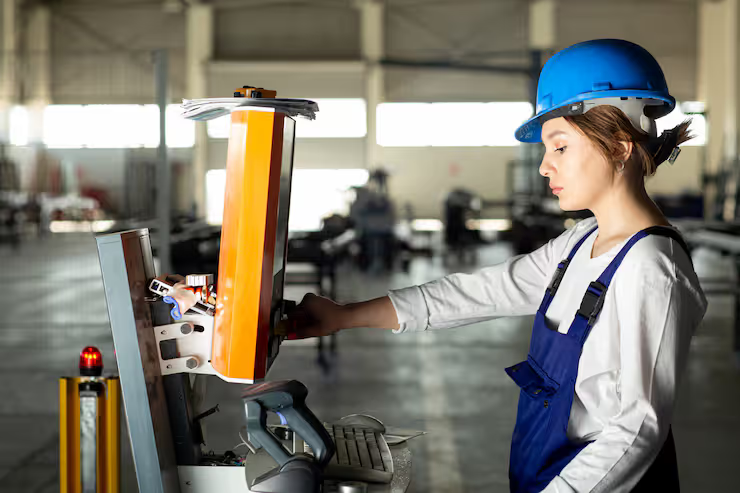
Vertical Machining Centers play a key role in modern manufacturing because they improve precision, consistency, and efficiency. In many industries, even small variations in measurements can affect how parts function. These machines help reduce such variations by following exact digital instructions.
They are particularly important for producing components that must fit together accurately. For example, in automotive or electronics production, parts often need to align perfectly with others. Vertical Machining Centers support this level of precision.
Another important aspect is time efficiency. Traditional machining methods may require multiple setups or manual adjustments. In contrast, a Vertical Machining Center can complete several operations in one setup, reducing production time and minimizing errors.
These machines also contribute to safer working environments. Since much of the process is automated, operators are less exposed to direct contact with cutting tools. This reduces the risk of injuries associated with manual machining.
In addition, Vertical Machining Centers support scalability. Whether producing a small batch or a large quantity of parts, the same program can be reused, ensuring consistency across production runs.
Recent Updates
Between 2024 and 2026, Vertical Machining Centers have continued to evolve with advancements in digital technology and automation. One major trend is the integration of smart manufacturing systems. Machines are now often connected to networks that allow real-time monitoring and data collection.
Another development is the use of artificial intelligence and machine learning. These technologies help optimize cutting paths, predict maintenance needs, and reduce downtime. For example, sensors can detect wear in tools and notify operators before performance declines.
Energy efficiency has also become a focus. Newer Vertical Machining Centers are designed to use less power while maintaining performance. This aligns with broader industrial efforts to reduce environmental impact.
Automation has expanded through the use of robotic systems. Many facilities now use robots to load and unload materials, allowing machines to operate continuously with minimal human intervention.
Additionally, software improvements have made programming more accessible. Modern interfaces often include visual simulations, helping users understand machining processes without requiring deep technical expertise.
Laws or Policies
The use of Vertical Machining Centers is influenced by various regulations related to workplace safety, environmental standards, and industrial practices. These rules vary by country but share common goals of protecting workers and ensuring responsible manufacturing.
In India, for example, workplace safety is governed by laws such as the Factories Act. This legislation outlines requirements for machine guarding, operator training, and maintenance practices. It ensures that machines like Vertical Machining Centers are used safely within industrial settings.
Environmental regulations also play a role. Manufacturing processes may involve cutting fluids, metal waste, and energy consumption. Policies encourage proper disposal of waste materials and efficient use of resources to reduce environmental impact.
International standards, such as those set by the International Organization for Standardization (ISO), provide guidelines for quality management and machine safety. Many manufacturers follow these standards to maintain consistency and meet global expectations.
In addition, data security policies are becoming more relevant as machines connect to digital networks. Protecting operational data and preventing unauthorized access are now part of modern manufacturing practices.
Tools and Resources
Understanding and working with Vertical Machining Centers often involves a range of tools and digital resources. These tools support programming, simulation, and performance monitoring.
Commonly used tools include:
- CAD (Computer-Aided Design) software: Used to create digital models of parts before machining
- CAM (Computer-Aided Manufacturing) software: Converts designs into machine instructions
- Simulation platforms: Allow users to visualize machining processes and detect potential issues
- Machine monitoring systems: Track performance, tool usage, and maintenance needs
Below is a simple comparison of commonly used software types:
| Tool Type | Purpose | Key Function |
|---|---|---|
| CAD Software | Design creation | Develops 2D and 3D models |
| CAM Software | Instruction generation | Converts designs into CNC code |
| Simulation Tools | Process testing | Visualizes machining steps |
| Monitoring Systems | Performance tracking | Collects machine data |
Online learning platforms and technical documentation also provide valuable information for those interested in understanding Vertical Machining Centers. These resources explain concepts such as tool paths, material properties, and machine setup.
Manufacturers and educational institutions often publish guides and tutorials that help users learn how to operate and maintain these machines effectively.
FAQs
What is a Vertical Machining Center used for?
A Vertical Machining Center is used to shape and cut materials into specific forms. It can perform tasks such as drilling holes, milling surfaces, and creating complex designs in metal or other materials.
How does a Vertical Machining Center differ from a horizontal machine?
The main difference lies in the orientation of the spindle. In a Vertical Machining Center, the spindle is positioned vertically, while in a horizontal machine, it is positioned horizontally. This affects how materials are handled and the types of operations performed.
Are Vertical Machining Centers suitable for small-scale production?
Yes, they can be used for both small and large production runs. Their programmable nature allows the same setup to be reused, making them adaptable to different production needs.
What skills are needed to operate Vertical Machining Centers?
Operators typically need to understand basic machining concepts, programming, and safety procedures. Familiarity with CAD and CAM software is also helpful for creating and modifying machining programs.
Why are Vertical Machining Centers important in modern manufacturing?
Vertical Machining Centers are important because they improve accuracy, reduce manual effort, and support efficient production. They help industries produce consistent and complex parts with minimal variation.
Conclusion
Vertical Machining Centers have become an essential part of modern manufacturing due to their precision and efficiency. They allow industries to produce complex components with consistent quality while reducing manual effort. Advances in automation, software, and connectivity continue to shape their development. As manufacturing evolves, these machines remain a key tool for meeting production demands and maintaining accuracy.