XRF Analyzer Guide: Principles, Types, and Industrial Applications
X-ray fluorescence, commonly known as XRF, is a powerful analytical technique used to determine the elemental composition of a wide range of materials. This technology exists to provide a method for identifying and quantifying the chemical elements present in a sample without causing damage to it. The process involves exposing a material to high-energy X-rays, which causes the atoms within the sample to become excited and emit secondary, or fluorescent, X-rays. Each element emits a unique set of characteristic X-rays, creating a distinct "fingerprint" that allows for precise identification .
The Importance of XRF Technology Today
XRF analysis is significant because it provides a solution to a fundamental need across many sectors: understanding what materials are made of. This technique affects a diverse range of professionals and industries, solving critical problems related to quality control, safety, and compliance. For instance, in the metals and alloys industry, XRF is used to verify the composition of raw materials and finished products, ensuring they meet stringent industry standards .
In environmental monitoring, it is used to detect heavy metal pollutants in soil and water, helping to assess contamination levels and guide remediation efforts . Geologists and mining companies rely on portable XRF analyzers for on-site exploration, allowing them to quickly determine the grade of ore samples and make informed decisions . The technique is also invaluable in art and archaeology, where it enables the non-invasive analysis of artifacts, pigments, and historical objects, aiding in authentication and preservation without damaging priceless items . The non-destructive nature of XRF makes it particularly suitable for examining irreplaceable samples of high scientific and cultural importance .
Recent Updates and Trends
The field of XRF spectrometry has seen significant advancements in the past year, particularly in instrumentation, data handling, and applications. A major review published in July 2025 highlights advances made between April 2024 and March 2025 . One notable trend is the shift towards more sophisticated laboratory systems.
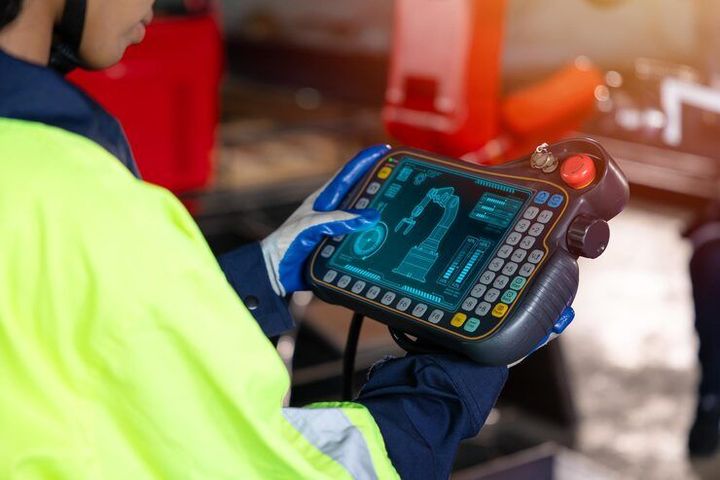
For example, researchers have made progress in developing laboratory-based XRF spectrometry-computed tomography (CT) for biomedical imaging, allowing for the tracking of nanocarriers in vivo . This represents a significant step forward in nanomedicine by enabling quantitative, tissue-level mapping of therapeutic agents . Another development involves improving benchtop XRF-CT systems with advanced detectors and correction algorithms to enhance spatial resolution and sensitivity for imaging high-Z tracers like gadolinium nanoparticles . The use of deep learning frameworks is also being explored to denoise low-dose XRF-CT images, balancing image quality with reduced radiation exposure, which could make in vivo imaging safer . The emergence of portable and handheld XRF devices is another key trend, as industries demand more flexible, on-site material testing. These devices provide instant, non-destructive testing, enabling workers in automotive, construction, and aerospace to perform on-the-spot material analysis .
Regulatory Framework and Guidelines
The use of XRF analyzers, particularly those that generate ionizing radiation, is subject to regulations to ensure safety and compliance. In India, the Atomic Energy Regulatory Board (AERB) provides comprehensive guidelines for the procurement, operation, and decommissioning of radiation-generating equipment. The e-LORA (e-Licensing of Radiation Applications) system is a digital platform for managing these regulatory processes .
According to the e-LORA guidelines released in 2025, end-users of X-ray fluorescence systems, both cabinet and hand-held types, must follow specific steps for registration. The process begins with the registration of the institute, followed by procurement of the equipment, equipment receipt intimation, and finally, obtaining registration for operation. The guidelines also cover the decommissioning of radiation equipment and require that a suitable survey radiation meter, capable of measuring background radiation levels, be procured. The resolution of this survey meter must be at least 0.01 µSv/h and it must be calibrated . This ensures that all operations involving XRF devices maintain radiation exposure As Low As Reasonably Achievable (ALARA) .
| Step | Purpose | Regulatory Form / Process |
|---|---|---|
| Step 1 | Institute Registration | Register Institute (one-time process) |
| Step 2 | Equipment Procurement | Procurement of Radiation Equipment |
| Step 3 | Equipment Receipt | Equipment Receipt Intimation |
| Step 4 | Operation | License / Registration for Operation |
| Step 5 | Decommissioning | Decommissioning & Intimation |
Essential Tools and Resources
To effectively use, analyze, and interpret data from XRF analyzers, a range of tools and resources is available.
Analysis and Visualization Software: Specialized software is crucial for processing the complex data generated by XRF instruments.
Larch: An open-source Python library and application suite for analyzing X-ray fluorescence and X-ray absorption spectroscopy data. It provides tools for visualizing, processing, and fitting XRF spectra and maps .
XRF-Maps: An open-source C++ software package designed for the analysis of XRF data sets, particularly for 3D imaging. It supports various analytical methods, such as region of interest (ROI) summation, principal component analysis, and spectral fitting .
Educational and Training Resources: Manufacturers and scientific organizations offer resources to help users understand XRF technology and its applications.
Application Notes and eLearning: Libraries of educational materials, including application notes, videos, and on-demand webinars, are available to illustrate how XRF analyzers are used across diverse industries .
Reference Materials and Standards: The quality of XRF analysis depends heavily on proper calibration.
Certified Reference Materials (CRMs): These are samples with a certified concentration of one or more elements. They are essential for calibrating XRF analyzers and validating the accuracy of results .
Drift Monitors: These are stable samples used to check the long-term stability of the instrument. By measuring a drift monitor periodically, any changes in the instrument's response can be corrected for, ensuring consistent results over time .
Frequently Asked Questions
1. What is the main principle behind XRF analyzers?
XRF analyzers work by using high-energy X-rays to excite atoms in a sample. The atoms then release energy as secondary (fluorescent) X-rays. Each element produces fluorescent X-rays with a unique energy, allowing the instrument to identify and measure the concentration of elements present .
2. What are the two main types of XRF technologies?
The two primary types are Energy Dispersive XRF (EDXRF) and Wavelength Dispersive XRF (WDXRF). EDXRF measures the energy of the fluorescent X-rays and can analyze multiple elements simultaneously, making it faster for many applications. WDXRF uses a crystal to separate X-rays based on their wavelength and offers higher resolution, which is useful for complex samples and lower detection limits .
3. Is using a handheld XRF analyzer safe?
When used correctly, handheld XRF analyzers are safe. The radiation exposure is similar to that from a medical or dental X-ray. The ALARA principle (As Low as Reasonably Achievable) is applied, which emphasizes minimizing exposure time, maximizing distance from the source, and using proper shielding. Users must always point the analyzer at the sample and never at a person or body part .
4. What are the limitations of XRF analysis?
XRF cannot detect very light elements, such as hydrogen, carbon, nitrogen, and oxygen, because the fluorescent X-rays they produce are too weak to be detected effectively . Additionally, XRF provides information about elemental composition but not the chemical structure or molecular form of the sample. Accurate results require proper sample preparation and calibration to ensure the sample surface is homogenous and flat .
5. How does XRF analysis contribute to recycling efforts?
XRF technology is increasingly used in recycling and waste management to quickly identify and separate valuable materials from waste streams. For instance, handheld XRF analyzers can sort metal scrap by identifying the specific alloy composition of metal pieces. They are also used in battery recycling to identify the type of cathode materials, such as distinguishing between nickel-cobalt-manganese (NCM) and lithium-iron-phosphate (LFP) batteries, which require different recycling processes .
Conclusion
X-ray fluorescence analysis stands as an essential technology for non-destructive elemental analysis across a broad spectrum of disciplines, from industrial quality control and environmental science to cultural heritage preservation. Its strength lies in its ability to provide rapid, reliable, and non-invasive elemental identification. The ongoing developments in instrumentation, data analysis, and portability continue to expand its capabilities and applications. As regulatory frameworks evolve to ensure its safe use, and as open-source tools make data analysis more accessible, XRF will remain a cornerstone of modern analytical science.