AI image enhancers are digital tools that use artificial intelligence and machine learning algorithms to improve the visual quality of images. These systems exist because traditional image editing techniques often require manual adjustments, technical expertise, and time-consuming processes. AI-based image enhancement automates many of these tasks by analyzing patterns in pixels and learning how to restore, sharpen, or upscale images efficiently.
The foundation of AI image enhancement lies in computer vision and deep learning. Neural networks are trained on large datasets of images to understand how high-quality visuals differ from lower-quality ones. Over time, these models learn how to reduce noise, correct blur, enhance resolution, and restore details that may not be easily visible to the human eye.
As digital images became central to communication, education, research, and media, the need for reliable image optimization tools increased. AI image enhancers emerged to support individuals and organizations working with photographs, scanned documents, historical archives, medical imagery, and digital content creation. Their purpose is not to alter reality but to improve clarity and usability while preserving original image characteristics.
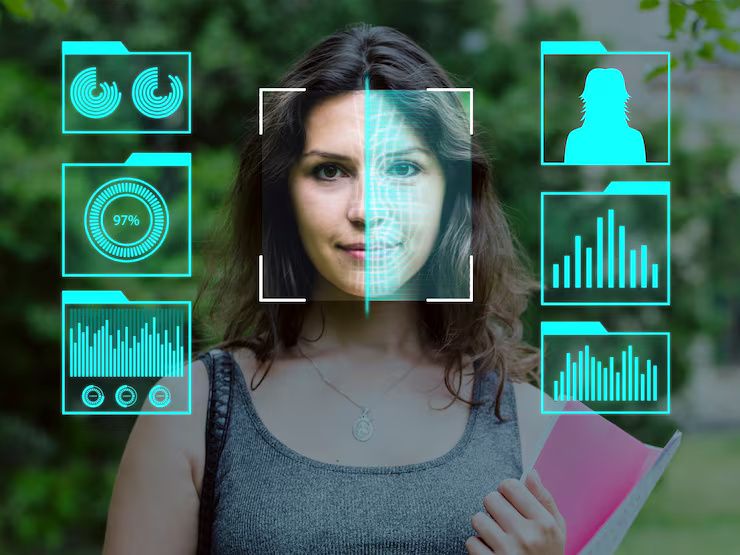
Importance
AI image enhancement matters today because visual information plays a critical role across many fields. From education and research to healthcare and digital publishing, high-quality images help improve understanding, accuracy, and accessibility.
Key reasons this topic is important include:
Improving image clarity
Low-resolution or blurred images can limit interpretation. AI image enhancement technology helps restore clarity, making visuals easier to analyze and understand.
Supporting accessibility
Clear images improve accessibility for educational materials, digital documents, and visual archives, benefiting learners and researchers alike.
Enhancing efficiency
Automated image processing reduces the need for manual editing, saving time while maintaining consistency across large image collections.
Preserving historical and scientific data
AI image enhancers are increasingly used to restore old photographs, manuscripts, and scientific imagery without physically altering original materials.
Supporting modern digital workflows
Fields such as computer vision research, data science, and content moderation rely on optimized images for accurate model training and evaluation.
AI-based image enhancement helps solve common problems such as pixelation, image noise, poor lighting, and compression artifacts. By improving visual quality, these tools support more accurate analysis and better communication of information.
Recent Updates
AI image enhancement has advanced significantly over the past year due to improvements in deep learning models, computational efficiency, and dataset quality.
Generative AI integration (2024–2025)
Recent developments introduced generative models that can reconstruct missing details more accurately. These models predict visual information using learned patterns rather than simple interpolation, resulting in more natural-looking enhancements.
Improved super-resolution algorithms (2024)
Super-resolution techniques have become more precise, allowing AI systems to upscale images while preserving edges, textures, and fine details. This has been especially useful in satellite imagery and scientific visualization.
Edge-aware enhancement models (2024)
New approaches focus on preserving edges and boundaries during enhancement. This reduces distortion and improves realism, particularly in portraits and document images.
Lower computational requirements (late 2024)
Optimization improvements made AI image enhancement more accessible on standard hardware. Lighter models now perform complex enhancements without requiring advanced computing resources.
Ethical AI discussions (2024–2025)
Increased attention has been given to responsible image enhancement, emphasizing transparency and the distinction between enhancement and manipulation. Guidelines encourage clear documentation when AI-enhanced images are used in academic or professional contexts.
These updates reflect how AI image enhancers continue evolving toward higher accuracy, efficiency, and ethical clarity.
Laws or Policies
AI image enhancement is influenced by regulations related to data protection, intellectual property, and ethical AI usage. While laws vary by country, several common principles apply.
Data protection and privacy laws
Images containing personal or sensitive information are subject to data protection regulations. AI systems must process images in ways that respect privacy rights and data security requirements.
Copyright and intellectual property rules
Enhancing copyrighted images does not change ownership rights. AI-enhanced images are generally treated as derivative works, meaning original copyright protections still apply.
Transparency and disclosure guidelines
In academic, journalistic, and scientific contexts, there is growing emphasis on disclosing when images have been enhanced using AI. This supports trust and prevents misinterpretation.
AI governance frameworks
Some regions have introduced broader AI governance policies that address accountability, fairness, and responsible model deployment. Image enhancement tools may fall under these frameworks when used at scale.
Sector-specific standards
Fields such as healthcare, research publishing, and legal documentation may impose stricter rules on image enhancement to ensure accuracy and prevent misrepresentation.
These policies aim to ensure that AI image enhancement is used responsibly, ethically, and with appropriate transparency.
Tools and Resources
Many educational and technical resources help users understand AI image enhancement and its underlying processes. These tools focus on learning, analysis, and experimentation rather than commercial promotion.
Image processing libraries
-
Open-source computer vision libraries used for studying enhancement algorithms
-
Machine learning frameworks that support image model training and testing
Research platforms
-
Academic journals publishing studies on super-resolution and noise reduction
-
AI research repositories documenting image processing benchmarks
Visualization and analysis tools
-
Software for comparing original and enhanced images
-
Tools that display pixel-level changes and enhancement metrics
Educational resources
-
Online courses explaining computer vision fundamentals
-
Tutorials on neural networks and image datasets
Performance evaluation tools
-
Image quality assessment metrics such as PSNR and SSIM
-
Benchmark datasets for evaluating enhancement accuracy
Below is a simple table illustrating common enhancement tasks:
| Enhancement Task | Description | Typical Use Case |
|---|---|---|
| Noise Reduction | Removes visual grain and artifacts | Low-light images |
| Super Resolution | Increases image resolution | Archived photos |
| Sharpening | Improves edge clarity | Document scans |
| Color Correction | Balances tones and contrast | Faded images |
These resources help users better understand how AI image enhancement works and how results are evaluated.
FAQs
What is an AI image enhancer?
An AI image enhancer is a system that uses machine learning and computer vision techniques to improve image quality by enhancing resolution, reducing noise, and restoring details.
How does AI improve image resolution?
AI models analyze patterns from high-quality images during training. When enhancing an image, the model predicts missing details based on learned visual structures.
Is AI image enhancement the same as image manipulation?
No. Enhancement focuses on improving clarity and visibility while maintaining original content. Manipulation involves altering or adding elements, which raises different ethical considerations.
Can AI image enhancement be used for old photographs?
Yes. AI image enhancers are commonly used to restore historical images by reducing damage, improving contrast, and clarifying details without altering original materials.
Are there limitations to AI image enhancement?
Yes. Results depend on image quality, model training, and context. AI cannot accurately reconstruct details that were never present, and excessive enhancement may introduce artifacts.
Conclusion
AI image enhancement has become an important part of modern digital workflows, supporting clearer communication, improved analysis, and efficient visual processing. By combining machine learning image processing with advanced computer vision algorithms, these systems help restore and optimize images across many domains.
As technology continues to evolve, AI image enhancers are becoming more accurate, efficient, and accessible. At the same time, legal frameworks and ethical guidelines emphasize responsible usage and transparency. Understanding how these tools work, their limitations, and their regulatory context allows individuals and organizations to use AI image enhancement thoughtfully and effectively.