AI Marketing Tools Explained: Learn the Core Concepts and Uses
Artificial intelligence is transforming how marketing works across industries. AI marketing tools use data, automation, and machine learning to improve decision-making and campaign performance. These tools help analyze customer behavior, predict trends, and deliver personalized experiences at scale.
As digital channels continue to grow, businesses rely on AI to handle complex marketing tasks efficiently. From content creation to audience targeting, AI tools simplify processes that once required significant manual effort. Understanding the core concepts behind these tools is essential for modern marketers.
What Are AI Marketing Tools?
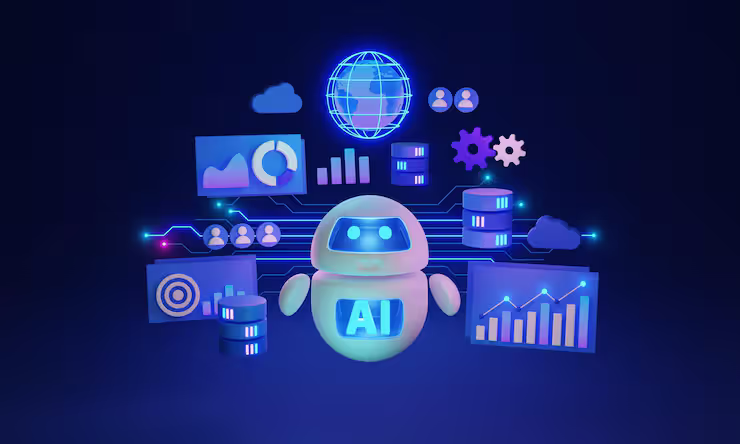
AI marketing tools are software applications powered by artificial intelligence technologies. They use algorithms, data models, and automation to perform marketing tasks more effectively. These tools can process large amounts of data quickly and identify patterns that humans might miss.
They are used in areas such as email campaigns, social media management, customer segmentation, and analytics. The goal is to improve accuracy, efficiency, and customer engagement. Instead of relying on guesswork, marketers can make data-driven decisions.
Key Technologies Behind AI Marketing
Several technologies form the foundation of AI marketing tools:
- machine learning for pattern recognition and predictions
- natural language processing for understanding and generating text
- data analytics for insights and reporting
- computer vision for analyzing images and videos
These technologies work together to automate tasks and enhance marketing outcomes.
Core Concepts of AI in Marketing
To understand AI marketing tools, it is important to learn the core concepts that drive them. These concepts explain how AI processes data and delivers insights.
Data Collection and Analysis
AI tools depend heavily on data. They collect information from websites, social media, emails, and customer interactions. This data is then analyzed to identify trends and behaviors.
For example, AI can track how users interact with a website. It can identify which pages they visit most and how long they stay. This helps marketers improve user experience and engagement.
Automation and Efficiency
Automation is one of the main benefits of AI marketing tools. Repetitive tasks such as sending emails, scheduling posts, and managing campaigns can be handled automatically.
This allows marketers to focus on strategy and creativity. Automation also reduces errors and ensures consistency across campaigns.
Personalization
AI enables highly personalized marketing experiences. It can analyze user preferences and deliver content tailored to individual needs.
Examples include:
- personalized email recommendations
- targeted advertisements
- customized website content
Personalization improves engagement and increases the chances of conversion.
Predictive Analytics
Predictive analytics uses historical data to forecast future outcomes. AI tools can predict customer behavior, such as the likelihood of making a purchase or interacting with a campaign.
This helps marketers plan strategies more effectively. They can focus on high-potential audiences and optimize their efforts.
Types of AI Marketing Tools
AI marketing tools come in various forms, each designed for specific tasks. Understanding these types helps in selecting the right tools for different marketing needs.
Content Creation Tools
These tools assist in generating written content, captions, and ideas. They use natural language processing to produce human-like text.
They are useful for:
- blog writing
- social media posts
- email content
Customer Relationship Management Tools
AI-powered CRM tools help manage customer interactions and data. They provide insights into customer behavior and preferences.
Features often include:
- automated follow-ups
- customer segmentation
- behavior tracking
Social Media Management Tools
These tools help schedule posts, analyze performance, and engage with audiences. AI can suggest the best times to post and recommend content strategies.
Analytics and Reporting Tools
Analytics tools use AI to process large datasets and generate insights. They help marketers understand campaign performance and identify areas for improvement.
Chatbots and Virtual Assistants
Chatbots use AI to interact with users in real time. They can answer questions, guide users, and improve customer experience.
Applications of AI Marketing Tools
AI marketing tools are used across various marketing activities. Their applications continue to expand as technology evolves.
Audience Segmentation
AI can divide audiences into specific groups based on behavior, interests, and demographics. This allows marketers to target the right audience with relevant messages.
Campaign Optimization
AI tools analyze campaign performance and suggest improvements. They can adjust targeting, timing, and messaging for better results.
Email Marketing
AI helps create personalized email campaigns. It can determine the best time to send emails and suggest subject lines that increase open rates.
Content Recommendations
AI tools recommend products, articles, or videos based on user preferences. This keeps users engaged and encourages interaction.
Ad Targeting
AI improves advertising by identifying the most relevant audience. It ensures that ads reach users who are more likely to respond.
Benefits of Using AI Marketing Tools
AI marketing tools offer several advantages that make them valuable for modern marketing strategies.
- improved efficiency through automation
- better decision-making using data insights
- enhanced customer experiences through personalization
- faster analysis of large datasets
- increased accuracy in targeting and predictions
These benefits help marketers achieve better results with less effort.
Challenges and Limitations
While AI marketing tools are powerful, they also have some limitations. Understanding these challenges helps in using them effectively.
Data Privacy Concerns
AI tools rely on user data, which raises privacy concerns. Marketers must ensure that data is collected and used responsibly.
Dependence on Data Quality
The accuracy of AI predictions depends on the quality of data. Poor or incomplete data can lead to incorrect insights.
Learning Curve
Some AI tools require time to understand and use effectively. Marketers need to learn how to interpret data and apply insights.
Lack of Human Creativity
AI can assist in content creation, but it cannot fully replace human creativity. A balanced approach is necessary for effective marketing.
Comparison of Traditional vs AI Marketing
Below is a simple comparison to understand the difference between traditional marketing methods and AI-driven marketing:
| Aspect | Traditional Marketing | AI Marketing Tools |
|---|---|---|
| Decision Making | Based on assumptions | Data-driven insights |
| Personalization | Limited | Highly personalized |
| Efficiency | Time-consuming | Automated processes |
| Data Analysis | Manual and slow | Fast and accurate |
| Customer Interaction | Generic communication | Real-time engagement |
This comparison shows how AI enhances marketing capabilities.
Future of AI Marketing Tools
AI marketing tools are expected to evolve rapidly. As technology advances, these tools will become more accurate and efficient. They will also integrate with more platforms, creating seamless marketing experiences.
Future trends may include:
- advanced voice and visual search capabilities
- deeper personalization using real-time data
- improved automation across multiple channels
- smarter predictive analytics
Marketers who adapt to these changes will be better prepared for the future.
How to Get Started with AI Marketing
Starting with AI marketing tools does not require advanced technical knowledge. A step-by-step approach can make the process easier.
Begin with Clear Goals
Define what you want to achieve. This could include improving engagement, increasing conversions, or enhancing customer experience.
Choose the Right Tools
Select tools based on your needs. Focus on tools that align with your marketing goals and offer relevant features.
Learn and Experiment
Take time to understand how the tools work. Experiment with different strategies to see what delivers the best results.
Monitor and Improve
Track performance regularly. Use insights provided by AI tools to refine your marketing strategies.
Conclusion
AI marketing tools are changing the way marketing operates. They provide powerful capabilities such as automation, personalization, and predictive analytics. These tools help marketers make better decisions and improve overall performance.
Understanding the core concepts and uses of AI marketing tools is essential for staying competitive. While challenges exist, the benefits far outweigh the limitations when used correctly. As technology continues to evolve, AI will play an even bigger role in shaping the future of marketing.