Autonomous Delivery Drones Overview: Smart Logistics & Drone Delivery Systems
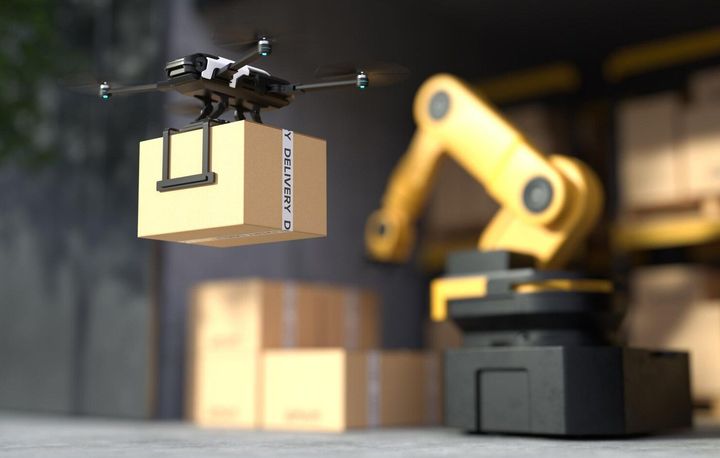
Autonomous delivery drones are unmanned aerial vehicles designed to transport goods without direct human control. These systems use technologies such as artificial intelligence, GPS navigation, sensors, and real-time data processing to deliver packages efficiently.
The idea of drone-based logistics emerged as industries began exploring faster and more flexible delivery methods, especially in areas where traditional transportation faces challenges like traffic congestion or difficult terrain. Companies such as Amazon and Alphabet have invested heavily in drone delivery systems, helping bring the concept closer to everyday use.
Smart logistics refers to the integration of advanced technologies like automation, data analytics, and connected systems into supply chain operations. Autonomous drones are a key part of this transformation, enabling faster, contactless, and more efficient delivery networks.
Why Autonomous Drone Delivery Matters Today
The rise of e-commerce, urbanization, and demand for faster deliveries has made logistics more complex. Autonomous delivery drones help address several modern challenges:
- Reduced delivery time: Drones can bypass traffic and deliver goods directly to locations.
- Improved last-mile delivery: They solve one of the most expensive and time-consuming parts of logistics.
- Access to remote areas: Drones can reach rural or disaster-affected regions where roads are limited.
- Lower environmental impact: Electric-powered drones reduce carbon emissions compared to traditional vehicles.
Industries that benefit include:
- Healthcare (medical supplies and emergency deliveries)
- Retail and e-commerce
- Food and grocery distribution
- Disaster response and humanitarian aid
Below is a simple comparison of traditional delivery vs drone delivery systems:
| Feature | Traditional Delivery | Drone Delivery |
|---|---|---|
| Delivery Speed | Moderate | High |
| Traffic Dependency | High | None |
| Operational Flexibility | Limited | High |
| Environmental Impact | Higher emissions | Lower emissions |
| Accessibility | Road-dependent | Air-based access |
Recent Developments and Trends in Drone Delivery
The past year has seen significant progress in autonomous delivery drone technology and implementation.
- 2025: Zipline expanded its drone delivery network for medical supplies in multiple countries, improving healthcare access in remote regions.
- Early 2026: Wing, a subsidiary of Alphabet, increased commercial drone delivery operations in urban areas, focusing on small-package logistics.
- Many logistics companies are integrating AI-powered route optimization to improve efficiency and safety.
- Advances in battery technology have increased flight range and payload capacity.
- Integration with smart cities and IoT infrastructure is becoming more common.
A growing trend is the use of hybrid delivery systems, where drones work alongside ground vehicles to optimize the supply chain.
Another key development is autonomous navigation systems, which allow drones to avoid obstacles, adapt to weather conditions, and operate safely in complex environments.
Regulations and Policies Affecting Drone Delivery
Drone delivery systems are highly regulated due to safety, privacy, and airspace concerns. Different countries have developed specific frameworks to manage drone operations.
In India, drone usage is governed by the Directorate General of Civil Aviation (DGCA). Key aspects include:
- Mandatory drone registration on the Digital Sky platform
- Defined airspace zones (green, yellow, red)
- Restrictions on altitude and flight paths
- Requirement for remote pilot certification in certain cases
Globally, organizations like the Federal Aviation Administration and the European Union Aviation Safety Agency regulate drone operations with rules such as:
- Visual line-of-sight limitations (in some regions)
- No-fly zones near airports and sensitive areas
- Data protection and privacy compliance
Governments are gradually updating policies to support commercial drone delivery while ensuring public safety. Regulatory sandboxes and pilot programs are also being introduced to test new drone technologies in controlled environments.
Useful Tools and Resources for Drone Logistics
Several tools and platforms support the development and operation of autonomous delivery drones:
-
Flight Planning Software
- Tools for mapping routes, managing airspace, and optimizing delivery paths
-
Drone Simulation Platforms
- Used for testing drone behavior in virtual environments before real-world deployment
-
Data Analytics Platforms
- Help analyze delivery performance, efficiency, and operational data
-
AI and Machine Learning Frameworks
- Enable autonomous navigation, obstacle detection, and predictive maintenance
-
Regulatory Platforms
- Systems like Digital Sky in India provide permissions and compliance management
-
Geospatial Mapping Tools
- Provide terrain and environmental data for accurate route planning
These resources help businesses and researchers build safer and more efficient drone delivery systems.
Frequently Asked Questions About Autonomous Delivery Drones
What is an autonomous delivery drone?
An autonomous delivery drone is an unmanned aircraft that uses software, sensors, and GPS to transport goods without direct human control during the flight.
How safe are drone delivery systems?
Modern drones use advanced safety features such as collision avoidance systems, geofencing, and real-time monitoring. Regulations also ensure safe operation in controlled airspace.
Can drones deliver in all weather conditions?
Drones can operate in mild weather, but strong winds, heavy rain, or extreme conditions can limit their performance and safety.
What types of goods can drones deliver?
Drones are typically used for lightweight items such as medical supplies, small packages, food items, and essential goods.
Are drone deliveries widely available?
Drone delivery is still expanding. It is currently available in select regions and is being tested in many countries as part of pilot programs.
Conclusion
Autonomous delivery drones represent a significant advancement in smart logistics systems. By combining artificial intelligence, automation, and aerial mobility, these technologies are reshaping how goods are transported and delivered.
They offer solutions to modern challenges such as traffic congestion, delivery delays, and limited accessibility in remote areas. At the same time, evolving regulations and technological improvements are ensuring that drone delivery systems become safer and more reliable.