Bakery Equipment: Complete Guide to Commercial Baking Machines and Essential Tools
Bakery equipment plays an important role in producing consistent, high-quality baked products.
Whether preparing bread, cakes, pastries, cookies, pizzas, or other baked goods, the right equipment helps improve efficiency, maintain product quality, and simplify daily operations.
Modern bakeries use a wide range of commercial bakery equipment to handle mixing, dough preparation, proofing, baking, cooling, slicing, and packaging. Each machine is designed for a specific stage of the baking process, making production smoother and more organized.
From small neighborhood bakeries to large food production facilities, reliable baking equipment supports consistent results while maintaining food safety and hygiene standards. This guide explains bakery equipment, its major types, working process, benefits, applications, and future industry developments in easy-to-understand language.
Understanding the Concept
Bakery equipment includes machines, tools, and production systems used throughout the baking process. Instead of performing every task manually, commercial baking machines help automate repetitive processes while maintaining consistent product quality.
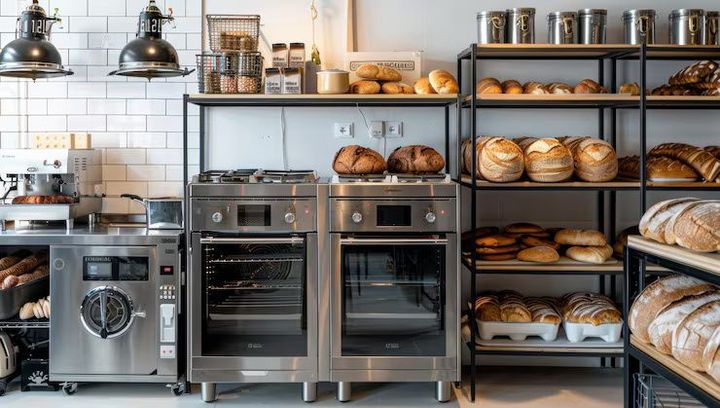
A complete bakery production line may include dough mixers, spiral mixers, planetary mixers, dough sheeters, dough dividers, proofing cabinets, deck ovens, rotary rack ovens, cooling racks, bread slicers, and packaging machines.
Each piece of equipment performs a dedicated function, helping maintain product consistency from ingredient preparation to finished baked goods.
For example, when preparing bread, flour, water, yeast, and other ingredients are first mixed, then the dough is divided, shaped, proofed, baked, cooled, sliced, and packaged using different bakery machines.
Key Types or Categories
Commercial bakery equipment is available in several categories.
Dough Mixing Equipment
Mixers prepare dough by blending ingredients evenly.
Common types include:
- Spiral mixers
- Planetary mixers
- Horizontal mixers
- Vertical mixers
- Dough kneading machines
Each mixer is suitable for different bakery products.
Dough Preparation Equipment
After mixing, dough preparation equipment shapes and portions the dough.
Examples include:
- Dough dividers
- Dough rounders
- Dough sheeters
- Dough moulders
- Dough cutters
These machines improve consistency and reduce manual effort.
Proofing Equipment
Proofing cabinets create controlled temperature and humidity conditions that allow dough to rise properly before baking.
Consistent proofing helps improve texture, volume, and overall product quality.
Baking Equipment
Commercial ovens are among the most important bakery machines.
Popular oven types include:
- Deck ovens
- Rotary rack ovens
- Convection ovens
- Tunnel ovens
- Pizza ovens
Each oven supports different baking requirements.
Cooling Equipment
After baking, products must cool before slicing or packaging.
Cooling equipment includes:
- Cooling racks
- Cooling conveyors
- Air circulation systems
Proper cooling helps maintain product texture.
Packaging Equipment
Packaging equipment prepares baked products for storage and distribution.
Examples include:
- Bread bagging machines
- Flow wrapping machines
- Vacuum packaging machines
- Labeling machines
- Sealing machines
Proper packaging helps preserve freshness and presentation.
Important Subsections
Spiral Mixers
Spiral mixers are widely used for bread dough because they gently mix ingredients while maintaining dough structure.
They are suitable for large batches and continuous production.
Planetary Mixers
Planetary mixers are commonly used for:
- Cake batter
- Cream
- Frosting
- Cookie dough
- Whipped mixtures
Different attachments make them suitable for various bakery tasks.
Deck Ovens
Deck ovens provide even heat distribution and are commonly used for artisan bread, pizzas, pastries, and specialty baked products.
Rotary Rack Ovens
Rotary rack ovens rotate baking racks during baking, helping products bake evenly throughout the chamber.
These ovens are often used for high-volume bakery production.
Bread Slicers
Bread slicers produce uniform slices quickly while maintaining product appearance.
Consistent slicing improves presentation and packaging.
How It Works
Commercial bakery equipment follows a structured production process.
Step 1: Ingredient Preparation
Ingredients are measured accurately.
Typical ingredients include:
- Flour
- Water
- Yeast
- Sugar
- Salt
- Butter
- Eggs
Accurate measurements support consistent baking results.
Step 2: Mixing
Commercial mixers combine ingredients into a uniform dough or batter.
Mixing time varies depending on the product.
Step 3: Dough Processing
After mixing, dough passes through equipment such as:
- Dough dividers
- Dough rounders
- Dough sheeters
- Moulders
This stage prepares dough for proofing.
Step 4: Proofing
Proofing cabinets maintain controlled environmental conditions that encourage yeast activity and dough expansion.
Step 5: Baking
Prepared dough enters commercial ovens where controlled heat transforms it into finished baked products.
Temperature and baking time depend on the recipe.
Step 6: Cooling
Products cool naturally or through cooling systems before further processing.
Proper cooling prevents excess moisture inside packaging.
Step 7: Packaging
Finished products are sliced if necessary and packaged using commercial packaging equipment before storage or distribution.
Benefits and Advantages
Commercial bakery equipment provides several important advantages.
Consistent Product Quality
Automated equipment helps produce uniform size, shape, texture, and appearance across batches.
Improved Production Efficiency
Modern bakery machines reduce manual work and streamline production.
This supports higher output while maintaining consistency.
Better Food Safety
Food-grade equipment supports hygienic production by reducing unnecessary product handling.
Many machines are designed for easy cleaning and maintenance.
Greater Production Capacity
Commercial equipment supports larger production volumes while maintaining consistent quality.
This is particularly valuable for growing bakeries.
Better Dough Handling
Specialized dough processing equipment minimizes damage to dough structure and improves finished product quality.
Energy Efficiency
Many modern bakery ovens include improved insulation and temperature control systems that help optimize energy usage during baking.
Real-World Examples or Applications
Bakery equipment supports many food production environments.
Bread Production
Bread manufacturers commonly use:
- Spiral mixers
- Dough dividers
- Proofing cabinets
- Deck ovens
- Bread slicers
These machines produce consistent loaves efficiently.
Cake Production
Cake preparation typically uses:
- Planetary mixers
- Depositors
- Convection ovens
- Cooling racks
These systems simplify cake production.
Cookie Manufacturing
Cookie production lines may include:
- Dough mixers
- Dough sheeters
- Rotary moulders
- Tunnel ovens
- Packaging machines
Automation improves consistency across large batches.
Pizza Production
Pizza preparation often involves:
- Dough mixers
- Dough sheeters
- Proofers
- Pizza ovens
These machines help maintain uniform crust quality.
Pastry Production
Pastry manufacturers use laminating equipment, sheeters, proofers, and baking ovens to create products with consistent layers and texture.
Important Factors to Understand
Several factors influence bakery equipment performance.
Production Capacity
Equipment should match expected production volume.
Larger operations often require higher-capacity machines than small bakeries.
Product Variety
Different baked products require different equipment.
Bread production equipment may differ from equipment used for cakes or pastries.
Food Safety Standards
Equipment should support hygienic food handling through smooth surfaces and easy cleaning.
Regular sanitation helps maintain product quality.
Maintenance
Routine inspection and maintenance help maintain equipment performance.
Moving components, heating systems, and electrical connections should be checked regularly.
Operator Training
Workers should understand equipment controls, safety procedures, and cleaning methods.
Proper training improves both efficiency and workplace safety.
Future Trends and Industry Insights
Bakery equipment continues evolving through automation and smart manufacturing technologies.
Smart Bakery Equipment
Modern bakery machines increasingly include digital control panels that monitor:
- Temperature
- Mixing speed
- Baking time
- Humidity
- Production settings
These controls improve consistency.
Automated Production Lines
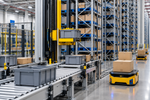
Integrated bakery production lines combine mixing, shaping, proofing, baking, cooling, and packaging into a coordinated workflow.
Automation improves production efficiency.
Artificial Intelligence Monitoring
Artificial intelligence is helping optimize baking parameters by analyzing production data and identifying opportunities for improved consistency.
Energy-Efficient Ovens
New commercial ovens focus on improved insulation, precise temperature control, and optimized heat distribution.
These improvements reduce energy consumption while maintaining baking quality.
Smart Quality Inspection
Advanced camera systems and industrial sensors inspect baked products for:
- Shape
- Color
- Size
- Surface appearance
- Product consistency
This supports reliable quality control.
Conclusion
Bakery equipment is an essential part of modern baking operations, supporting every stage from ingredient preparation to final packaging. Commercial bakery machines such as mixers, proofing cabinets, ovens, cooling systems, slicers, and packaging equipment improve production efficiency while maintaining consistent product quality.
Selecting suitable equipment depends on production goals, product variety, capacity requirements, and food safety practices. Regular maintenance and proper operation further enhance equipment performance and reliability.
As automation, artificial intelligence, digital monitoring, and energy-efficient technologies continue advancing, bakery equipment will become even more precise, productive, and adaptable, helping bakeries maintain high standards of quality and operational efficiency.