Best Type-C Power Banks Guide for Fast Charging Devices
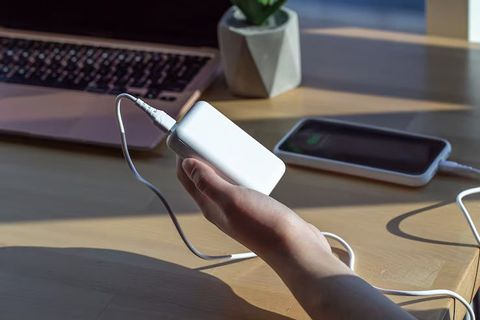
Portable charging has become an important part of everyday life as people rely on smartphones, tablets, laptops, wireless earbuds, smartwatches, and many other electronic devices throughout the day. A Type-C power bank is designed to provide convenient backup power whenever access to a wall charger is unavailable.
When discussing a USB Type-C power bank, the focus is mainly on the presence of a USB-C port that supports both charging the power bank itself and delivering power to connected devices. Modern USB-C ports commonly support Power Delivery (PD) technology, which enables intelligent power management and faster charging for compatible devices.
Unlike older charging standards, USB-C provides greater flexibility because the same port can transfer power in both directions. This makes charging more efficient while reducing the need for multiple charging cables.
Modern Type-C power banks are available in various capacities, charging speeds, sizes, and designs, making them suitable for daily commuting, business travel, outdoor activities, education, and remote work.
Why Type-C Power Banks Matter Today
The increasing number of rechargeable electronic devices has created greater demand for portable power solutions. Battery-intensive applications, video streaming, navigation, photography, gaming, and online communication consume more energy than ever before.
A Type-C power bank helps users maintain device availability throughout the day without depending entirely on fixed charging locations.
Some of the major benefits include:
- Fast charging through USB-C Power Delivery technology
- Support for smartphones, tablets, laptops, cameras, and accessories
- Better compatibility across modern electronic devices
- Reduced need for multiple charging adapters
- Improved energy management through intelligent charging systems
USB-C has also become a common charging standard across many consumer electronics, making Type-C power banks increasingly practical for everyday use.
Understanding Capacity, Power, and Everyday Uses
Choosing the right Type-C power bank involves understanding three essential factors: battery capacity, charging power, and intended usage.
Battery Capacity (mAh)
Battery capacity is measured in milliampere-hours (mAh) and indicates how much energy the power bank can store.
| Capacity | Suitable Usage |
|---|---|
| 5,000–10,000 mAh | Compact daily use with one or two smartphone charges |
| 10,000–20,000 mAh | Multiple phone charges and occasional tablet charging |
| 20,000–27,000 mAh | Travel, remote work, and charging multiple devices |
| Above 27,000 mAh | Extended battery backup for demanding users |
Higher capacity generally provides more charging cycles but also increases the physical size and weight of the power bank.
Output Power (Watts)
Charging speed depends on the output power measured in watts (W).
| Output Power | Typical Use |
|---|---|
| 15–18 W | Standard smartphone charging |
| 20–30 W | Fast charging for many modern smartphones |
| 45–60 W | Tablets and many USB-C laptops |
| 100 W and above | High-performance laptops and multiple device charging |
Some advanced USB-C power banks now support outputs exceeding 140W, requiring certified E-Marker USB-C cables to safely handle higher power levels.
Common Applications
Type-C power banks are widely used for:
- Smartphones
- Tablets
- USB-C laptops
- Wireless earbuds
- Smartwatches
- Digital cameras
- Portable gaming devices
- Bluetooth speakers
Their versatility makes them useful for students, professionals, travelers, and outdoor enthusiasts.
Features That Differentiate the Best Type-C Power Banks
Capacity alone does not determine overall performance. Several additional features contribute to a better user experience.
USB-C Power Delivery Support
Power Delivery technology automatically adjusts voltage and current according to the connected device, enabling faster and safer charging.
Multiple Charging Ports
Many models include:
- USB-C ports
- USB-A ports
- Multiple simultaneous charging outputs
This allows several compatible devices to receive power at the same time.
Integrated USB-C Cable
Some portable models include a built-in USB-C cable, reducing the need to carry additional accessories.
Wireless Charging Compatibility
Certain Type-C power banks also support wireless charging for compatible smartphones and accessories.
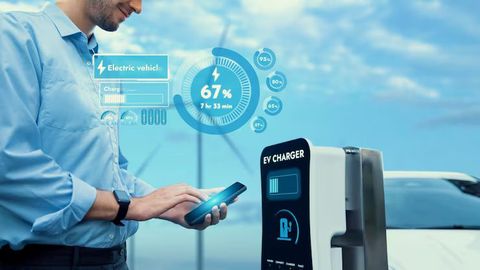
Digital Battery Display
Modern power banks often feature displays showing:
- Remaining battery percentage
- Charging status
- Input power
- Output power
These indicators help users monitor battery levels more accurately.
Safety, Quality, and Reliability
Safety remains one of the most important considerations when selecting any portable battery.
Quality Type-C power banks typically include multiple protection systems designed to improve reliability.
Common safety features include:
- Overcurrent protection
- Overvoltage protection
- Short-circuit protection
- Overheating protection
- Automatic power regulation
- Intelligent charging management
Many products also comply with recognized electrical safety and environmental standards, helping ensure consistent performance during everyday use.
Reliable internal battery management systems also contribute to longer battery lifespan by controlling charging cycles more effectively.
Choosing the Right Power Bank for Different Needs
Different users have different charging requirements.
Everyday Portable Use
Compact models between 10,000 and 20,000 mAh are suitable for:
- Daily commuting
- Office use
- School
- Public transportation
- Light travel
These are generally lightweight and easy to carry.
Travel and Heavy Usage
Long-distance travelers often benefit from higher-capacity power banks between 20,000 and 27,000 mAh.
These models typically support:
- Multiple charging ports
- Higher charging speeds
- Extended battery backup
- Simultaneous charging of several devices
Laptop Charging
Charging laptops requires both higher capacity and higher power output.
Important considerations include:
- At least 20,000 mAh capacity
- Minimum 30W output
- 45W–60W recommended for many laptops
- Certified USB-C cables for higher wattage
Users should always verify the power requirements of their specific devices before selecting a compatible power bank.
Recent Updates in Type-C Power Bank Technology
The portable charging industry has continued evolving throughout 2025 and 2026.
Recent developments include:
- Wider adoption of USB-C Power Delivery standards
- Increased availability of 100W to 140W charging support
- Improved battery efficiency
- Faster self-recharging capabilities
- More compact high-capacity battery designs
- Enhanced intelligent charging chips
- Better thermal management systems
- Improved battery health monitoring
Manufacturers are also focusing on reducing charging time while maintaining battery safety through smarter power management technologies.
The growing adoption of USB-C across smartphones, tablets, laptops, and accessories has further increased compatibility between devices.
Laws and Policies Related to Type-C Power Banks
Many countries have introduced regulations encouraging standardized charging solutions and improved consumer safety.
Common regulatory areas include:
- Electrical safety certification
- Battery transportation guidelines
- Environmental compliance
- Hazardous substance restrictions
- Recycling requirements for lithium batteries
Many regions also encourage the adoption of USB-C charging standards to reduce electronic waste by minimizing the need for multiple chargers and cables.
Users should always follow airline regulations regarding lithium battery capacity when traveling internationally, as different aviation authorities may specify maximum allowable battery limits for carry-on luggage.
Helpful Tools and Resources
Several resources can help users better understand and manage Type-C power banks.
Useful resources include:
- Battery capacity calculators
- USB-C Power Delivery compatibility charts
- Device charging requirement guides
- Battery health monitoring applications
- USB power testing meters
- Portable charging comparison templates
- Product specification checklists
- Battery maintenance guides
These resources help users compare battery capacity, charging speed, compatibility, and power requirements more effectively.
Frequently Asked Questions
What is a USB-C Power Delivery power bank?
A USB-C Power Delivery power bank uses intelligent charging technology to deliver appropriate power levels for compatible devices, allowing faster and safer charging.
How much battery capacity is suitable for everyday use?
Most everyday users find 10,000–20,000 mAh sufficient for multiple smartphone charges while maintaining good portability.
Can a Type-C power bank charge laptops?
Yes. Many USB-C power banks support laptop charging, provided they deliver sufficient output power, typically between 45W and 100W, depending on the laptop's requirements.
Does higher wattage always mean faster charging?
Not necessarily. Charging speed depends on both the power bank and the connected device supporting the same charging standard and compatible charging protocols.
How can battery lifespan be extended?
Battery lifespan can be improved by:
- Using certified USB-C cables
- Avoiding excessive heat
- Using suitable charging adapters
- Preventing frequent complete battery discharge
- Storing the power bank in moderate temperatures
Conclusion
Type-C power banks have become an essential accessory for powering today's connected devices. Their USB-C ports, combined with Power Delivery technology, provide efficient charging for smartphones, tablets, laptops, and many other electronics.