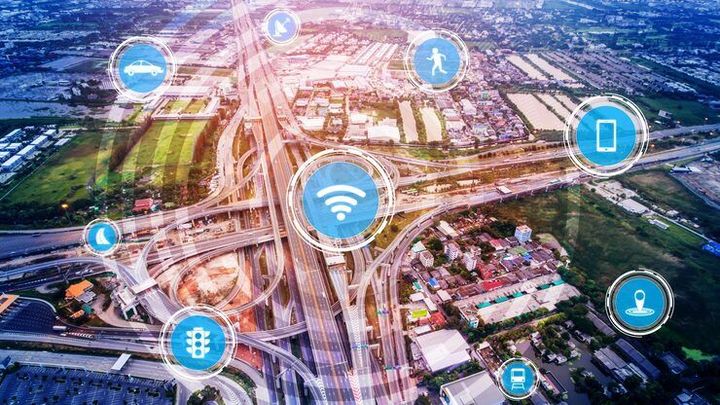
City-wide sensor networks are a key component of modern smart cities, designed to collect and analyze real-time data across urban environments. As cities expand rapidly, these systems help manage infrastructure, resources, and public services more efficiently.
At their core, these networks rely on technologies like IoT, wireless communication, and cloud computing. Sensors gather data, which is transmitted to centralized platforms for processing and analysis, enabling faster and more informed decision-making.
Importance of City-Wide Sensor Networks in Modern Urban Environments
As urban populations grow, managing cities becomes more complex. Sensor networks provide the data needed to improve efficiency, sustainability, and safety.
Key Application Areas
-
Traffic management: Reduces congestion and improves mobility
-
Environmental monitoring: Tracks pollution and climate conditions
-
Energy management: Optimizes consumption and reduces waste
-
Public safety systems: Enhances emergency response and surveillance
Key Benefits
-
Real-time visibility into city operations
-
Faster and more accurate decision-making
-
Reduced operational risks
-
Improved public services
For citizens, this results in shorter travel times, cleaner environments, and safer communities. Industries such as urban planning, transportation, utilities, and healthcare also benefit from continuous data streams.
Recent Updates and Trends (2024–2025)
Advancements in technology have significantly improved how sensor networks are deployed and managed.
Key Developments
-
Edge computing adoption: Processes data closer to the source, reducing latency
-
AI integration: Enhances prediction, anomaly detection, and optimization
-
5G expansion (2024): Enables faster and more reliable connectivity
-
Sustainability focus: Low-power sensors and renewable energy integration
-
Scalability improvements: Easier deployment across cities of different sizes
Sensor Network Data Flow
| Component | Function |
|---|
| Sensors | Collect environmental or operational data |
| Communication Network | Transmit data (Wi-Fi, 5G, LPWAN) |
| Data Platform | Store and process information |
| Analytics Tools | Generate insights from data |
| User Interface | Display data for decision-makers |
These advancements make sensor networks more efficient and responsive to real-world conditions.
Laws and Policies Affecting Sensor Network Deployment
City-wide sensor networks must comply with regulations related to data privacy, cybersecurity, and infrastructure planning.
Key Policy Areas
-
Data protection laws for handling personal and sensitive data
-
Cybersecurity standards for network safety
-
Environmental regulations for deployment and energy usage
-
Urban planning policies for infrastructure integration
Initiatives in India
-
Smart Cities Mission promoting digital urban infrastructure
-
Government frameworks supporting IoT-based systems
Transparency and responsible data usage are essential to build public trust and ensure successful implementation.
Tools and Resources for Sensor Network Deployment
Various tools help in designing, deploying, and managing sensor networks effectively.
Common Tools
-
IoT platforms for device connectivity and management
-
Data analytics software for processing and visualization
-
Geographic Information Systems (GIS) for mapping sensor locations
-
Network simulation tools for planning communication systems
Tool Comparison
| Tool Type | Purpose |
|---|
| IoT Platforms | Connect and manage sensor devices |
| Data Analytics Tools | Analyze and interpret data |
| GIS Software | Visualize spatial data and mapping |
| Network Simulators | Plan and test communication networks |
Additional Resources
-
Technical documentation and guides
-
Open-source IoT frameworks
-
Research papers and case studies
-
Government portals for smart city initiatives
Frequently Asked Questions
What is a city-wide sensor network?
It is a network of interconnected sensors distributed across a city to collect and transmit data for monitoring and management.
How do sensor networks improve urban living?
They provide real-time data that helps optimize traffic, reduce pollution, improve safety, and enhance services.
Are these networks secure?
Security depends on proper implementation of encryption, authentication, and continuous monitoring.
What types of sensors are used?
-
Temperature sensors
-
Air quality monitors
-
Motion detectors
-
Traffic sensors
Can small cities use sensor networks?
Yes, these systems are scalable and can be adapted to cities of any size.
Conclusion
City-wide sensor networks are transforming urban environments by enabling real-time data collection and intelligent decision-making. They help cities address challenges such as congestion, pollution, and resource management more effectively.
With advancements in AI, edge computing, and connectivity, these systems are becoming more powerful and accessible. At the same time, regulations ensure responsible and secure implementation.
For modern cities aiming to improve efficiency and quality of life, sensor networks offer a scalable and practical solution for sustainable urban development.