Coffee filling machines are advanced industrial automation systems designed to accurately dispense ground coffee, whole beans, or instant coffee into containers such as pouches, capsules, jars, and bags. These machines exist to ensure consistent weight, minimize product waste, maintain hygiene, and streamline packaging workflows within modern production environments.
As global coffee consumption continues to expand, manufacturers rely on automated packaging systems to maintain efficiency, reduce human error, and meet strict food safety standards. Coffee filling technology integrates with conveyors, sealing systems, labeling units, and quality control checkpoints, forming a complete production line.
Modern food processing equipment in this segment typically includes:
• Auger fillers for powdered or ground coffee
• Volumetric cup fillers for granules
• Multi-head weighers for whole beans
• Capsule filling systems for single-serve formats
• Vertical form fill seal (VFFS) machines for flexible packaging
These machines are engineered to operate at high speeds while maintaining precision. In competitive markets, production line efficiency directly affects brand reliability and supply chain performance.
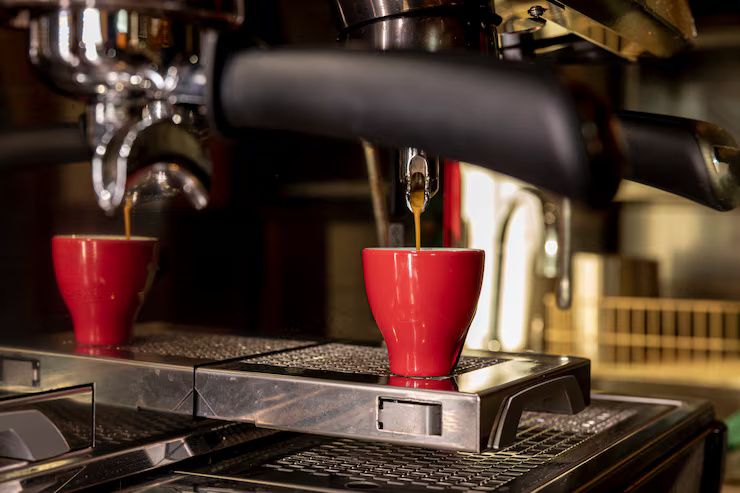
Why Coffee Filling Machines Matter in Today’s Manufacturing Landscape
The coffee industry operates within a fast-paced, high-demand global market. Automation is no longer optional—it is a strategic requirement for consistency and compliance.
Modern coffee filling machines affect:
• Large-scale food manufacturers
• Private-label producers
• Specialty coffee brands
• Contract packaging facilities
• International exporters
Key challenges solved by automated systems include:
• Inconsistent portion control
• Product spillage and material loss
• Cross-contamination risks
• Labor-intensive manual filling
• Packaging speed limitations
The following table highlights the operational differences between manual and automated systems:
| Feature | Manual Filling | Automated Filling Machines |
|---|---|---|
| Filling Accuracy | Moderate | High precision (±0.5–1g typical range) |
| Output Speed | Low to medium | High-speed continuous operation |
| Hygiene Control | Dependent on handling | Enclosed sanitary systems |
| Data Tracking | Limited | Digital monitoring & analytics |
| Scalability | Restricted | Designed for expansion |
From a manufacturing technology perspective, smart factory solutions now integrate programmable logic controllers (PLCs), IoT sensors, and real-time production dashboards. These systems generate operational insights that support predictive maintenance and optimized throughput.
For companies investing in advanced food processing equipment, the goal is not only efficiency but also traceability and regulatory compliance.
Recent Updates and Industry Trends
The coffee packaging equipment industry has seen notable advancements in the past year.
In 2025, several packaging machinery manufacturers introduced AI-assisted calibration systems. These systems use machine learning algorithms to automatically adjust fill weights based on environmental variables such as humidity and vibration.
Another significant development in early 2025 has been the expansion of sustainable packaging compatibility. Equipment manufacturers have redesigned auger fillers and sealing units to handle:
• Compostable films
• Recyclable mono-material pouches
• Paper-based flexible packaging
In mid-2024, industry reports highlighted the increased integration of Industry 4.0 connectivity. Smart sensors now monitor:
• Fill weight deviations
• Seal integrity
• Machine temperature
• Production downtime
Data is transmitted to centralized dashboards, improving real-time decision-making.
Additionally, capsule filling lines have seen upgrades to accommodate recyclable aluminum and plant-based capsule materials, responding to sustainability targets announced across Europe in late 2024.
Robotics integration has also expanded. Collaborative robots (cobots) are now used to:
• Load packaging materials
• Transfer filled units to inspection stations
• Support palletizing operations
These updates demonstrate how manufacturing technology continues to evolve toward digital transformation and environmental responsibility.
Regulatory Framework and Compliance Considerations
Coffee filling machines operate within strict regulatory environments, particularly in food manufacturing.
In the United States, production facilities must comply with regulations enforced by the U.S. Food and Drug Administration (FDA) under the Food Safety Modernization Act (FSMA). This includes:
• Preventive controls for food safety
• Sanitation standards
• Equipment cleaning validation
• Hazard Analysis and Critical Control Points (HACCP) documentation
In the European Union, manufacturers must follow food hygiene regulations such as:
• EU Regulation (EC) No 852/2004 on food hygiene
• Machinery Directive 2006/42/EC
• CE marking requirements
Many modern automated packaging systems are designed with stainless steel construction and easy-clean components to meet hygienic design standards.
Other important compliance areas include:
• Accurate weight labeling regulations
• Environmental packaging directives
• Workplace safety standards
• Electrical certification requirements
Governments in several regions introduced packaging waste reduction targets in 2024–2025, encouraging production lines to support recyclable materials. As a result, filling equipment manufacturers are updating machine compatibility features to align with these evolving policies.
Tools and Resources for Production Optimization
Manufacturers often rely on digital tools and specialized resources to optimize their production lines.
Helpful tools include:
Production Line Efficiency Calculators
These tools estimate throughput rates, downtime impact, and capacity utilization.
OEE (Overall Equipment Effectiveness) Software
Tracks availability, performance, and quality metrics to improve operational outcomes.
PLC Programming Platforms
Used for configuring and monitoring machine logic and process automation.
SCADA Systems
Supervisory Control and Data Acquisition systems provide centralized monitoring for industrial automation.
CAD Design Software
Supports layout planning and space optimization within facilities.
Industrial IoT Dashboards
Allow remote monitoring of filling accuracy, cycle times, and equipment performance.
The following simplified performance visualization illustrates how automation improves output consistency:
Production Output Comparison (Illustrative Example)
Manual Line:
██████████ 60% capacity utilization
Semi-Automated Line:
███████████████ 80% capacity utilization
Fully Automated Line:
████████████████████ 95% capacity utilization
These analytics-driven tools help manufacturers align production targets with quality standards while maintaining operational transparency.
Frequently Asked Questions
What types of coffee products can filling machines handle?
Coffee filling machines can process ground coffee, whole beans, instant powder, and single-serve capsule formats. Different mechanisms—such as auger fillers or multi-head weighers—are selected based on product density and flow characteristics.
How accurate are automated coffee filling systems?
Modern systems typically maintain high precision within small gram-level tolerances. Integrated weighing sensors and feedback loops ensure consistent portion control throughout high-speed operations.
Can coffee filling machines support sustainable packaging?
Yes. Recent equipment models are engineered to handle recyclable, compostable, and mono-material packaging films. Compatibility depends on machine configuration and sealing technology.
How does automation improve food safety?
Automated systems reduce human contact, feature enclosed filling zones, and incorporate clean-in-place (CIP) options. This supports compliance with food safety regulations and hygiene protocols.
What factors influence production line efficiency?
Efficiency depends on machine speed, maintenance scheduling, operator training, packaging material quality, and integration with upstream and downstream equipment.
Conclusion
Coffee filling machines play a central role in modern manufacturing technology. They enable consistent product quality, support industrial automation, and enhance production line efficiency across global markets.
Recent advancements in AI-assisted calibration, sustainable packaging compatibility, and Industry 4.0 connectivity reflect the evolving demands of the food processing sector. Regulatory frameworks further shape machine design, encouraging hygienic construction, traceability, and environmental responsibility.
By integrating smart factory solutions, digital monitoring tools, and compliance-focused engineering, coffee manufacturers can maintain operational reliability while adapting to changing market expectations.
As automation continues to evolve, coffee filling machines will remain a cornerstone of advanced automated packaging systems within modern production lines.