Commercial HVAC System Guide for Understanding Heating Ventilation and Cooling Solutions
Indoor environmental quality plays a vital role in the comfort, health, and productivity of people working in commercial buildings.
Offices, shopping centers, hospitals, educational institutions, hotels, warehouses, and manufacturing facilities all require reliable climate control to maintain comfortable indoor conditions throughout the year. A commercial HVAC system provides this essential function by combining heating, ventilation, and cooling into an integrated solution that regulates temperature, humidity, and air quality.
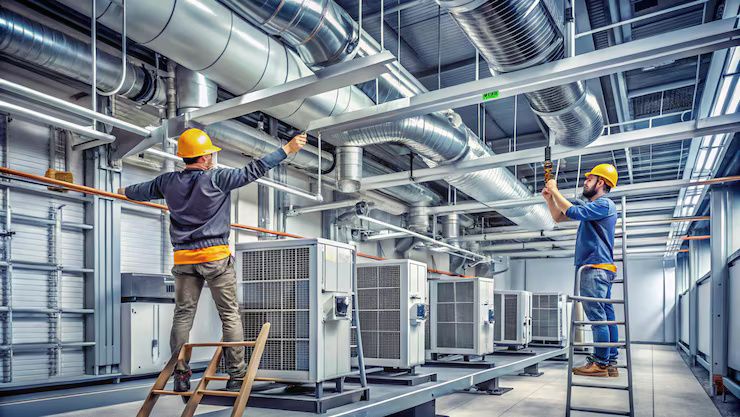
As modern buildings become more energy-conscious and technologically advanced, HVAC systems continue to evolve with improved controls, intelligent monitoring, and efficient equipment designs. Understanding how these systems operate helps facility managers, building owners, engineers, and occupants appreciate the importance of proper environmental control. This commercial HVAC system guide explains the major components, operating principles, practical applications, performance considerations, and future developments that shape today's commercial climate control systems.
This article explores commercial HVAC fundamentals, system components, heating and cooling technologies, ventilation methods, building applications, decision-making factors, and emerging industry trends.
What Is a Commercial HVAC System?
A commercial HVAC system is an integrated building system designed to provide heating, ventilation, and air conditioning for commercial, institutional, and industrial facilities. Unlike residential HVAC equipment, commercial systems are engineered to manage larger indoor spaces, varying occupancy levels, and more complex environmental requirements.
These systems help maintain comfortable temperatures, regulate indoor humidity, circulate fresh air, and improve indoor air quality while supporting efficient building operation.
Commercial HVAC systems are widely used in office buildings, retail centers, healthcare facilities, schools, hotels, airports, warehouses, manufacturing plants, and data centers.
How a Commercial HVAC System Works
A commercial HVAC system operates by coordinating several interconnected processes.
Heating equipment raises indoor temperatures during colder conditions, while cooling equipment removes unwanted heat during warmer periods.
Ventilation systems continuously circulate indoor and outdoor air to maintain fresh air supply and reduce airborne contaminants.
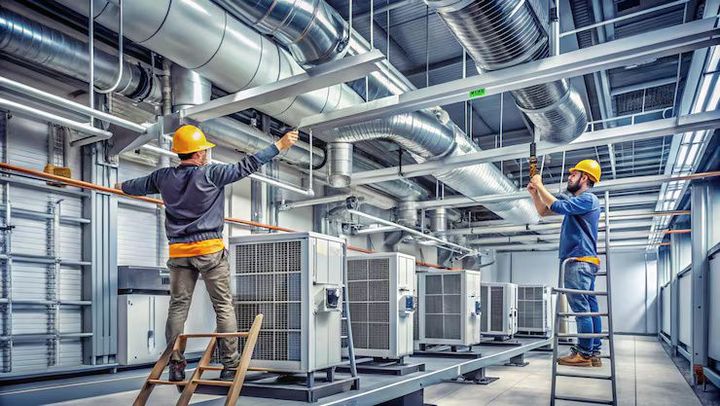
Air handling units distribute conditioned air throughout the building using ductwork or specialized air distribution systems.
Control systems monitor indoor conditions and automatically adjust heating, cooling, airflow, and humidity to maintain desired environmental settings.
These coordinated functions create consistent indoor comfort while supporting building efficiency.
Main Components of a Commercial HVAC System
Several essential components work together to regulate indoor environments.
Heating Equipment
Heating systems generate warm air or heated water using technologies such as furnaces, boilers, heat pumps, or electric heating elements depending on building requirements.
Cooling Equipment
Cooling equipment removes indoor heat through chillers, rooftop units, packaged systems, or refrigeration-based air conditioning equipment.
These systems maintain comfortable indoor temperatures during warmer weather.
Ventilation Systems
Ventilation introduces fresh outdoor air while removing stale indoor air, helping maintain healthy indoor air quality.
Proper ventilation also supports moisture control and occupant comfort.
Air Handling Units
Air handling units condition and distribute air throughout the building using fans, filters, heating elements, cooling coils, and airflow control devices.
Control Systems
Modern control systems continuously monitor indoor environmental conditions and automatically adjust HVAC operation to improve comfort and energy efficiency.
Many systems incorporate programmable schedules and building automation capabilities.
Why Ventilation Matters
Ventilation is one of the most important aspects of commercial HVAC performance.
Fresh air circulation helps reduce indoor pollutants, odors, excess moisture, and airborne particles while improving occupant comfort.
Proper ventilation also supports healthier indoor environments by maintaining balanced airflow throughout occupied spaces.
Buildings with effective ventilation often experience improved indoor environmental quality, particularly in high-occupancy facilities such as schools, hospitals, offices, and conference centers.
Balanced ventilation contributes to both comfort and operational efficiency.
Applications Across Different Industries
Commercial HVAC systems serve a wide range of industries with unique environmental requirements.
Office buildings rely on HVAC systems to maintain comfortable working conditions that support employee productivity throughout the day.
Healthcare facilities require carefully controlled temperature, humidity, and ventilation to support patient care and specialized medical environments.
Educational institutions depend on reliable climate control to create comfortable learning environments across classrooms, laboratories, libraries, and administrative offices.
Retail centers use HVAC systems to enhance customer comfort while protecting merchandise from excessive humidity or temperature fluctuations.
Industrial facilities often require specialized HVAC solutions capable of managing heat generated by manufacturing equipment while maintaining appropriate ventilation for employee safety.
These diverse applications highlight the adaptability of commercial HVAC technology.
Energy Efficiency and Building Performance
Energy efficiency has become a major priority in commercial HVAC design.
Modern systems incorporate variable-speed motors, intelligent controls, energy recovery technologies, and high-efficiency compressors that reduce energy consumption while maintaining indoor comfort.
Building automation systems optimize HVAC performance by adjusting operation according to occupancy, outdoor weather conditions, and scheduled building use.
Well-designed maintenance programs further support efficiency by keeping filters, coils, fans, and mechanical components operating properly.
Improved efficiency contributes to reduced environmental impact while supporting reliable long-term building operation.
Decision Guide: Choosing the Right Commercial HVAC System
Selecting the best commercial HVAC system depends on building size, occupancy patterns, climate conditions, indoor air quality requirements, energy efficiency goals, maintenance considerations, and future expansion plans.
Small commercial buildings often benefit from packaged rooftop systems that combine heating and cooling into compact equipment, while larger facilities may require centralized chilled water systems or advanced building automation solutions capable of managing multiple environmental zones.
A commercial HVAC system comparison generally evaluates heating capacity, cooling performance, ventilation effectiveness, energy efficiency, control capabilities, maintenance accessibility, scalability, and overall operational flexibility.
In many cases, modular HVAC designs tend to work well because they allow buildings to expand or modify climate control systems as operational needs change.
The real difference appears when HVAC system design aligns closely with building usage, occupant comfort expectations, and long-term operational requirements rather than focusing solely on equipment size.
Emerging Trends in Commercial HVAC Technology
Commercial HVAC technology continues advancing rapidly.
Smart building automation systems now provide real-time monitoring, predictive maintenance, and remote equipment management that improve operational efficiency.
Artificial intelligence is increasingly supporting HVAC optimization by analyzing occupancy patterns, weather forecasts, and equipment performance to improve climate control decisions.
Heat pump technology is expanding across commercial applications because of improved efficiency and flexible heating and cooling capabilities.
Indoor air quality monitoring systems are becoming more common as organizations prioritize healthier work environments.
Manufacturers are also developing environmentally responsible refrigerants, energy-efficient equipment, and sustainable system designs that support evolving environmental objectives.
These innovations continue shaping the future of commercial climate control.
Frequently Asked Questions
1. What is a commercial HVAC system?
A commercial HVAC system is an integrated heating, ventilation, and air conditioning solution designed to regulate indoor climate in commercial, institutional, and industrial buildings.
2. What are the main components of a commercial HVAC system?
Major components include heating equipment, cooling equipment, ventilation systems, air handling units, ductwork, filters, and automated control systems.
3. Why is ventilation important in commercial buildings?
Ventilation improves indoor air quality by supplying fresh air, removing contaminants, regulating humidity, and supporting occupant comfort.
4. Where are commercial HVAC systems commonly used?
They are widely used in offices, hospitals, schools, hotels, shopping centers, warehouses, manufacturing facilities, airports, and public buildings.
5. What factors should be considered when selecting a commercial HVAC system?
Building size, occupancy, climate, energy efficiency, indoor air quality, maintenance requirements, scalability, and operational goals should all be carefully evaluated.
Conclusion
A commercial HVAC system is a fundamental part of modern buildings, providing the heating, ventilation, and cooling needed to maintain comfortable, healthy, and productive indoor environments. Understanding how these systems operate, their major components, and the factors that influence performance allows building owners and facility professionals to make informed planning decisions. This comprehensive commercial HVAC system guide highlights the importance of efficient climate control, reliable ventilation, and intelligent system design across a wide range of commercial and industrial applications. As building technologies continue evolving, commercial HVAC systems will remain central to creating efficient, sustainable, and comfortable indoor spaces.