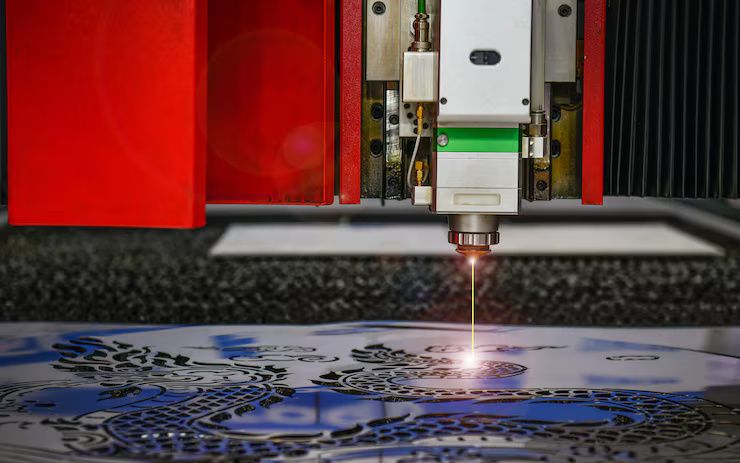
Laser engraving machines are precision systems that use concentrated light energy to mark, etch, or engrave materials. They operate by directing a focused laser beam onto a surface, altering the material through heat interaction. Unlike traditional engraving methods that rely on mechanical cutting tools, laser engraving provides non-contact marking with high precision.
These machines exist because modern industries require accurate, permanent, and repeatable marking for identification, traceability, branding, and functional purposes. As manufacturing standards tightened and product tracking became more important, laser engraving emerged as a reliable solution for detailed and durable surface marking.
Today, laser engraving machines are widely used in manufacturing, electronics, automotive components, medical devices, packaging, aerospace parts, and decorative fabrication.
Importance: Why Laser Engraving Machines Matter Today
Laser engraving machines are essential in contemporary industrial environments due to their precision, speed, and adaptability.
Why this topic matters today:
-
High precision marking: Enables fine details and complex patterns
-
Permanent identification: Supports serial numbers, QR codes, and traceability
-
Material versatility: Works on metals, plastics, wood, glass, and composites
-
Minimal material stress: Non-contact process reduces mechanical deformation
-
Production efficiency: Supports automated manufacturing lines
These machines affect production engineers, quality inspectors, supply chain managers, compliance officers, and product designers. They solve challenges related to inconsistent marking, wear-prone labeling methods, and regulatory traceability requirements.
Industries with strict documentation and part tracking standards depend heavily on reliable laser engraving technology.
Recent Updates: Industry Trends and Developments (2024–2025)
In the past year, laser engraving technology has continued to advance in precision control, automation, and efficiency.
| Year | Development or Trend | Industrial Impact |
|---|---|---|
| 2024 | Improved fiber laser efficiency | Faster marking speeds and lower energy consumption |
| 2024 | Enhanced beam control systems | Greater engraving detail accuracy |
| 2025 | Integration with automated production lines | Seamless marking within manufacturing workflows |
| 2025 | Advanced cooling and thermal stability systems | Increased machine longevity and consistency |
Recent developments also include compact machine designs, better surface adaptability for reflective metals, and improved user interfaces for easier parameter control.
Laws, Standards, and Regulatory Influence
Laser engraving machines operate under safety and industrial compliance standards due to the nature of laser radiation and precision manufacturing.
Common regulatory and standard frameworks include:
-
Laser safety classifications (IEC standards): Define safe operating conditions
-
Workplace safety regulations: Require protective enclosures and operator training
-
ISO quality management standards: Ensure traceable and documented marking processes
-
Product identification regulations: Mandate durable and readable part markings in sectors such as automotive and aerospace
Facilities using laser engraving systems must ensure proper shielding, ventilation, and safety protocols to protect operators and maintain compliance.
Working Principles: How Laser Engraving Machines Operate
Laser engraving works by focusing a high-energy beam onto a material’s surface. The heat generated by the beam modifies the material, creating a visible mark.
Basic operational process:
-
The design is prepared digitally
-
The laser beam is directed through focusing optics
-
Controlled pulses interact with the material surface
-
Material is vaporized or altered at specific points
-
The pattern forms through precise movement of the beam or workpiece
Key components include:
-
Laser source (fiber, CO₂, or other types)
-
Beam delivery system
-
Control system for motion and power
-
Cooling mechanism
-
Worktable or positioning system
Precision depends on beam stability, focus accuracy, and motion control consistency.
Types of Laser Engraving Machines
Laser engraving machines are categorized by the type of laser source used.
Common types include:
-
Fiber Laser Engravers: Suitable for metals and high-precision industrial applications
-
CO₂ Laser Engravers: Used for non-metal materials such as wood, acrylic, and leather
-
Diode Laser Systems: Compact systems for lighter-duty applications
-
UV Laser Engravers: Designed for delicate materials and fine detail work
| Laser Type | Best For | Typical Industry Use |
|---|---|---|
| Fiber Laser | Metals | Automotive, aerospace |
| CO₂ Laser | Non-metals | Packaging, crafts |
| UV Laser | Precision plastics | Electronics |
| Diode Laser | Light materials | Small-scale marking |
Each type is selected based on material compatibility, precision requirements, and production volume.
Industry Uses of Laser Engraving Machines
Laser engraving machines are widely used across various sectors.
Key applications include:
-
Serial number marking on mechanical components
-
QR code and barcode engraving for supply chain tracking
-
Branding and labeling of consumer products
-
Medical device identification
-
Aerospace component traceability
-
Decorative and architectural engraving
Their adaptability makes them suitable for both functional identification and aesthetic detailing.
Tools and Learning Resources
Understanding laser engraving machines is supported by technical and educational materials.
Helpful learning resources include:
-
Industrial laser processing textbooks
-
Manufacturing engineering journals
-
Laser safety guidelines and manuals
-
Material compatibility reference charts
-
Beam parameter calculation guides
Practical reference tools:
-
Engraving depth comparison tables
-
Power-to-speed adjustment charts
-
Surface interaction diagrams
-
Maintenance inspection checklists
These resources help professionals and learners understand the technical principles behind effective engraving.
Frequently Asked Questions
What materials can laser engraving machines process?
They can process metals, plastics, wood, glass, ceramics, and certain composites depending on laser type.
Is laser engraving permanent?
Yes, the marking alters the surface material, creating durable and long-lasting results.
How is engraving accuracy controlled?
Accuracy depends on beam focus, motion control systems, and stable power output.
Are laser engraving machines safe?
When operated within regulated safety guidelines and protective enclosures, they are considered safe.
Do industries require permanent marking?
Many sectors require durable marking for traceability and regulatory compliance.
Conclusion
Laser engraving machines are powerful tools in modern manufacturing and identification processes. Through precise, non-contact marking, they enable consistent and permanent surface modification across diverse materials. As industrial standards for traceability and quality continue to rise, laser engraving technology remains essential.
Understanding their working principles, types, safety regulations, and industrial applications provides valuable insight into how advanced marking systems support global manufacturing and product reliability.