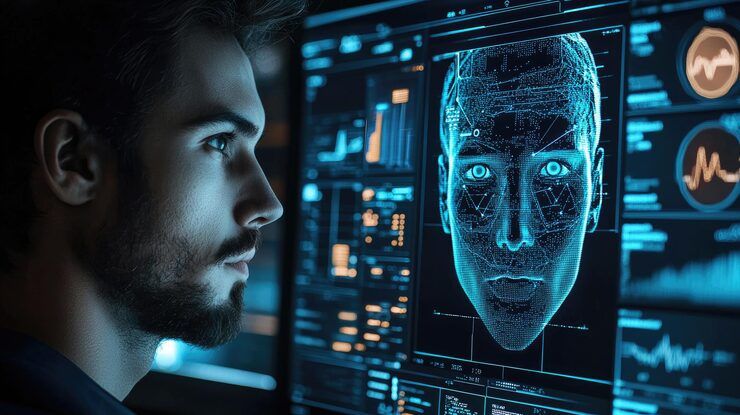
Deepfake detection using AI refers to technologies designed to identify manipulated media, such as altered videos, images, or audio created using artificial intelligence. Deepfakes are generated through advanced machine learning techniques that can mimic real people’s faces, voices, and expressions. While these technologies have legitimate uses in entertainment and education, they can also be misused to spread misinformation or impersonate individuals.
To address this challenge, researchers and developers have created AI deepfake detection methods that analyze subtle inconsistencies in digital content. These methods are often integrated into identity verification AI tools, biometric authentication systems, and enterprise fraud prevention tools. The goal is to distinguish authentic media from manipulated content in a reliable and scalable way.
As digital communication grows, deepfake detection tools and deepfake detection APIs are becoming more common in online platforms, financial systems, and security workflows. These systems aim to support safer interactions by verifying identities and reducing risks linked to synthetic media.
Importance
Deepfake detection matters because digital trust is increasingly important in everyday life. People rely on online platforms for communication, banking, education, and work. When manipulated media becomes difficult to distinguish from real content, it can lead to confusion, fraud, or reputational harm.
One key area of concern is identity fraud. Attackers may use deepfake videos or voice clones to bypass biometric authentication systems. This can affect processes like remote onboarding, login verification, or transaction approvals. Identity verification AI tools are designed to counter this by analyzing facial movements, voice patterns, and behavioral signals.
Another important use case is enterprise fraud prevention tools. Organizations use these systems to monitor suspicious activity and detect anomalies in digital interactions. Deepfake detection techniques can help identify synthetic media used in phishing attempts or impersonation attacks.
For individuals, the impact can include:
- Misinformation exposure: Deepfakes can spread false narratives through social media or messaging platforms
- Privacy concerns: Personal images or videos may be altered without consent
- Security risks: Fraud attempts may become more convincing with realistic synthetic media
For organizations, the risks include financial loss, reputational damage, and operational disruption. As a result, AI deepfake detection methods are becoming a critical component of digital security strategies.
Recent Updates
From 2024 to 2026, deepfake detection has evolved alongside advancements in generative AI. As synthetic media becomes more realistic, detection methods have also become more sophisticated.
One notable trend is the use of multimodal analysis. Instead of focusing only on visual clues, modern systems combine video, audio, and behavioral data. This improves accuracy by identifying inconsistencies across multiple signals. For example, a system may compare lip movements with audio timing or analyze voice patterns alongside facial expressions.
Another development is the integration of deepfake detection API solutions into broader platforms. These APIs allow developers to embed detection capabilities into applications such as video conferencing tools, financial systems, and content moderation platforms.
There is also increased use of real-time detection. Earlier systems often analyzed content after it was created, but newer tools can assess authenticity during live interactions. This is especially relevant for biometric authentication and identity verification AI tools.
Additionally, research has focused on improving explainability. Users and organizations want to understand why a piece of content is flagged as a deepfake. Newer models provide clearer insights into detected anomalies, such as unnatural blinking patterns or inconsistent lighting.
The following table summarizes common AI deepfake detection methods and their characteristics:
| Method Type | Description | Common Use Cases |
|---|---|---|
| Visual artifact analysis | Detects irregularities in pixels and textures | Video verification, media screening |
| Audio pattern analysis | Examines voice tone and frequency patterns | Voice authentication, call monitoring |
| Behavioral biometrics | Analyzes user behavior and interaction patterns | Login verification, fraud detection |
| Multimodal analysis | Combines video, audio, and metadata signals | Identity verification, live interactions |
| Metadata inspection | Reviews file origin and editing history | Content validation, forensic analysis |
These developments show a shift toward more comprehensive and adaptive deepfake detection techniques.
Laws or Policies
Governments and regulatory bodies have started to address the risks associated with deepfakes. While laws vary by country, many focus on privacy, identity protection, and misinformation control.
In India, digital regulations such as the Information Technology Act and updated IT Rules address harmful online content, including manipulated media. Platforms may be required to remove misleading or harmful content when notified. Deepfake-related concerns are increasingly being discussed in policy updates related to online safety and data protection.
Globally, several regions have introduced or proposed regulations:
- Data protection laws: These emphasize the secure handling of biometric data used in biometric authentication systems
- Content labeling rules: Some jurisdictions encourage or require labeling of AI-generated media
- Election integrity measures: Policies aim to prevent the misuse of deepfakes in political contexts
- Consumer protection frameworks: These address deceptive practices involving manipulated media
Organizations using identity verification AI tools and deepfake detection tools must also comply with privacy regulations. This includes ensuring that biometric data is collected and processed responsibly.
As policies continue to evolve, there is a growing emphasis on balancing innovation with user protection. Clear guidelines can help ensure that AI technologies are used in a responsible and transparent manner.
Tools and Resources
Various tools and platforms support deepfake detection and identity verification processes. These resources are used in sectors such as finance, media, cybersecurity, and education.
Deepfake detection tools often rely on machine learning models trained to recognize patterns associated with synthetic media. These tools may analyze visual, audio, and metadata signals to determine authenticity.
Common categories of tools include:
- Deepfake detection API platforms: These allow developers to integrate detection features into applications such as video platforms or authentication systems
- Biometric authentication systems: These tools verify identity using facial recognition, voice analysis, or fingerprint data
- Enterprise fraud prevention tools: These systems monitor transactions and user behavior to detect suspicious activity
- Content verification platforms: These tools assess the authenticity of images, videos, and audio files
In addition to tools, there are educational resources and frameworks that help users understand deepfake detection techniques. These include:
- Research publications: Provide insights into evolving AI deepfake detection methods
- Online courses: Explain how synthetic media is created and detected
- Open datasets: Used for training and testing detection models
- Guidelines and standards: Developed by industry groups to promote responsible AI use
When selecting tools, organizations often consider factors such as accuracy, scalability, and compatibility with existing systems. For individuals, awareness of how these tools work can help in identifying potentially manipulated content.
FAQs
What are deepfake detection techniques?
Deepfake detection techniques are methods used to identify manipulated media created by AI. These include visual analysis, audio pattern recognition, and multimodal approaches that combine multiple data sources.
How do identity verification AI tools use deepfake detection?
Identity verification AI tools use deepfake detection to ensure that a person is real during processes like login or account setup. They analyze facial movements, voice patterns, and behavioral signals to detect synthetic content.
What is a deepfake detection API?
A deepfake detection API is a software interface that allows applications to check whether media is authentic. Developers can integrate these APIs into platforms such as video calls, social media, or authentication systems.
Are biometric authentication systems vulnerable to deepfakes?
Biometric authentication systems can be targeted by deepfake attacks, especially if they rely on a single type of data. To reduce risks, many systems now combine multiple verification methods and use AI deepfake detection methods.
What role do enterprise fraud prevention tools play in deepfake detection?
Enterprise fraud prevention tools use deepfake detection to identify suspicious activities, such as impersonation attempts. They analyze user behavior and digital interactions to detect anomalies and reduce fraud risks.
Conclusion
Deepfake detection using AI has become an important part of maintaining trust in digital environments. As synthetic media continues to evolve, detection methods are also advancing to address new challenges. These technologies are used in identity verification, biometric authentication, and fraud prevention systems. While regulations and tools continue to develop, understanding how deepfake detection works can help individuals and organizations navigate digital interactions more safely.