A destination wedding is a marriage ceremony held in a location away from a couple’s hometown. These events often combine travel, celebration, and cultural experiences in one setting. Popular destination wedding locations include beaches, heritage cities, mountain resorts, and international tourist hubs.
Destination wedding planning focuses on organizing ceremonies in meaningful or scenic locations away from the couple’s hometown. It emphasizes curated guest lists, venue selection, travel coordination, and hospitality management.
With the growth of international travel and online planning tools, destination weddings have become more accessible. Couples can now compare venues, review packages, and understand legal requirements using digital platforms.
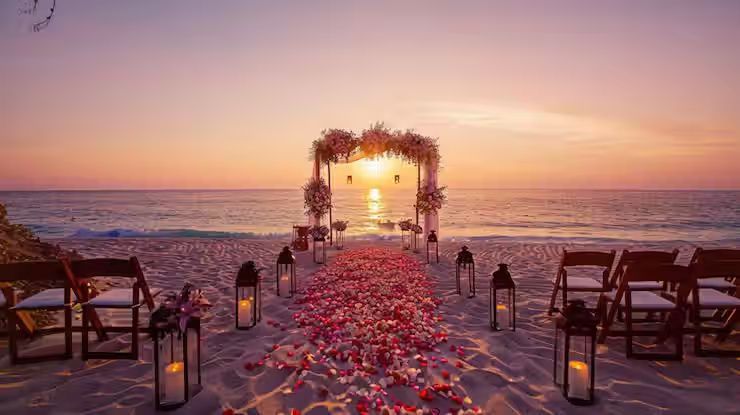
Popular Destination Wedding Locations
Beach Destinations
Beach weddings are known for natural scenery and relaxed settings. Common locations include:
- Goa – Coastal venues and heritage churches
- Bali – Cliffside ceremonies and tropical landscapes
- Maldives – Private island and overwater venues
- Phuket – Beach resorts with sunset views
These destinations often offer packages that include décor, accommodation coordination, and event planning services.
Heritage and Royal Locations
Historic venues attract couples seeking cultural and architectural elegance. Popular choices include:
- Udaipur – Lake palaces and royal themes
- Jaipur – Heritage architecture and traditional décor
- Lake Como – European-style scenic settings
- Santorini – White architecture with sea views
These venues often require early booking due to high seasonal demand.
Importance of Destination Weddings
Destination wedding planning has gained importance due to evolving preferences and travel accessibility.
Key Benefits
- Personalization of events based on preferences
- Enhanced guest experience through travel-based celebrations
- Smaller guest lists for easier coordination
- Integrated planning of travel, accommodation, and events
Industries Impacted
Destination weddings influence multiple industries:
- Hospitality and resorts
- Event management
- Travel and tourism
- Wedding décor and design
- Photography and videography
Traditional vs Destination Weddings
| Factor | Traditional Wedding | Destination Wedding |
|---|---|---|
| Guest Count | Large (200+) | Small to mid-size |
| Location | Hometown | Travel-based |
| Duration | Single day | Multi-day event |
| Travel Planning | Minimal | Integrated |
| Venue Type | Banquet halls | Resorts, beaches, palaces |
Destination weddings also help address challenges such as venue availability in crowded cities.
Recent Updates and Trends (2025)
Recent developments highlight changing preferences in the wedding industry.
Key Trends
- Sustainable weddings: Use of eco-friendly décor and local sourcing
- Micro-weddings: Smaller, more intimate guest lists
- Hybrid celebrations: Live streaming for remote guests
- Flexible booking: Updated resort policies for travel uncertainties
- Digital tools: AI-based planning for budgeting and coordination
Trend Distribution Example
| Trend | Estimated Popularity (%) |
|---|---|
| Beach Weddings | 35% |
| Heritage Venues | 25% |
| International Resorts | 20% |
| Mountain Locations | 10% |
| Other Unique Venues | 10% |
These values represent general industry observations.
Laws and Policies
Legal requirements vary depending on the destination country. Understanding regulations is essential for proper planning.
In India
Under the Special Marriage Act, couples must provide:
- Proof of identity
- Proof of residence
- Witness signatures
- Age verification
Religious ceremonies may follow additional personal law frameworks.
International Destinations
Countries like Italy, Thailand, and Indonesia have specific rules. Common legal considerations include:
- Document translation
- Embassy authentication
- Waiting periods
- Civil vs symbolic ceremony differences
Couples often consult official government sources before finalizing plans.
Tools and Resources for Planning
Modern planning uses digital tools to simplify coordination and organization.
Helpful Tools
- Budget calculators for expense estimation
- Guest management software for RSVPs
- Travel insurance comparison platforms
- Digital invitation systems
- Vendor directories for service providers
- Marriage registration portals
Sample Planning Timeline
| Timeline | Task |
|---|---|
| 12 Months Before | Select location and venue |
| 9 Months Before | Confirm guest list |
| 6 Months Before | Finalize décor and itinerary |
| 3 Months Before | Submit legal paperwork |
| 1 Month Before | Confirm travel arrangements |
These structured timelines help reduce last-minute complications.
Frequently Asked Questions
What is the difference between a legal and symbolic destination wedding?
A legal ceremony fulfills official marriage laws, while a symbolic ceremony is ceremonial only.
How many guests usually attend?
Most destination weddings include 30 to 120 guests depending on logistics and venue size.
Do guests pay for their own travel?
Guests usually manage their own travel and accommodation, though guidance is often provided.
Is travel insurance important?
Travel insurance helps manage risks like cancellations or emergencies.
How early should planning begin?
Planning typically starts 9–12 months in advance, especially for international destinations.
Conclusion
Destination weddings combine travel experiences with ceremonial traditions. They offer flexibility, personalization, and scenic settings beyond conventional celebrations.
Understanding venue selection, legal requirements, and planning tools helps couples organize events efficiently. With proper preparation and coordination, destination wedding planning can provide a structured and memorable experience aligned with modern travel trends.