Diamond Necklaces: Discover Popular Designs, Diamond Cuts and Jewellery Styles
Diamond necklaces remain among the most versatile and enduring forms of fine jewellery. From delicate everyday pendants to dramatic statement pieces, they highlight the brilliance, fire, and durability of diamonds while complementing a wide range of necklines and occasions.
This overview explores popular designs, the diamond cuts most commonly used, key jewellery styles, materials and craftsmanship considerations, and practical guidance for choosing and wearing diamond necklaces.
Popular Diamond Necklace Designs
Designers and wearers favour a range of silhouettes that balance sparkle, wearability, and visual impact.
Solitaire and Floating Pendants
A single diamond suspended on a fine chain remains a classic. Floating or bezel-set solitaires create a clean, modern look that draws attention to the stone’s cut and brilliance. These designs work equally well for daily wear and formal occasions.
Tennis and Station Necklaces
Tennis necklaces feature a continuous line of diamonds set closely together, delivering consistent sparkle around the neck. Station (or by-the-yard) necklaces space diamonds at regular intervals along the chain, offering a lighter, more versatile alternative that layers easily with other pieces.
Chokers, Collars, and Lariats
Close-fitting chokers and structured collars create a bold, contemporary presence. Y-shaped or lariat styles add vertical interest and movement. These forms often incorporate mixed diamond sizes or shapes for added dimension.
Cluster, Halo, and Statement Pieces
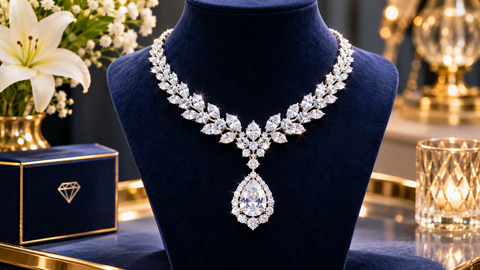
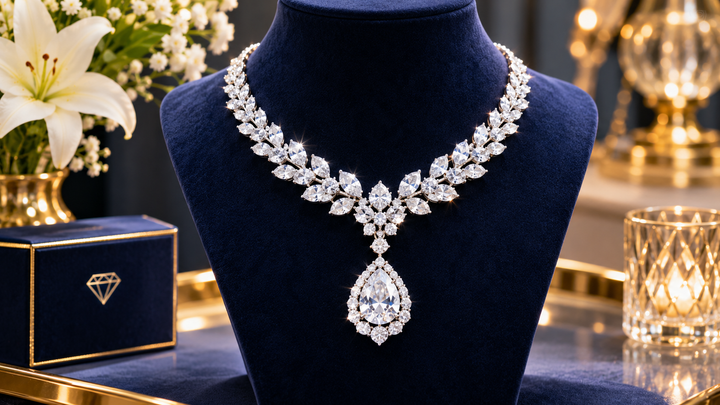
Clusters of diamonds form floral, geometric, or cascading motifs. Halo settings surround a central stone with smaller diamonds to amplify perceived size and sparkle. Larger or high-jewellery designs may combine multiple cuts and carat weights for red-carpet or special-event impact.
Layered and Modular Looks
Multi-strand sets and modular designs allow wearers to combine a solitaire, station necklace, and longer pendant for personalized layering. Pre-styled layered sets have become popular for their ready-to-wear versatility.
Diamond Cuts Used in Necklaces
The cut of a diamond strongly influences how light is returned and how the necklace appears on the body.
Round Brilliant
The most popular cut for overall brilliance and fire. Round diamonds are widely used in tennis necklaces, pavé work, and classic solitaire pendants.
Fancy and Elongated Shapes
Oval, pear, marquise, and emerald cuts are increasingly favoured for pendants and mixed-shape designs. These shapes often appear larger face-up for their carat weight and create distinctive silhouettes. Emerald and Asscher cuts offer elegant step-cut geometry, while marquise and pear shapes add drama and length.
Mixed-Cut Designs
Contemporary necklaces frequently combine different cuts (for example, round, baguette, and pear) within the same piece to create texture, rhythm, and visual interest.
Cut Quality Considerations
Regardless of shape, proportions, symmetry, and polish determine light performance. Well-cut diamonds maximize sparkle even in smaller sizes commonly used in necklaces.
Jewellery Styles and Aesthetics
Diamond necklaces span classic, modern, and vintage-inspired aesthetics.
Minimalist and Everyday Styles
Lightweight solitaires, fine station necklaces, and simple bezel or floating settings emphasize wearability and quiet luxury. These pieces suit office, casual, and layered looks.
Classic and Timeless Designs
Traditional tennis necklaces, elegant solitaires, and balanced three-stone or halo pendants remain enduring choices that transcend short-term trends.
Contemporary and Sculptural Approaches
Architectural lines, rigid collars, high-polish gold with minimal diamond accents, and mixed-metal combinations reflect current interest in bold yet refined forms.
Vintage and Heirloom Influences
Milgrain detailing, old-cut diamonds, filigree elements, and Art Deco-inspired geometry appear in both new designs and restored pieces, appealing to those seeking character and history.
Materials, Settings, and Craftsmanship
Metals
Platinum, white gold, yellow gold, and rose gold are the primary choices. Yellow gold has regained strong popularity for its warmth, while white metals continue to highlight diamond brilliance. Mixed-metal designs offer additional versatility.
Setting Styles
Prong, bezel, channel, and pavé settings each affect security, light entry, and overall appearance. Bezels provide modern protection and a sleek profile; prongs maximize sparkle. Secure craftsmanship is essential for pieces worn close to the body and subject to movement.
Quality Indicators
Look for well-matched diamonds (especially in tennis or station styles), secure settings, comfortable chain construction, and appropriate clasp security. Independent grading reports for larger centre stones and clear disclosure of total carat weight support informed purchasing.
Choosing and Wearing Diamond Necklaces
Consider neckline, lifestyle, and personal style when selecting a design. Shorter lengths (choker to princess) suit higher necklines and statement looks; longer lengths work well for layering or deeper necklines. Lightweight constructions and secure clasps improve daily comfort. Professional cleaning and periodic inspection of settings help maintain brilliance and security over time.
Diamond necklaces offer exceptional versatility—from understated everyday solitaires and station designs to continuous tennis lines and bold statement pieces. Popular cuts range from classic round brilliants to elongated fancy shapes and mixed-cut compositions, while styles span minimalist, classic, contemporary, and vintage-inspired aesthetics. Careful attention to cut quality, setting security, metal choice, and overall craftsmanship ensures a piece that delivers lasting beauty and wearability. Whether chosen as a signature everyday necklace or a special-occasion statement, diamond necklaces remain a refined expression of brilliance and personal style.