Discover Steel Industry Machines and Their Role in Efficient Production
Steel plays an important role in modern infrastructure, transportation, manufacturing, energy, and construction.
From bridges and buildings to household appliances and vehicles, steel products are part of everyday life. Behind these products is a wide range of steel industry machines designed to transform raw materials into finished steel with consistent quality and efficiency.
Steel manufacturing machinery has evolved over many decades to improve productivity, reduce material waste, and support safer industrial operations. Modern steel processing equipment combines mechanical systems, automation, and digital monitoring to perform tasks such as melting, rolling, cutting, shaping, and finishing steel products.
Understanding how steel plant machinery works helps explain why steel production remains one of the foundations of industrial development. This article explores the purpose of industrial steel machines, their importance, current industry developments, relevant regulations, useful resources, and common questions related to steel manufacturing systems.
Context
The evolution of steel manufacturing
Steel production has changed significantly since the early industrial era. Traditional manual methods have gradually been replaced by advanced steel production equipment capable of handling large production volumes while maintaining consistent product quality.
Today, steel manufacturing systems include interconnected machines that perform multiple stages of production. Automation and computerized controls help operators monitor temperatures, material flow, and equipment performance throughout the manufacturing process.
Main categories of steel industry machines
Different types of steel industry machines perform specific functions during production. Each category contributes to transforming raw materials into finished steel products suitable for different industries.
| Machine Category | Primary Purpose | Typical Output |
|---|---|---|
| Melting equipment | Converts raw materials into molten steel | Liquid steel |
| Casting machinery | Forms steel into semi-finished shapes | Slabs, billets, blooms |
| Steel rolling mill machines | Reduces thickness and shapes steel | Sheets, bars, coils |
| Steel fabrication equipment | Cuts, bends, and joins steel | Fabricated components |
| Finishing equipment | Improves surface quality | Finished steel products |
| Inspection systems | Measures dimensions and detects defects | Quality verification |
How the production process works
Steel manufacturing usually follows a sequence of connected operations. Although production methods vary between facilities, many steel manufacturing systems include similar stages:
- Raw material preparation
- Melting and refining
- Continuous casting
- Rolling and shaping
- Heat treatment
- Surface finishing
- Inspection and packaging
Each stage relies on specialized steel processing equipment designed for a specific manufacturing function.
Importance
Supporting modern infrastructure
Steel remains one of the most widely used construction materials because of its strength and versatility. Steel plant machinery makes it possible to produce structural steel used in bridges, railways, airports, factories, residential buildings, and public infrastructure.
Without reliable steel production equipment, many large-scale infrastructure projects would face slower production and reduced manufacturing consistency.
Improving manufacturing efficiency
Industrial steel machines help manufacturers process large volumes of steel while maintaining consistent production standards. Automated controls reduce unnecessary interruptions and help coordinate multiple production stages.
Modern steel rolling mill equipment can process steel continuously, allowing manufacturers to produce sheets, coils, bars, and structural sections more efficiently than traditional methods.
Supporting multiple industries
Steel manufacturing machinery contributes to many sectors, including:
- Construction
- Automotive manufacturing
- Shipbuilding
- Railway infrastructure
- Energy production
- Agricultural equipment
- Heavy machinery manufacturing
- Consumer appliances
These industries rely on steel fabrication equipment to create components with accurate dimensions and dependable structural properties.
Enhancing workplace safety
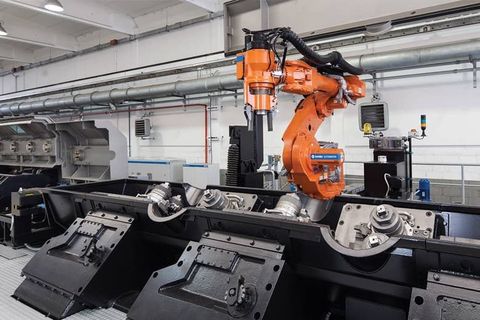
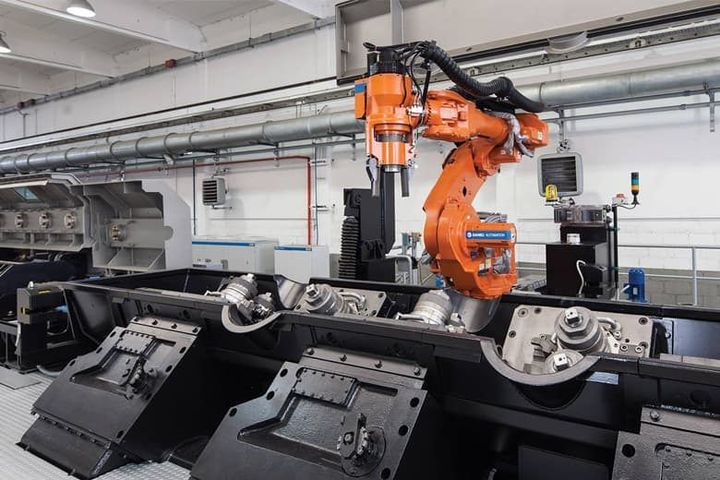
Modern steel production equipment often includes automated handling systems that reduce direct human interaction with extremely hot materials and heavy loads. Digital monitoring systems also help identify operating conditions that require attention before equipment performance is affected.
Although skilled operators remain essential, automation has improved overall operational consistency in many steel facilities.
Recent Updates
Increasing automation
Recent developments continue to focus on smarter steel manufacturing systems. Many facilities now integrate programmable controls, industrial sensors, and connected monitoring platforms that collect operational data throughout production.
These systems help monitor equipment conditions, production flow, and energy consumption while providing operators with real-time information.
Artificial intelligence and predictive maintenance
Artificial intelligence is becoming more common in steel industry machines. Machine learning models analyze operating patterns to identify potential maintenance requirements before equipment experiences unexpected downtime.
Predictive maintenance helps facilities schedule inspections more effectively while improving equipment availability.
Energy-efficient production
Many manufacturers continue updating steel plant machinery to improve energy efficiency. New furnace technologies, optimized rolling systems, and improved heat recovery methods help reduce overall energy consumption during production.
These improvements also support environmental objectives established by various industrial policies.
Digital quality inspection
Inspection systems have become increasingly automated. Cameras, laser scanners, and measurement equipment now inspect steel products throughout production rather than relying only on final inspections.
Digital inspection improves consistency by identifying dimensional variations and surface conditions during manufacturing.
Greater recycling integration
Steel production increasingly incorporates recycled steel as part of manufacturing. Updated steel processing equipment supports the processing of recycled materials while maintaining production quality standards.
Recycling contributes to resource conservation because steel can be processed repeatedly without losing many of its core material properties.
Laws or Policies
Environmental regulations
Steel manufacturing operates under environmental regulations that address emissions, waste management, water usage, and air quality. Requirements differ between countries, but many governments encourage cleaner industrial processes and improved resource efficiency.
Facilities using steel production equipment typically monitor emissions and maintain records that demonstrate compliance with applicable environmental standards.
Workplace safety requirements
Industrial facilities generally follow occupational safety regulations covering machine operation, protective equipment, emergency procedures, and employee training.
Safety standards also apply to heavy machinery, electrical systems, lifting equipment, and high-temperature production areas commonly found in steel manufacturing.
Product quality standards
Steel products are often manufactured according to nationally or internationally recognized quality standards. These standards define mechanical properties, chemical composition, testing methods, and inspection requirements.
Compliance helps ensure that steel products remain suitable for construction, transportation, and industrial applications.
Energy and sustainability programs
Many governments encourage manufacturers to improve industrial efficiency through energy management initiatives and environmental reporting programs. Steel manufacturing systems are increasingly designed to support these broader sustainability objectives while maintaining production capability.
Tools and Resources
Digital design software
Computer-aided design software allows engineers to create detailed component models before production begins. Digital models improve communication between design and manufacturing teams while reducing production errors.
Production monitoring platforms
Industrial monitoring platforms collect operational information from steel industry machines throughout the manufacturing process. These systems display production data, equipment performance, and maintenance information using centralized dashboards.
Maintenance management software
Maintenance platforms help organize inspection schedules, equipment records, replacement parts, and repair history for steel plant machinery.
Common features include:
- Equipment inventories
- Inspection schedules
- Maintenance records
- Spare parts tracking
- Performance reporting
Material property databases
Material databases contain technical information about steel grades, mechanical characteristics, and engineering specifications. Engineers frequently use these references during product development and manufacturing planning.
Engineering calculators
Engineering calculators assist with measurements related to:
- Material weight
- Beam dimensions
- Plate thickness
- Load estimation
- Unit conversions
- Production calculations
These tools simplify routine engineering tasks without replacing technical expertise.
FAQs
What are steel industry machines used for?
Steel industry machines process raw materials into finished steel products through melting, casting, rolling, cutting, shaping, finishing, and inspection. Different machines perform different stages of the overall manufacturing process.
What is the difference between steel manufacturing machinery and steel fabrication equipment?
Steel manufacturing machinery is generally used to produce raw and semi-finished steel products inside manufacturing facilities. Steel fabrication equipment is typically used afterward to cut, bend, drill, weld, or assemble steel into finished components.
How do steel rolling mill machines improve production?
Steel rolling mill machines reduce the thickness of steel while shaping it into products such as sheets, coils, rails, bars, and structural sections. Continuous rolling helps maintain consistent dimensions across large production volumes.
What equipment is included in steel manufacturing systems?
Steel manufacturing systems commonly include furnaces, casting equipment, steel rolling mill equipment, conveyors, cranes, inspection systems, automation controls, finishing machinery, and material handling equipment working together as an integrated production process.
Why is automation becoming more common in steel processing equipment?
Automation helps improve production consistency, monitor equipment performance, reduce manual handling, support quality inspection, and provide operational data for maintenance planning. These capabilities help manufacturers manage increasingly complex production environments.
Conclusion
Steel industry machines play an important role in transforming raw materials into products used across construction, transportation, manufacturing, and infrastructure. Modern steel manufacturing machinery combines automation, digital monitoring, and specialized equipment to improve production consistency and operational efficiency. Ongoing developments continue to focus on energy efficiency, digital inspection, predictive maintenance, and sustainable manufacturing practices. Understanding the purpose of steel processing equipment provides useful insight into one of the world's most significant industrial sectors.