Engine assembly machines are specialized industrial systems designed to construct internal combustion engines, electric power units, or hybrid propulsion systems through automated processes. These machines perform tasks such as component alignment, fastening, torque application, lubrication, testing, and quality verification. Many modern assembly lines incorporate robotics, computer-controlled operations, and precision measurement systems.
Engine assembly machines exist because engines require consistent accuracy, controlled tolerances, and structured assembly workflows. Human-only assembly introduces variability and increases the risk of mechanical faults. Automated machines, however, maintain repeatable precision, improve safety, and support large-scale production. They also handle heavy components such as crankshafts, cylinder blocks, pistons, and camshafts with minimal manual strain.
Early assembly lines relied on manual labor and simple fixtures. Over time, mechanical jigs evolved into robotic and digitally monitored systems capable of advanced sequencing and quality tracking. Today’s machines allow manufacturers to meet global engineering standards while managing efficiency and production volume.
Engine assembly systems combine robotics, mechanical engineering, materials science, electrical circuitry, and data analytics—making them central to modern engine manufacturing.
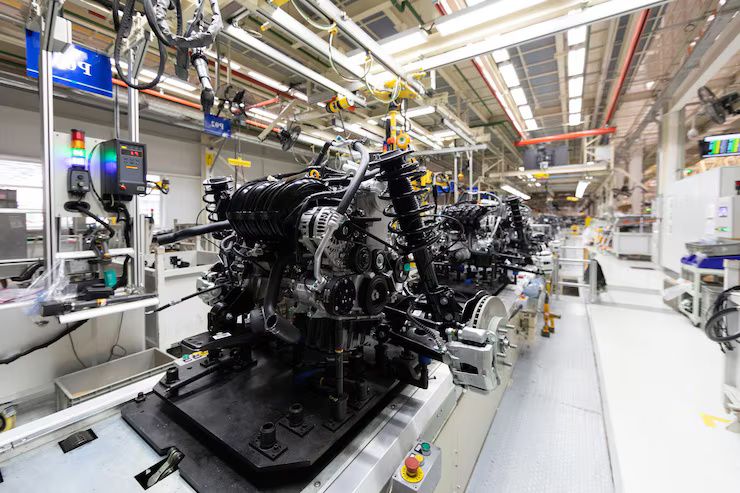
Importance: Why Engine Assembly Machines Matter Today
Engine assembly machines are essential to global automotive, aerospace, industrial equipment, marine power, and agricultural machinery manufacturing.
Who engine assembly machines affect
-
Mechanical and production engineers
-
Automotive and engine manufacturers
-
Quality assurance inspectors
-
Electric and hybrid powertrain developers
-
Robotics and automation specialists
-
Students studying mechanical production processes
-
Safety compliance teams in industrial environments
Why they matter today
-
Ensure consistent assembly accuracy and torque application
-
Improve production throughput in high-demand industries
-
Support advanced engines, including hybrid and electric units
-
Reduce human error and manual fatigue
-
Enhance component performance through stable assembly
-
Help meet safety and environmental compliance standards
Problems engine assembly machines help solve
-
Misalignment of rotating components
-
Incorrect torque application leading to mechanical failure
-
Inefficient assembly causing production delays
-
High variability when assembling precision components manually
-
Challenges with inspecting internal engine parts
-
Fatigue and ergonomic risks for human workers
Comparison:
| Manual Assembly | Automated Engine Assembly Machines |
|---|---|
| Higher risk of inconsistency | High precision and repeatability |
| Time-consuming | Faster and scalable |
| Dependent on human skill | Controlled by programmed logic |
| Limited inspection ability | Real-time quality monitoring |
| Ergonomic strain | Mechanized lifting and alignment |
Engine assembly machines support precision engineering, industrial safety, and efficient production.
Recent Updates, Trends, and Advancements (2024–2025)
Increased adoption of AI-supported assembly
AI-based torque monitoring, error prediction, and path-planning tools became more common in 2024. Machine learning algorithms now detect assembly anomalies early.
Growth of electric powertrain assembly
With expanding EV production, assembly machines now support stator installation, rotor alignment, drive-unit integration, and thermal management module assembly.
Collaborative robotics (cobots) integration
Cobots assist technicians with repetitive tasks such as fastener insertion, lubrication application, and sequencing—helping improve accuracy and reduce fatigue.
Digital twin technology adoption
Manufacturers now simulate engine assembly lines using digital twin models to optimize workflows without interrupting production.
Real-time sensor tracking
Modern systems use sensors for torque accuracy, vibration monitoring, lubrication flow, and part-position verification.
Sustainability-driven changes
Energy-efficient assembly equipment, reduced waste techniques, and smart monitoring support sustainable manufacturing strategies.
Recent advancements highlight AI analytics, EV engine assembly changes, cobot support, simulation systems, and real-time process tracking.
Laws, Standards, and Policies Impacting Engine Assembly (Global Focus)
Engine assembly machines must comply with industrial, mechanical, safety, and environmental standards.
Machinery safety laws
Regulations require safe guarding, lockout-tagout capability, emergency stops, and load-handling protocols that protect workers.
Industrial automation standards
Robotics, sensors, and control systems must follow international standards such as ISO automation guidelines for mechanical integrity and operational safety.
Environmental compliance
Manufacturing facilities follow rules on waste reduction, energy efficiency, and permissible emissions from industrial equipment.
Quality and performance standards
Certain industries (e.g., automotive, aerospace) require strict testing, including torque verification, leak testing, and dimensional accuracy checks.
Electrical and mechanical certification
Assembly equipment must meet industrial electrical safety requirements, wiring regulations, and machine durability expectations.
These policies ensure safe operation, consistent output quality, environmental care, and engineering reliability.
Tools, Engineering Resources, and Helpful Platforms
Many tools and digital platforms support engine assembly, monitoring, and engineering analysis.
Production and assembly tools
-
Automated torque-control systems
-
Robotic arm programming interfaces
-
Precision positioning and alignment modules
-
Engine-part measurement tools
Digital engineering tools
-
CAD modeling platforms
-
Assembly-sequence simulation software
-
Digital-twin analysis dashboards
-
PLC and automation programming tools
Monitoring and quality-control tools
-
Leak-testing systems
-
Vibration and torque sensors
-
Lubrication monitoring tools
-
Real-time component tracking systems
Learning resources and educational platforms
-
Mechanical engineering tutorials
-
Automation engineering guides
-
Assembly-line simulation modules
-
Industrial safety training materials
These tools enhance process reliability, engineering knowledge, and efficient production cycles.
FAQs
What are engine assembly machines?
They are automated or semi-automated systems designed to assemble engine components such as pistons, crankshafts, cylinder heads, and powertrain modules with high precision.
Why is automation important in engine assembly?
Automation improves accuracy, reduces human fatigue, tracks real-time quality, and supports mass production.
Do engine assembly machines work with electric motors?
Yes. Modern systems support electric powertrain assembly, including rotor placement, stator alignment, and cooling-module integration.
What components require the most precision?
Crankshaft alignment, piston installation, valve timing mechanisms, and torque-controlled fasteners require high accuracy.
What skills are useful for working with engine assembly systems?
Mechanical engineering understanding, robotics basics, safety awareness, software interface knowledge, and quality-control techniques.
Conclusion
Engine assembly machines play a fundamental role in producing reliable, high-performance engines across automotive, industrial, and aerospace sectors. These systems combine advanced engineering, automation, robotics, and data analytics to support precision, safety, and efficiency.
Recent trends demonstrate progress in AI-based quality prediction, electric powertrain assembly, digital twins, and collaborative robots. Compliance with industrial safety laws and mechanical standards ensures responsible operation.
With access to engineering tools, simulation platforms, and continuous monitoring systems, manufacturers can maintain high standards and adapt to evolving powertrain technologies. Engine assembly machines remain essential in shaping the future of mechanical manufacturing, sustainable production, and reliable engine performance.