Exploring Belt Conveyor Systems: Technical Insights and Useful Information
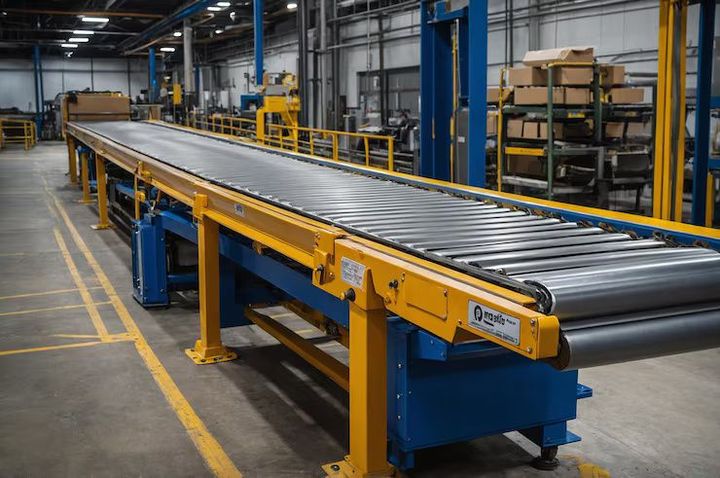
Belt conveyor systems are mechanical handling solutions used to transport materials efficiently across short or long distances. They consist of a continuous belt driven by pulleys, allowing items to move smoothly through manufacturing lines, warehouses, mining operations, and various industrial environments. These systems exist because many industries require consistent, controlled movement of goods, raw materials, or bulk items without depending solely on manual labor or slow transport methods.
Belt conveyor systems have evolved from simple mechanical setups to advanced automated systems using synthetic materials, sensors, and digital controls. Their main function is to move materials efficiently across different stages of production or handling.
Today, they are widely used in industries such as logistics, mining, agriculture, food processing, and manufacturing due to their ability to transport various materials safely and continuously.
Why Belt Conveyor Systems Matter Today
Modern industries depend on consistent and efficient material movement. Belt conveyors help maintain workflow stability and reduce manual effort.
Who It Affects
- Manufacturing and production operators
- Warehouse and logistics managers
- Mining and construction teams
- Safety officers and engineers
- Industrial system designers
Key Benefits
- Reduces physical strain from manual handling
- Enables continuous material flow
- Supports high-volume operations
- Improves workplace safety
- Allows flexible plant layout (horizontal and vertical movement)
Problems It Helps Solve
- Inefficient manual material transport
- Workflow interruptions in production lines
- Safety risks from lifting and carrying
- Difficulty managing bulk materials
- Limited scalability in industrial layouts
Recent Developments and Trends (2024–2025)
Belt conveyor technology continues to advance with automation, sustainability, and smart monitoring.
Key Trends
- Sensor-based monitoring for alignment, temperature, and load tracking
- Adoption of energy-efficient motors and variable-speed drives
- Development of eco-friendly and recycled belt materials
- Integration with robotics and automated sorting systems
- Growth of modular conveyor designs for flexible configurations
Technology Progress Overview
| Year | Automation Growth | Energy Efficiency | Sensor Integration | Material Innovation |
|---|---|---|---|---|
| 2022 | Moderate | High | Low | Moderate |
| 2023 | High | High | Moderate | High |
| 2024 | Very High | Very High | High | Very High |
| 2025 | Very High | Very High | Very High | High |
Laws, Standards, and Safety Policies
Belt conveyor systems operate under strict safety and engineering regulations to ensure reliability and worker protection.
Key Policy Areas
- Workplace safety standards (guarding, emergency stops)
- Mechanical engineering requirements for load and speed
- Electrical and automation compliance
- Environmental regulations for noise and energy use
- Regular inspection and maintenance requirements
These policies reduce risks and improve operational safety.
Tools and Resources for Conveyor Systems
Various tools support the design, operation, and maintenance of conveyor systems.
Engineering and Planning Tools
- Conveyor power and tension calculators
- Material flow simulation software
- Belt selection and specification guides
- System layout planning tools
Safety and Training Resources
- Inspection checklists for maintenance
- Operator training modules
- Troubleshooting guides and diagrams
- Monitoring dashboards for performance tracking
Types of Belt Conveyors
| Conveyor Type | Typical Use | Belt Material | Key Feature |
|---|---|---|---|
| Flat Belt Conveyor | Packaging and assembly | Rubber or synthetic | Smooth transport |
| Cleated Belt Conveyor | Inclined movement | Rubber with cleats | Prevents slipping |
| Modular Plastic | Food processing | Plastic segments | Easy cleaning and flexibility |
| Troughed Belt Conveyor | Bulk material handling | Rubber | Supports loose materials |
FAQs About Belt Conveyor Systems
What materials can conveyors handle?
They can transport packaged goods, grains, minerals, powders, and fragile items depending on belt type.
How do conveyor systems work?
A motor drives pulleys that move the belt, carrying materials along a fixed path.
Are all belts made of rubber?
No. Materials include synthetic polymers, steel-reinforced belts, and modular plastics.
How long do conveyor belts last?
Lifespan depends on usage, material, and maintenance, ranging from months to several years.
Can conveyors be used outdoors?
Yes. Many systems are designed for outdoor environments with weather-resistant materials.
Conclusion
Belt conveyor systems are essential for efficient material handling in modern industries. They improve productivity, safety, and workflow consistency.
Recent advancements highlight automation, energy efficiency, and smart monitoring. Regulations and tools ensure safe and effective operation across industries.
Understanding conveyor systems helps explain how industries manage large-scale operations with precision and reliability.