Exploring Self-Driven Cars: Facts, Details, and Key Information to Understand Better
Self-driven cars, often called autonomous vehicles, are automobiles designed to move and navigate without direct human control. These vehicles use a combination of sensors, cameras, artificial intelligence, and mapping systems to understand their surroundings and make driving decisions. The concept has developed through decades of research in robotics, computing, and transportation technology.
The idea of automated driving first appeared in experimental research projects during the late twentieth century. Early prototypes relied on basic sensors and pre-programmed routes. As computing systems advanced, engineers began developing vehicles capable of interpreting road conditions, traffic signals, and nearby vehicles in real time.

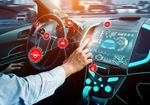
Modern self-driven cars integrate several technologies that work together. Cameras observe road markings and traffic signals, radar detects nearby vehicles, lidar creates detailed maps of the surroundings, and artificial intelligence processes all of this information. The system then decides how the vehicle should accelerate, slow down, or change direction.
Organizations such as Tesla, Waymo, and Baidu have contributed to the development of these technologies. Research groups within universities and technology companies have also explored automated driving systems to improve safety and mobility.
Self-driven cars are typically categorized into different levels of automation. These levels describe how much control the vehicle system has compared with the human driver.
| Automation Level | Description |
|---|---|
| Level 0 | Human driver controls all driving tasks |
| Level 1 | Basic driver assistance such as steering or speed support |
| Level 2 | Partial automation where systems assist steering and acceleration |
| Level 3 | Conditional automation with limited driver involvement |
| Level 4 | High automation in certain environments |
| Level 5 | Full automation without human driving input |
Organizations such as the Society of Automotive Engineers introduced this classification to create a common understanding of automated driving capabilities.
As research progresses, self-driven cars continue to evolve from experimental prototypes toward vehicles capable of navigating complex road environments with minimal human interaction.
Importance
The development of self-driven cars has attracted attention because transportation plays a central role in daily life. Road networks connect communities, enable movement of goods, and support economic activity. Improvements in vehicle technology may influence how people travel and how cities manage traffic.
One important aspect often discussed is road safety. Human drivers can become distracted, tired, or stressed, which may affect reaction time. Autonomous driving systems attempt to monitor the road continuously through sensors and computing systems. While research is ongoing, developers aim to design systems that detect hazards quickly and respond consistently.
Self-driven cars may also influence mobility for individuals who face challenges with traditional driving. Some people cannot operate vehicles due to age, physical conditions, or other limitations. Automated transportation systems may provide alternative mobility options in certain environments.
Traffic management is another area where automated vehicles could have an impact. When vehicles communicate with each other and with traffic infrastructure, it may become possible to coordinate movement more efficiently. Researchers are studying whether automated systems can help reduce congestion or improve traffic flow in busy urban areas.
Environmental considerations also appear in discussions about autonomous transportation. Many automated vehicle projects are connected with electric vehicle development. Electric power systems combined with intelligent driving technologies may influence energy use and urban transportation planning.
Despite these possibilities, the transition toward widespread autonomous vehicles remains gradual. Technical limitations, regulatory frameworks, infrastructure readiness, and public understanding all play roles in shaping how this technology develops.
Recent Updates
Between 2024 and 2026, research and pilot programs involving self-driven cars continued to expand in several regions. Technology companies and automotive manufacturers tested automated vehicles in controlled environments and selected urban areas.
One notable trend involves the growth of robotaxi pilot programs. For example, Waymo expanded automated ride programs in selected cities in the United States. These programs use vehicles equipped with advanced sensors and mapping systems that operate within predefined geographic zones.
Automotive manufacturers have also integrated advanced driver assistance features into conventional vehicles. Companies such as Tesla and Mercedes-Benz introduced automated driving features designed to assist drivers with tasks like highway navigation, parking, and traffic management.
Artificial intelligence improvements have played a major role in recent developments. Machine learning models trained on large driving datasets help vehicles recognize pedestrians, bicycles, road signs, and unexpected obstacles more accurately. As computing hardware becomes more powerful, automated driving systems can process large volumes of sensor data quickly.
Mapping technology has also improved. Autonomous vehicles rely on high-definition maps that contain detailed information about road geometry, lane markings, traffic signals, and intersections. Companies such as Google and several automotive technology firms have developed sophisticated mapping systems to support automated navigation.
Another development involves communication between vehicles and infrastructure. This concept, sometimes called vehicle-to-everything communication, allows vehicles to exchange information with traffic lights, road sensors, and nearby vehicles. Researchers continue studying how these systems may support safer and more coordinated transportation networks.
Although progress continues, many autonomous vehicles remain limited to specific environments or supervised driving conditions. Engineers and policymakers continue evaluating safety, reliability, and regulatory considerations before wider deployment.
Laws or Policies
Automated vehicle development is influenced by transportation laws and safety regulations in different countries. Governments establish frameworks that guide testing, certification, and operation of self-driven cars.
In the United States, the National Highway Traffic Safety Administration oversees vehicle safety standards and provides guidance related to automated driving technologies. This agency publishes policy documents and research reports describing how autonomous systems should address safety considerations.
In Europe, the European Commission works with member countries to develop regulations for automated vehicles. These regulations address areas such as cybersecurity, vehicle data recording, and operational design limits.
India has also begun examining policies related to autonomous transportation. Institutions such as the Ministry of Road Transport and Highways monitor developments in automated driving technology and evaluate how it might fit within existing road safety frameworks.
Key regulatory considerations often include:
- Vehicle safety validation: testing systems to confirm that automated driving functions perform reliably in various conditions
- Driver responsibility rules: determining when a human driver must monitor the system
- Data recording requirements: collecting information about vehicle activity during automated operation
- Cybersecurity protections: preventing unauthorized access to vehicle control systems
- Infrastructure compatibility: ensuring that automated vehicles interact properly with existing road networks
Because automated driving technology continues to evolve, regulatory frameworks are frequently updated to address new developments and technical capabilities.
Tools and Resources
Various digital platforms and research resources help researchers, developers, and policymakers study autonomous vehicle technology.
Simulation software plays a major role in automated driving development. Programs such as CARLA Simulator allow engineers to test driving scenarios in virtual environments. These simulations can model complex traffic conditions, weather variations, and pedestrian movement.
Mapping and navigation platforms also support self-driven vehicle research. For example, OpenStreetMap provides detailed geographic data that developers can analyze when building navigation systems. High-definition mapping tools further enhance road detail for automated driving experiments.
Machine learning frameworks are another essential resource. Systems such as TensorFlow and PyTorch help researchers build models capable of recognizing objects, predicting movement patterns, and interpreting road scenes.
Public research databases contribute to progress as well. Datasets such as the KITTI Vision Benchmark Suite contain labeled driving images and sensor recordings used for training and evaluating computer vision systems.
Educational platforms and research publications also help explain the science behind autonomous vehicles. Universities and transportation institutes publish studies that examine topics such as sensor reliability, algorithm design, and transportation planning.
Together, these tools support ongoing research and help experts evaluate how automated vehicles interact with complex real-world environments.
FAQs
What are self-driven cars?
Self-driven cars are vehicles equipped with automated systems that can perform driving tasks using sensors, artificial intelligence, and mapping technology. These systems analyze road conditions and guide the vehicle’s movement with limited or no human input.
How do self-driven cars detect obstacles?
Autonomous vehicles detect obstacles using a combination of cameras, radar, lidar sensors, and computer vision software. These systems interpret visual information and measure distances to identify vehicles, pedestrians, road signs, and other objects.
Are autonomous vehicles fully automated today?
Most vehicles currently available operate at partial automation levels. Human drivers usually remain responsible for monitoring the road and taking control when needed. Fully automated vehicles without driver supervision are still being tested in limited environments.
How safe are self-driven cars compared with human drivers?
Researchers continue studying safety performance using simulations, controlled testing, and real-world trials. Automated systems aim to detect hazards consistently, though engineers continue improving reliability in complex traffic situations.
What technologies are required for self-driven cars?
Key technologies include sensor systems, artificial intelligence algorithms, high-definition maps, and vehicle control software. Together these components help vehicles observe their surroundings and make driving decisions.
Conclusion
Self-driven cars represent an important development in transportation technology. By combining sensors, artificial intelligence, and mapping systems, autonomous vehicles attempt to interpret complex road environments and perform driving tasks automatically. Research programs and pilot deployments continue exploring how these systems function in real-world conditions.
Government regulations, technical challenges, and infrastructure readiness all influence how autonomous transportation evolves. Ongoing research, testing, and policy development contribute to a gradual understanding of the technology. As innovation continues, self-driven vehicles remain an area of active study within transportation and technology fields.