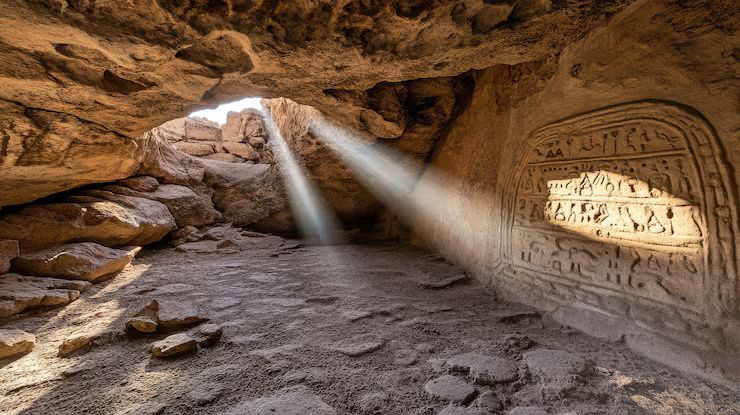
Underground cities in Turkey are ancient networks of tunnels, chambers, dwellings, storage zones, meeting rooms, religious areas, and living quarters carved beneath the earth. These spaces are mainly located in the Cappadocia region, known for soft volcanic rock that is easy to carve and shape. Derinkuyu, Kaymaklı, Özkonak, and several other underground complexes are among the most notable examples.
These cities were designed to offer protection, secrecy, and shelter. Throughout history, many populations in the region faced political unrest, invasions, extreme weather conditions, or cultural conflict. Underground habitats allowed communities to hide safely while continuing daily routines, food storage, metalwork, education, religious ceremonies, and livestock care.
The origin of these cities goes back more than 2,000 years and was influenced by different civilizations, including Phrygians, Byzantines, and early Christian communities. Over time, the underground areas expanded into multi-level structures, sometimes extending dozens of meters below the surface. Some cities were interconnected by passageways stretching long distances across the region.
Underground cities demonstrate ancient engineering using ventilation shafts, water wells, security doors, hidden entrances, and purpose-built storage systems. Their construction reflects knowledge of climate preservation, geological composition, and coordinated living.
Importance: Why These Underground Cities Matter Today
Turkey’s underground cities hold historical, cultural, and archaeological value. They represent community resilience, architectural innovation, and adaptation to environmental and political conditions.
Who underground cities affect
-
Historians studying ancient civilizations and underground architecture
-
Archaeologists researching daily life, tools, and religious practices
-
Cultural scholars examining identity, language, and settlement patterns
-
Travelers seeking heritage learning and geological exploration
-
Conservation groups maintaining historical sites and rock integrity
-
Government authorities preserving ancient spaces and tourism awareness
Why underground cities matter
-
Provide historical knowledge of early settlement strategies
-
Demonstrate advanced multi-level engineering without industrial tools
-
Preserve evidence of ancient social structure and living systems
-
Illustrate water management, ventilation, and food preservation methods
-
Reflect cultural diversity as different groups occupied the same spaces at various times
Problems underground cities helped solve historically
-
Need for safe refuge during conflict
-
Lack of secure above-ground living in times of war
-
Requirement for stable climate-controlled food storage
-
Environmental protection from extreme winter or summer conditions
-
Demand for discreet religious gatherings and community safety
Simplified comparison:
| Above-Ground Settlement | Underground Cities |
|---|---|
| Exposed to conflict | Hidden for safety and protection |
| Dependent on external climate | Constant underground temperature |
| Visible to invaders | Discreet and secure |
| Limited food preservation | Cool storage chambers |
| Minimal concealment | Multi-level secret living structures |
Underground cities illustrate ancient infrastructure design that combined security, environmental adaptation, cultural continuity, and engineering creativity.
Recent Updates, Discoveries, and Heritage Trends (2024–2025)
Ongoing archaeological mapping
Researchers continue to study underground tunnels using 3D mapping, digital scanning, and geological imaging. New corridors and small chambers are occasionally discovered in Cappadocia as structures become better documented.
Cultural preservation and responsible tourism
2024–2025 discussions emphasize managing tourism responsibly to protect stone stability and air quality. Visitor pathways are adjusted to prevent erosion, and digital crowd-control tools help maintain cultural safety.
Improved heritage documentation
Cultural historians have expanded documentation using storytelling archives, social platforms, video records, and virtual tours. This ensures broader global learning without heavy foot traffic.
Digital tourism and educational outreach
Digital museum experiences, online heritage libraries, and bilingual learning modules allow students and researchers to understand underground cities without physical travel. Interactive mapping makes site navigation easier.
Geological and ecological monitoring
Local authorities monitor humidity, temperature, and air circulation to ensure structural safety. This helps maintain underground rock composition and visitor wellbeing.
Underground cities continue evolving through heritage technology, protective tourism planning, archaeological scanning, and preservation strategies.
Laws, Policies, and Preservation Rules (Turkey Focus)
Underground cities in Turkey are protected as historical and archaeological heritage zones. Policies emphasize responsible access, safety, documentation, and conservation.
Cultural heritage protection
Underground cities are recognized as national heritage assets. Preservation laws regulate excavation, restoration, and research activities to prevent structural damage.
Archaeological governance
New discoveries require permission from relevant cultural authorities before excavation begins. Conservation experts approve safe restoration practices that protect original architecture.
Responsible visitor management
Access pathways, lighting systems, staircase safety, and crowd guidelines are established to protect residents and maintain geological stability. Limited entry helps prevent excessive humidity or erosion.
Environmental and structural monitoring
Underground cities require geological assessment to preserve rock quality and prevent collapses. Monitoring ensures cultural sites remain secure for long-term preservation.
Documentation and research ethics
Scholarly work must follow ethical guidelines, respectful representation of local culture, and transparent data reporting. Heritage laws prevent unauthorized excavation or artifact transfer.
Policies ensure historical respect, site safety, cultural integrity, environmental protection, and regulated archaeology.
Tools, Educational Platforms, and Cultural Resources
Digital tools and learning resources support exploration and heritage understanding of underground cities.
Heritage education resources
-
Online archives detailing Cappadocia history
-
Archaeology platforms with tunnel maps and excavation notes
-
Digital storytelling collections from cultural researchers
-
Geography modules explaining volcanic rock formation
Mapping and simulation tools
-
3D underground mapping systems
-
Cave and tunnel visualization apps
-
Virtual reality heritage walkthroughs
-
Geological structure simulation dashboards
Conservation and monitoring resources
-
Rock humidity and air-quality monitoring tools
-
Environmental safety dashboards for underground chambers
-
Visitor flow analytics for responsible site access
Cultural tourism and planning references
-
Region-wide heritage information libraries
-
Digital museum guides
-
Educational travel awareness webpages
-
Cultural storytelling platforms
These tools improve research quality, travel knowledge, preservation awareness, and immersive heritage learning.
FAQs
What are underground cities in Turkey?
They are ancient tunnel-based settlements built below ground to provide safety, community living, food storage, and cultural continuity. Most are located in Cappadocia.
Who built the underground cities?
Different civilizations across centuries, including Phrygians, Byzantines, and early Christian communities, contributed to their development. Layered construction reflects long historical use.
How deep can these underground structures go?
Some cities like Derinkuyu extend multiple levels below the surface with chambers, ventilation shafts, communal kitchens, and livestock areas.
Are underground cities safe to enter today?
Designated public sites follow safety guidelines, structural monitoring, and controlled access pathways for responsible viewing.
Why were these underground cities created?
They offered refuge during conflict, improved food storage, cultural privacy, environmental protection, and community organization within secure underground spaces.
Conclusion
Turkey’s underground cities symbolize a remarkable blend of archaeological detail, community engineering, cultural heritage, environmental adaptation, and protective architecture. Their multi-level design demonstrates early knowledge of ventilation, water management, and climate stabilization.
Recent updates reflect a growing emphasis on heritage preservation, digital mapping, visitor safety, virtual learning, and collaborative research. Policies support responsible access, cultural respect, geological monitoring, and historical integrity.
These underground environments remain valuable for understanding ancient resilience, cultural continuity, and innovative settlement strategies. Exploring them provides insight into how communities adapted uniquely to security needs, geography, and evolving history.