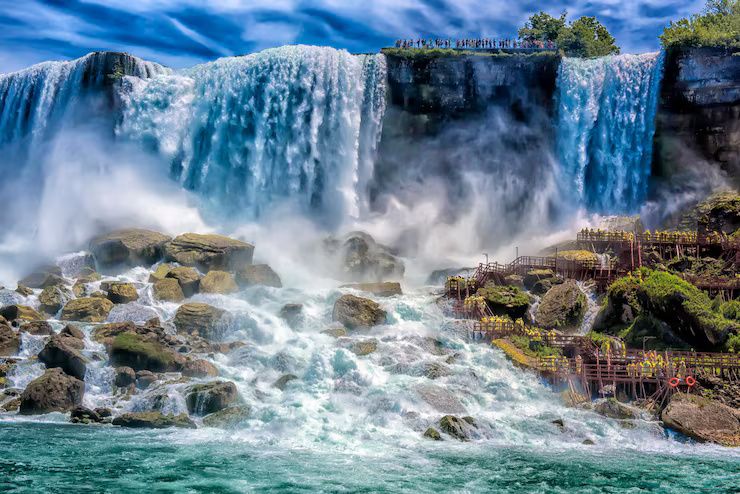
Famous waterfalls are large and visually striking natural features formed where rivers or streams flow over steep drops in the landscape. They exist because of long-term geological processes such as erosion, tectonic movement, and variations in rock hardness. Over thousands of years, flowing water gradually shapes cliffs and escarpments, creating waterfalls that can vary greatly in height, width, and water volume.
Across continents, waterfalls have drawn attention for their scale and natural beauty. Many are located within protected landscapes, river basins, or mountainous regions. These natural wonders have become reference points for geography, hydrology, and environmental studies, helping people understand how freshwater systems behave within different climates and terrains.
Importance: Why Famous Waterfalls Matter Today
Famous waterfalls matter because they connect natural science, environmental awareness, and cultural identity. They affect local ecosystems by supporting biodiversity and regulating river flow. Communities living near waterfalls often rely on surrounding rivers for freshwater, agriculture, and energy planning.
This topic is important for:
-
Environmental researchers studying erosion and water cycles
-
Conservation authorities managing protected natural areas
-
Educators and students learning about geography and climate
-
Policy planners focused on sustainable land and water use
Waterfalls also help raise awareness about freshwater conservation and climate-related changes. Variations in water flow can signal broader environmental shifts, including changing rainfall patterns and glacial melt.
Types of Waterfalls and Natural Formation Patterns
Waterfalls are categorized based on how water descends and interacts with the landscape. Understanding these types helps explain why famous waterfalls appear so different from one another.
Common waterfall types include:
-
Plunge waterfalls, where water drops vertically without touching the rock face
-
Horsetail waterfalls, where water remains in contact with rock during descent
-
Tiered waterfalls, formed by multiple drops at different elevations
-
Block waterfalls, characterized by wide, heavy water flow
Table: Waterfall Types and Key Characteristics
| Waterfall Type | Flow Pattern | Geological Feature |
|---|---|---|
| Plunge | Vertical drop | Resistant rock layers |
| Horsetail | Sloping contact | Gradual erosion |
| Tiered | Multiple levels | Stepped terrain |
| Block | Wide curtain | Broad river channel |
These natural patterns explain the visual diversity seen in well-known waterfalls across the world.
Famous Waterfalls Around the World
Several waterfalls have gained global recognition due to their size, setting, and environmental significance. Each reflects unique geological and climatic conditions.
-
Niagara Falls is known for its high water volume and continuous flow, shaped by post-glacial erosion.
-
Iguazu Falls consists of hundreds of cascades formed along a volcanic plateau.
-
Victoria Falls spans a wide basalt gorge and creates seasonal mist visible from long distances.
-
Angel Falls is recognized for its extreme height, descending from a tabletop mountain.
Table: Comparative Overview of Selected Famous Waterfalls
| Waterfall | Region | Notable Feature |
|---|---|---|
| Niagara Falls | North America | High flow rate |
| Iguazu Falls | South America | Extensive width |
| Victoria Falls | Africa | Seasonal mist |
| Angel Falls | South America | Exceptional height |
This comparison highlights how different landscapes influence waterfall characteristics.
Recent Updates: Environmental and Tourism-Related Trends
In 2024, environmental monitoring agencies reported increased attention to water flow variability at major waterfalls due to changing rainfall patterns. Studies published in mid-2024 linked seasonal flow reductions at some waterfalls to prolonged dry periods in surrounding regions.
Another trend observed in late 2024 was the expansion of digital mapping and satellite-based observation tools. These technologies help researchers track erosion rates, vegetation health, and river discharge around famous waterfalls. Several protected areas introduced updated visitor management guidelines during 2025 to reduce erosion and protect viewing zones.
Educational outreach also increased, with virtual learning platforms highlighting famous waterfalls as case studies in climate science and geography curricula.
Laws and Policies Affecting Famous Waterfalls
Famous waterfalls are often protected under national park laws, environmental protection acts, or heritage conservation programs. Governments regulate land use, construction, and water diversion activities near these sites to preserve natural flow and surrounding ecosystems.
Policy areas commonly include:
-
Protected area and national park regulations
-
Environmental impact assessment requirements
-
Water resource management laws
-
Biodiversity conservation programs
International cooperation is also important for waterfalls located on shared borders, where river management agreements help maintain ecological balance and water quality.
Tools and Resources for Learning About Waterfalls
A range of educational tools and reference materials support the study of famous waterfalls and their environments. These resources are designed for research, learning, and planning purposes.
Helpful tools and resources include:
-
Interactive world maps highlighting major waterfalls
-
Hydrology data portals showing river flow trends
-
Climate visualization tools for rainfall analysis
-
Educational documentaries on natural wonders
-
Geography textbooks and digital learning platforms
Table: Example Learning Tools and Their Purpose
| Tool Type | Use Case |
|---|---|
| Digital maps | Location and scale comparison |
| River data charts | Flow variation analysis |
| Climate graphs | Seasonal rainfall patterns |
These tools help users understand how waterfalls fit into broader environmental systems.
FAQs: Common Questions About Famous Waterfalls
How are waterfalls formed naturally?
Waterfalls form through erosion, where softer rock wears away faster than harder rock, creating a vertical or steep drop in a river’s path.
Do waterfalls change over time?
Yes. Continuous erosion can cause waterfalls to move upstream or alter their shape over long periods.
Why do some waterfalls have seasonal flow changes?
Seasonal rainfall, snowmelt, and upstream water storage affect how much water reaches a waterfall at different times of the year.
Are famous waterfalls protected by law?
Many are protected under national park or environmental conservation laws to preserve natural conditions.
Can waterfalls indicate climate patterns?
Changes in water volume and seasonal behavior can reflect broader climate and weather trends.
Conclusion
Famous waterfalls are remarkable natural features shaped by geology, water flow, and time. They play an important role in environmental systems, education, and cultural awareness. Recent developments show increased focus on conservation, digital monitoring, and climate research related to these sites.
Understanding famous waterfalls helps explain how landscapes evolve and why freshwater systems must be managed responsibly. Through clear policies, educational tools, and environmental protection efforts, these natural wonders can continue to be studied and appreciated for generations.