Floor Scrubbers: Guide to Industrial and Commercial Floor Cleaning Machines
Floor scrubbers are mechanical cleaning machines designed to wash and dry hard floor surfaces in a single operating process.
Industrial floor scrubbers, commercial floor scrubbers, automatic floor scrubber machines, and factory floor cleaning machines are used in places where large floor areas need regular cleaning. These machines combine water or cleaning solution, rotating or cylindrical brushes, mechanical agitation, and suction to remove dirt and recover used water from floors.
Context
What Are Floor Scrubbers?
A floor scrubber is a powered machine that performs several cleaning tasks together. Depending on its design, it can apply a measured amount of water or cleaning solution, agitate the surface with brushes or pads, collect dirty liquid, and leave the floor relatively dry.
Traditional floor cleaning often involves separate sweeping, mopping, rinsing, and drying activities. Industrial floor cleaning machines combine several of these steps into one process, which can make cleaning large indoor areas more systematic.
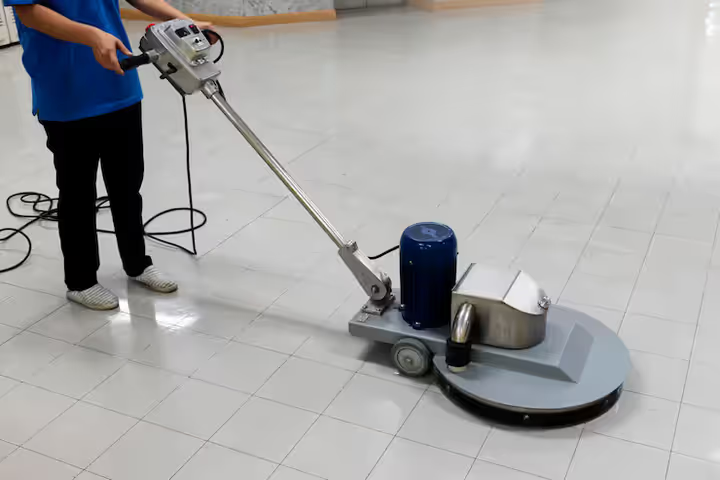
Commercial floor cleaning equipment is available in different configurations. Small walk-behind machines are intended for compact areas, while larger ride-on machines are designed for warehouses, factories, distribution centers, airports, shopping areas, and other extensive spaces.
Main Types of Floor Scrubbers
Floor scrubbers can be grouped according to how they are operated and the cleaning mechanism they use.
Walk-behind scrubbers require an operator to guide the machine. They are commonly used in corridors, retail areas, workshops, educational buildings, and medium-sized facilities.
Ride-on scrubbers allow an operator to sit on the machine while controlling movement and cleaning functions. Their larger tanks and wider cleaning paths can make them suitable for extensive floor areas.
Automatic floor scrubber machines use powered movement and automated control functions to regulate selected cleaning operations. Depending on the model, these functions can include water flow, brush pressure, suction, and movement control.
Robotic floor scrubbers use sensors, navigation software, and programmed routes to move through designated areas with limited direct control during routine operation.
How a Floor Scrubber Works
Most machines follow a basic sequence. Water or cleaning solution is distributed onto the floor, rotating brushes or pads agitate the surface, and a vacuum system collects the resulting liquid.
The collected liquid moves into a recovery tank rather than remaining on the floor. Filters, hoses, brushes, tanks, and suction components need regular inspection because their condition affects machine operation.
Different floors require different cleaning approaches. Concrete, ceramic tile, natural stone, vinyl, epoxy-coated floors, and other surfaces can vary in hardness, texture, chemical resistance, and sensitivity to abrasion.
| Floor Scrubber Type | Typical Area | Main Operating Method |
|---|---|---|
| Compact walk-behind | Small to medium areas | Operator-guided |
| Large walk-behind | Medium to large areas | Operator-guided |
| Ride-on | Large facilities | Seated operator |
| Robotic scrubber | Defined indoor routes | Automated navigation |
| Industrial scrubber | Factories and warehouses | Heavy-duty mechanical cleaning |
Importance
Maintaining Large Floor Areas
Large facilities can accumulate dust, soil, oil residues, packaging debris, and other contaminants through regular activity. Manual cleaning methods can become difficult to coordinate when floor areas extend across warehouses, factories, transport facilities, or public buildings.
Heavy duty floor scrubbers are designed for demanding environments where machines may operate across large hard-floor surfaces. Their configuration can include larger tanks, wider cleaning paths, stronger brush systems, and durable components.
Supporting Workplace Conditions
Clean floors can contribute to orderly working environments. Removing accumulated dirt and liquid can also help reduce conditions that may create slipping hazards, although a floor scrubber itself does not eliminate all workplace risks.
Facility managers must consider floor condition, drainage, pedestrian movement, chemical handling, and other environmental factors alongside mechanical cleaning.
Reducing Manual Handling
Commercial floor scrubbers can reduce the amount of repetitive physical work associated with manually cleaning extensive surfaces. Operators can control machine speed, brush operation, water application, and recovery functions from a central control area.
This can be particularly relevant in warehouses, factories, parking structures, hospitals, educational buildings, and other facilities where cleaning areas are large and frequently used.
Supporting Different Cleaning Requirements
Not every floor requires the same cleaning method. Factors that influence machine selection and operation include:
- Floor material
- Surface texture
- Amount and type of contamination
- Area size
- Available water supply
- Drainage arrangements
- Cleaning frequency
- Pedestrian traffic
- Required drying time
Cleaning chemicals must also be compatible with the floor material and the machine components. Manufacturer instructions and chemical safety information should be reviewed before use.
Recent Updates
Growth of Robotic Floor Cleaning
From 2024 through 2026, robotic cleaning has continued to develop as part of wider automation in facility management. Robotic floor scrubbers commonly combine cameras, proximity sensors, mapping systems, navigation software, and safety detection features.
Industrial robotic floor cleaners may be configured to follow mapped routes and identify obstacles. Depending on the system, they can pause when an obstacle is detected and continue when the route becomes available.
Autonomous operation does not remove the need for human oversight. Operators may still need to inspect floors, refill tanks, manage obstacles, clean machine components, and respond to unusual operating conditions.
Greater Use of Sensors and Data
Modern industrial floor cleaning machines increasingly incorporate electronic controls and sensors. These systems can monitor parameters such as water levels, battery condition, brush pressure, machine movement, and recovery-tank status.
Some connected machines can transmit operating information to facility-management platforms. Data can help organizations understand machine usage patterns and schedule routine inspections.
Battery Technology
Battery-powered floor scrubbers remain common in indoor environments because they avoid the need for a trailing electrical cable during operation. Improvements in battery technology have supported changes in operating time, charging arrangements, and machine design.
Lithium-ion batteries are used in some newer machines, while other models continue to use lead-acid battery systems. Each battery type has specific charging, storage, ventilation, and handling requirements.
More Attention to Water Use
Manufacturers have also focused on controlling water application and recovery. Sensors and electronically controlled pumps can regulate the amount of liquid distributed during cleaning.
Water management is relevant in facilities where large floor areas are cleaned regularly. However, actual water consumption depends on the machine configuration, operating conditions, cleaning method, and floor contamination.
Laws or Policies
Workplace Safety in India
In India, the use of industrial and commercial cleaning equipment is influenced by workplace health and safety requirements. The Occupational Safety, Health and Working Conditions Code, 2020 provides a broad framework concerning occupational safety and working conditions, although implementation and applicable provisions depend on the relevant regulatory framework.
Factories and other workplaces may also be subject to requirements concerning electrical safety, machinery, worker protection, chemical handling, and housekeeping.
Electrical and Battery Safety
Electrically powered floor scrubbers should be operated according to applicable electrical safety requirements and manufacturer instructions. Charging areas for battery-powered machines should have appropriate arrangements for the particular battery technology.
Facilities should also consider ventilation and ignition risks where applicable, particularly when using battery systems or cleaning chemicals that require controlled handling.
Chemical Handling
Cleaning agents used with floor scrubbers can fall under workplace chemical-handling requirements depending on their composition and use. Safety Data Sheets provide information about hazards, handling, storage, and emergency measures.
Workers using cleaning chemicals should follow the applicable workplace procedures and product instructions. Chemicals should not be mixed unless compatibility has been specifically established.
Noise and Environmental Considerations
Some large machines can generate significant noise during operation. Facilities should consider workplace noise exposure where machines are used for extended periods.
Used cleaning liquid should also be handled according to the facility's drainage and environmental requirements. Contaminated liquid containing oils, chemicals, or industrial residues may require different handling from ordinary wastewater.
Tools and Resources
Floor Assessment Tools
Before selecting or configuring a scrubber, facility operators can document floor area, surface material, contamination type, obstacles, cleaning frequency, and available storage space. A simple floor survey can help determine the required cleaning width, tank capacity, maneuverability, and operating pattern.
Floor plans can also be used to identify narrow corridors, doors, ramps, restricted areas, and pedestrian routes.
Maintenance Checklists
Routine inspection checklists can include:
- Brush or pad condition
- Squeegee condition
- Recovery tank cleanliness
- Solution tank condition
- Filters and hoses
- Battery condition
- Charger condition
- Wheels and drive components
- Warning indicators
- Emergency controls
Keeping records of inspections can help identify recurring equipment issues and provide information for maintenance planning.
Manufacturer Documentation and Safety Resources
Equipment manuals provide information about machine operation, brush selection, tank capacities, charging procedures, and maintenance intervals. Safety Data Sheets can help operators understand the cleaning chemicals used with the equipment.
In India, organizations can also refer to resources from the Ministry of Labour and Employment, state factory inspectorates, the Bureau of Indian Standards, and other applicable regulatory authorities for workplace safety information.
FAQs
What are industrial floor scrubbers used for?
Industrial floor scrubbers are used to clean hard surfaces in facilities such as factories, warehouses, workshops, distribution centers, and large commercial buildings. They combine liquid application, mechanical scrubbing, and recovery of used liquid.
How do automatic floor scrubber machines work?
Automatic floor scrubber machines use powered brushes or pads, controlled liquid application, and suction to clean and recover liquid from the floor. Some models also automate movement and selected cleaning functions.
Are robotic floor scrubbers suitable for factories?
Robotic floor scrubbers can be used in certain factory environments when floor layouts, traffic conditions, obstacles, surface types, and safety requirements are compatible with the machine's navigation system. Human oversight remains necessary.
What are heavy duty floor scrubbers designed for?
Heavy duty floor scrubbers are designed for demanding cleaning environments and larger floor areas. They may have larger tanks, wider cleaning paths, stronger brush systems, and construction intended for frequent industrial use.
What should be considered when choosing factory floor cleaning machines?
Important considerations include floor type, cleaning area, contamination, machine dimensions, water and recovery capacity, battery arrangement, maneuverability, operator requirements, safety features, and maintenance needs.
Conclusion
Floor scrubbers combine mechanical brushing, liquid application, and liquid recovery to clean hard floor surfaces in commercial and industrial environments. Industrial floor scrubbers range from operator-guided machines to automated and robotic systems equipped with sensors and navigation technology. Recent developments have focused on automation, data monitoring, battery technology, and controlled water application. Safe operation still depends on appropriate machine selection, workplace procedures, chemical handling, inspection, and maintenance.