Mobile cranes are lifting machines designed to move easily between locations while handling heavy loads. Unlike fixed cranes, they combine lifting capability with mobility, allowing operators to transport the crane to a worksite, set it up, perform lifting tasks, and relocate when needed. This flexibility makes mobile cranes essential for projects where lifting points change frequently or where permanent lifting structures are impractical.
The concept of mobile cranes developed as construction, infrastructure, and industrial projects expanded beyond single locations. Early lifting devices were stationary and time-consuming to relocate. As project timelines tightened and work became more distributed, mobile cranes emerged to support faster setup, adaptable lifting, and efficient site operations.
Today, mobile cranes are widely used in construction, logistics, energy projects, infrastructure development, manufacturing plants, and maintenance operations.
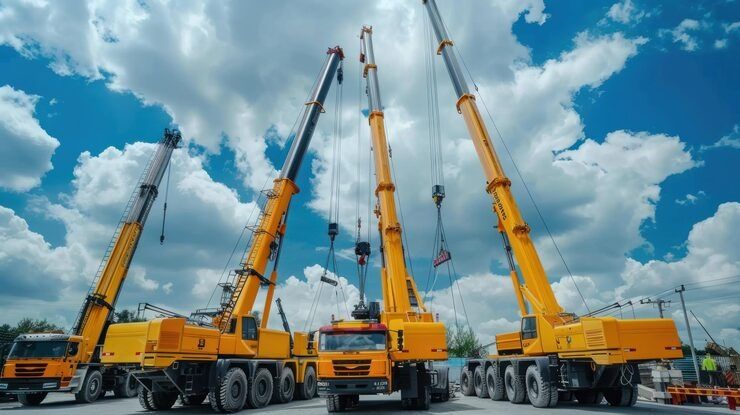
Importance: Why Mobile Cranes Matter Today
Mobile cranes play a critical role in modern industry and construction due to their versatility and efficiency.
Why this topic matters today:
-
Project flexibility: One crane can serve multiple lifting points across a site
-
Time efficiency: Faster setup compared to fixed lifting systems
-
Wide application range: Suitable for urban sites, remote areas, and industrial facilities
-
Load handling capability: Supports lifting of heavy and oversized components
-
Infrastructure growth: Essential for bridges, towers, utilities, and transport projects
Mobile cranes affect construction planners, site engineers, logistics coordinators, safety officers, and equipment operators. They solve problems related to restricted access, changing lift locations, and tight project schedules.
Recent Updates: Industry Trends and Developments (2024–2025)
Over the past year, mobile crane technology has continued to evolve, focusing on safety, efficiency, and operational intelligence.
| Year | Development or Trend | Operational Impact |
|---|---|---|
| 2024 | Advanced load moment indicators | Improved overload prevention |
| 2024 | Enhanced hydraulic efficiency | Smoother lifting and reduced energy loss |
| 2025 | Digital crane monitoring systems | Better lift planning and usage tracking |
| 2025 | Improved chassis stability designs | Safer operation on uneven terrain |
Recent developments also include better operator cabins with improved visibility, refined control interfaces, and stronger emphasis on noise reduction and environmental compatibility in urban areas.
Laws, Standards, and Regulatory Influence
Mobile crane operations are governed by strict safety and operational regulations due to the risks associated with heavy lifting.
Common regulatory and standard frameworks include:
-
Occupational safety regulations: Define safe lifting practices and operator responsibilities
-
ISO standards for cranes: Cover design, stability, and load rating requirements
-
National construction safety codes: Specify inspection and certification requirements
-
Transportation regulations: Govern road movement of mobile cranes
Regulations typically require:
-
Certified crane operators
-
Clearly marked load charts
-
Routine inspection and maintenance records
-
Safe setup procedures and ground assessment
Compliance reduces accident risk and ensures safe integration into construction and industrial environments.
Types of Mobile Cranes
Mobile cranes are classified based on mobility, terrain capability, and application needs.
Common types include:
-
Truck-mounted cranes: Mounted on road-going trucks, suitable for fast relocation
-
All-terrain cranes: Designed for both highways and rough ground conditions
-
Rough-terrain cranes: Optimized for uneven and unpaved job sites
-
Crawler cranes: Mounted on tracks for excellent stability and heavy lifting
-
Pick-and-carry cranes: Compact cranes for short-distance load movement
| Crane Type | Key Feature | Typical Use |
|---|---|---|
| Truck-mounted | High mobility | Urban construction |
| All-terrain | Versatile travel | Infrastructure projects |
| Rough-terrain | Strong off-road ability | Industrial sites |
| Crawler | High stability | Heavy lifts |
| Pick-and-carry | Compact design | Plant maintenance |
Each type is selected based on site conditions, lift capacity, and mobility requirements.
Working Principles: How Mobile Cranes Operate
Mobile cranes operate using mechanical, hydraulic, and structural systems working together.
Core operating principles include:
-
Load lifting: A hoist mechanism raises and lowers loads using wire ropes
-
Boom operation: Telescopic or lattice booms extend reach and height
-
Hydraulic control: Hydraulic systems power boom movement and lifting
-
Stability management: Outriggers or tracks distribute load forces
-
Load monitoring: Sensors track weight, radius, and stability margins
Proper balance between load weight, boom length, and operating radius is essential. Load charts guide operators on safe lifting limits under different configurations.
Operational Knowledge: Key Considerations on Site
Effective mobile crane operation depends on planning, setup, and execution.
Pre-operation considerations:
-
Ground bearing capacity assessment
-
Crane configuration selection
-
Load weight verification
-
Weather condition evaluation
During operation:
-
Maintain clear communication signals
-
Monitor load swing and boom deflection
-
Respect rated capacity limits
-
Ensure exclusion zones around lifting area
Post-operation practices:
-
Secure boom and hook
-
Retract outriggers
-
Conduct visual inspections
Operational discipline directly affects safety and lifting efficiency.
Tools and Learning Resources
Understanding mobile cranes is supported by technical and educational resources.
Helpful learning resources include:
-
Construction equipment operation manuals
-
Crane safety handbooks
-
Load chart interpretation guides
-
Engineering textbooks on lifting mechanics
-
Workplace safety authority publications
Practical reference tools:
-
Ground pressure calculation charts
-
Lift planning templates
-
Hand signal reference sheets
-
Inspection and maintenance checklists
These tools help operators and planners perform lifts safely and accurately.
Frequently Asked Questions
What is the main advantage of mobile cranes?
Their ability to move easily between locations while performing heavy lifting tasks.
How is crane stability maintained?
Through outriggers, tracks, or counterweights that balance lifting forces.
Why are load charts important?
They define safe lifting limits based on crane configuration and reach.
Can mobile cranes operate on uneven ground?
Yes, certain types are specifically designed for rough or uneven terrain.
What skills are essential for crane operation?
Understanding load dynamics, site conditions, communication signals, and safety procedures.
Conclusion
Mobile cranes are indispensable tools in modern construction and industrial operations. Their combination of lifting strength and mobility allows projects to progress efficiently across varied environments. By understanding the different crane types, working principles, regulations, and operational practices, professionals can plan safer and more effective lifting operations.
As technology continues to advance, mobile cranes are becoming smarter, safer, and more adaptable, reinforcing their central role in infrastructure development and industrial growth.