Industrial cutting machines are specialized manufacturing systems designed to cut, shape, and separate materials with high accuracy and efficiency. These machines are used across industries to process metals, plastics, composites, wood, and other engineering materials into precise components used in larger assemblies.
The development of industrial cutting machines emerged from the need for precision, repeatability, and productivity in manufacturing. Early cutting methods relied heavily on manual tools, which were limited in accuracy and consistency. As industries expanded and product designs became more complex, advanced cutting technologies were developed to deliver consistent results at higher speeds.
Today, industrial cutting machines form the backbone of modern manufacturing environments. They enable precise component production for machinery, transportation equipment, infrastructure systems, and consumer products.
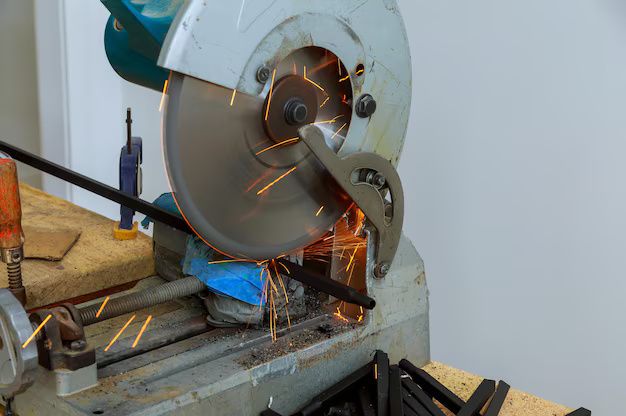
Importance: Why Industrial Cutting Machines Matter Today
Industrial cutting machines play a central role in manufacturing because nearly every engineered product begins with a raw material that must be accurately shaped or trimmed.
Why this topic matters today:
-
Precision engineering: Accurate cuts ensure components fit correctly during assembly
-
Production efficiency: Automated cutting reduces production time and material waste
-
Product quality: Smooth edges and precise dimensions improve reliability
-
Scalability: High-volume manufacturing depends on consistent cutting performance
-
Material versatility: Modern machines handle multiple materials and thicknesses
These machines affect mechanical engineers, production planners, quality inspectors, industrial designers, and maintenance specialists. They solve problems such as uneven edges, dimensional inaccuracies, slow manual processes, and excessive material waste.
Industries relying heavily on industrial cutting machines include automotive manufacturing, aerospace engineering, construction materials, shipbuilding, electronics fabrication, and heavy machinery production.
Recent Updates: Industry Trends and Developments (2024–2025)
Over the past year, industrial cutting technology has continued to evolve with improvements in automation, energy efficiency, and precision control.
| Year | Development or Trend | Industrial Impact |
|---|---|---|
| 2024 | Advanced CNC control systems | Greater accuracy and repeatability |
| 2024 | Improved fiber laser cutting technology | Faster cutting speeds and cleaner edges |
| 2025 | Smart machine monitoring | Real-time performance tracking |
| 2025 | Hybrid cutting solutions | Combination of multiple cutting technologies |
Recent developments also include improved cooling systems for cutting heads, better material detection sensors, and more compact machine designs suitable for flexible production lines. Manufacturers increasingly integrate machine data monitoring to maintain consistent quality and detect deviations early.
Laws, Regulations, and Policy Influence
Industrial cutting machines operate under workplace safety, machinery standards, and environmental regulations that ensure safe operation and responsible manufacturing practices.
Common regulatory frameworks include:
-
Workplace machinery safety regulations requiring protective guards and emergency stops
-
Electrical safety standards for industrial equipment
-
Occupational health rules addressing noise, fumes, and operator protection
-
Environmental guidelines controlling emissions and waste handling
Many countries also implement industrial modernization initiatives encouraging manufacturers to adopt more energy-efficient and digitally controlled equipment. Compliance with these regulations ensures safer workplaces and improved manufacturing quality.
Technologies Used in Industrial Cutting Machines
Industrial cutting machines employ several technologies, each suited to different materials and precision requirements.
Common cutting technologies include:
-
Laser cutting: Uses concentrated light beams for high-precision material removal
-
Plasma cutting: Uses ionized gas to cut electrically conductive materials
-
Waterjet cutting: Uses high-pressure water streams with abrasive particles
-
Mechanical cutting: Includes sawing, milling, and shearing processes
-
Flame cutting: Uses oxygen and fuel gases for thick metal cutting
| Cutting Technology | Key Advantage | Typical Applications |
|---|---|---|
| Laser cutting | High precision and smooth edges | Sheet metal fabrication |
| Plasma cutting | Fast cutting for thick metals | Industrial structures |
| Waterjet cutting | Minimal heat distortion | Aerospace components |
| Mechanical cutting | Versatile and widely used | General manufacturing |
| Flame cutting | Effective for heavy steel | Construction materials |
Each technology offers different advantages in terms of speed, accuracy, and material compatibility.
Applications Across Industrial Sectors
Industrial cutting machines are used in numerous sectors where precise component manufacturing is required.
Major application areas include:
-
Automotive body and component production
-
Aerospace structural parts
-
Steel and metal fabrication
-
Electronics component manufacturing
-
Shipbuilding and heavy machinery
-
Construction materials processing
Accurate cutting ensures that components meet strict engineering tolerances, allowing efficient assembly and reliable product performance.
Tools and Resources for Learning and Implementation
Understanding industrial cutting machines is supported by technical references and professional learning resources.
Useful knowledge resources include:
-
Manufacturing engineering textbooks
-
Industrial automation training programs
-
Engineering research journals on manufacturing processes
-
Workplace safety authority publications
-
Material processing technical guides
Practical tools often used in cutting operations:
-
Material thickness reference charts
-
Cutting speed calculation tables
-
Machine maintenance inspection checklists
-
Production workflow templates
These resources help engineers, technicians, and students develop practical knowledge about cutting processes and machine operation.
Frequently Asked Questions
What is the main purpose of industrial cutting machines?
They precisely shape raw materials into components required for manufacturing and assembly processes.
Which materials can industrial cutting machines process?
They commonly process metals, plastics, composites, wood, and specialized engineering materials.
Why is cutting precision important?
Precision ensures components meet design tolerances and function correctly during assembly and operation.
How do cutting technologies differ?
Different technologies use mechanical force, thermal energy, or high-pressure streams to remove material.
Are industrial cutting machines automated?
Many modern systems incorporate automated control for improved accuracy and consistent production.
Conclusion
Industrial cutting machines are essential to modern manufacturing. They enable the accurate shaping of materials that form the foundation of countless industrial products. Through technologies such as laser, plasma, waterjet, and mechanical cutting, manufacturers can achieve the precision and efficiency required by modern engineering standards.
As manufacturing continues to evolve, industrial cutting machines are becoming more automated, intelligent, and energy-efficient. Understanding their technologies, applications, and regulatory requirements provides valuable insight into how precision manufacturing supports global industrial development.