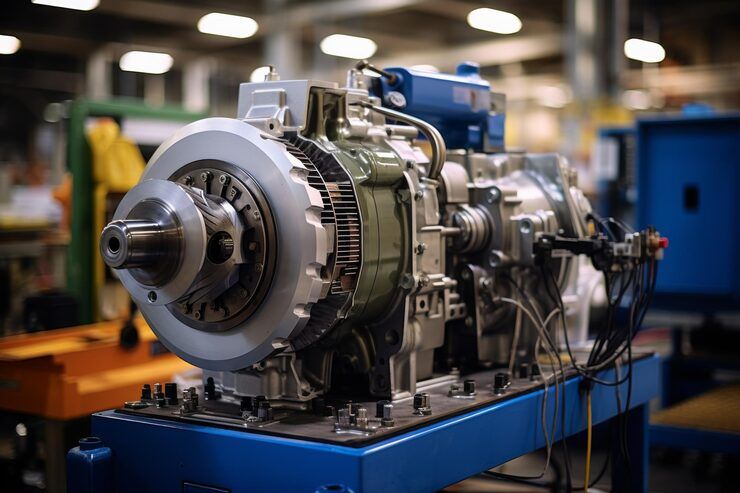
Industrial motors are machines that convert electrical energy into mechanical motion. They are a core component of industrial automation systems, manufacturing equipment, HVAC units, pumps, compressors, conveyor systems, and robotics.
The need for industrial motors began with the growth of electrification in the late 19th and early 20th centuries. As industries expanded, factories required reliable mechanical power that could operate continuously and efficiently. Electric motors gradually replaced steam engines and mechanical belt systems because they were safer, more compact, and easier to control.
Today, the most widely used types include:
-
AC induction motors
-
Synchronous motors
-
DC motors
-
Servo motors
-
Stepper motors
These motors vary in torque output, speed control capability, energy efficiency, and industrial application. Modern motor systems often integrate variable frequency drives (VFDs) and advanced motor control systems to improve performance and reduce energy consumption.
Importance
Industrial motors are critical because they power nearly every automated production environment. According to global energy assessments, electric motors account for a large share of industrial electricity consumption.
Why this topic matters today:
-
Energy efficiency regulations are tightening worldwide.
-
Industries are adopting predictive maintenance tools.
-
Smart manufacturing requires advanced motor control integration.
-
Rising electricity demand increases the need for optimized motor performance.
Industrial motors affect:
-
Manufacturing plants
-
Oil and gas facilities
-
Water treatment plants
-
Construction material production
-
Data centers and HVAC infrastructure
Key problems they help solve:
-
Converting electrical power into controlled mechanical motion
-
Reducing manual labor through automation
-
Improving precision in production lines
-
Enhancing operational reliability
Energy-efficient motors and premium efficiency motor designs reduce energy losses caused by heat, friction, and magnetic resistance. These improvements support sustainability goals and carbon reduction targets.
Types of Industrial Motors and Their Function
| Motor Type | Power Source | Key Feature | Common Application |
|---|---|---|---|
| AC Induction Motor | Alternating | Durable, low maintenance | Pumps, fans, conveyors |
| Synchronous Motor | Alternating | Constant speed operation | Large compressors, mills |
| DC Motor | Direct | Precise speed control | Elevators, cranes |
| Servo Motor | AC/DC | High precision positioning | Robotics, CNC machines |
| Stepper Motor | Electric | Incremental movement control | Automation equipment |
AC motors dominate industrial use due to reliability and simpler design. DC motors are preferred where speed variation and torque control are essential.
Efficiency and Energy Performance Overview
Below is a simplified representation of energy distribution in a typical industrial motor system:
| Energy Input | Mechanical Output | Heat Loss | Friction & Other Loss |
|---|---|---|---|
| 100% | 88–96% | 2–6% | 2–6% |
Premium efficiency motors can exceed 95% efficiency depending on size and application.
Graph Representation (Conceptual Trend)
Efficiency increases with improved design standards:
Standard Motor → High Efficiency Motor → Premium Efficiency Motor → IE4 / IE5 Super Premium
This progression reflects global efforts to improve electric motor efficiency standards.
Recent Updates
Over the past year, several developments have influenced industrial motor technology:
-
2025 energy efficiency revisions in various regions continue aligning with IE3, IE4, and emerging IE5 classifications.
-
Greater adoption of smart motor sensors for predictive maintenance.
-
Increased integration of industrial IoT (IIoT) with motor monitoring systems.
-
Expansion of high-efficiency motor manufacturing in Asia-Pacific markets.
Many manufacturers are focusing on:
-
Rare-earth optimized rotor designs
-
Reduced copper losses
-
Advanced insulation systems
-
Digital twin simulation in motor design
As of early 2026, sustainability reporting requirements in multiple countries are encouraging industries to upgrade to higher-efficiency motor systems to meet carbon reduction targets.
Laws or Policies
Industrial motors are influenced by energy efficiency regulations and electrical safety standards. While policies vary by country, key regulatory themes include:
Energy Efficiency Standards
-
IE (International Efficiency) classifications
-
Minimum Energy Performance Standards (MEPS)
-
Mandatory labeling requirements
Electrical Safety Compliance
-
Insulation standards
-
Thermal protection requirements
-
Overload and short-circuit safeguards
In countries like India, energy performance standards for electric motors are regulated through national efficiency programs aligned with global frameworks. Similar regulations exist in the European Union and North America to reduce industrial electricity consumption.
Organizations such as:
-
International Electrotechnical Commission
-
Bureau of Energy Efficiency
play a role in defining motor efficiency classifications and compliance standards.
Regulatory updates in recent years emphasize:
-
IE3 and IE4 efficiency compliance
-
Reduced greenhouse gas emissions
-
Industrial sustainability goals
Tools and Resources
Several tools and platforms support motor selection, monitoring, and performance evaluation:
Motor Selection Software
-
Manufacturer-based motor sizing calculators
-
Torque-speed curve simulation tools
Energy Efficiency Calculators
-
Industrial motor load calculators
-
Energy consumption comparison tools
Monitoring and Predictive Maintenance
-
Vibration analysis software
-
Thermal imaging tools
-
IoT-enabled motor condition monitoring systems
Engineering Standards and Documentation
-
IEC motor standards documentation
-
National energy efficiency portals
-
Electrical design handbooks
Digital tools now allow engineers to simulate motor load behavior before installation, helping optimize energy use and system reliability.
Motor Control Systems and Automation Integration
Modern industrial environments rely on advanced control systems.
Key components include:
-
Variable Frequency Drives (VFDs)
-
Soft starters
-
PLC-controlled motor systems
-
Smart relays
Benefits of motor control systems:
-
Reduced inrush current
-
Speed adjustment based on load
-
Lower mechanical stress
-
Improved energy efficiency
Industrial automation systems increasingly depend on synchronized motor operations in robotics, packaging lines, and automated storage systems.
Maintenance and Lifecycle Considerations
Industrial motors require preventive and predictive maintenance to ensure long service life.
Common maintenance practices:
-
Bearing lubrication
-
Insulation resistance testing
-
Vibration analysis
-
Thermal inspection
Predictive maintenance uses sensor data to identify early signs of failure, reducing downtime and improving equipment lifespan.
Lifecycle factors include:
-
Operating temperature
-
Load variation
-
Environmental conditions
-
Voltage stability
Upgrading older motors to premium efficiency models can reduce long-term operational energy use.
FAQs
What is the difference between AC and DC industrial motors?
AC motors operate on alternating current and are widely used in industrial environments. DC motors run on direct current and provide more precise speed control in specialized applications.
What does IE3 or IE4 mean in motor efficiency?
IE3 and IE4 are international efficiency classes defined by the International Electrotechnical Commission. Higher numbers indicate better energy performance.
How does a variable frequency drive improve motor performance?
A VFD controls motor speed by adjusting frequency and voltage. This reduces energy waste and allows better load matching.
Why are industrial motors important for energy savings?
Motors consume a significant portion of industrial electricity. High-efficiency designs reduce power losses and support sustainability targets.
How long does an industrial motor typically last?
With proper maintenance, industrial motors can operate for 15–25 years depending on usage conditions and environmental factors.
Conclusion
Industrial motors form the mechanical backbone of modern industry. From manufacturing plants to infrastructure systems, they enable automation, precision, and productivity.
Advancements in electric motor design, energy efficient motors, and motor control systems continue improving performance and reducing energy consumption. Regulatory frameworks and efficiency standards further encourage industries to adopt optimized solutions.
Understanding motor types, efficiency classifications, maintenance practices, and automation integration helps organizations make informed technical decisions. As industries move toward digital transformation and sustainability, industrial motors will remain a central component of industrial innovation and energy management.