Industrial Reactors for Chemicals Guide: Types, Working & Applications
Industrial reactors are the backbone of modern chemical manufacturing, enabling controlled reactions that produce a wide range of products used in everyday life.
From pharmaceuticals and fertilizers to polymers and specialty chemicals, these systems provide the precise operating conditions needed for safe, efficient, and consistent production. As manufacturing technology advances, industrial reactors continue to evolve with smarter controls, improved energy efficiency, and enhanced process monitoring.
This Industrial Reactors for Chemicals Guide explains how these systems operate, the different reactor types, their industrial applications, major benefits, operational considerations, and the technologies shaping the future of chemical processing.
What Are Industrial Reactors for Chemicals?
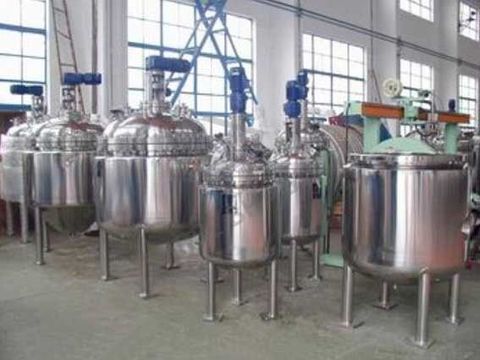
Industrial Reactors for Chemicals are engineered vessels designed to carry out chemical reactions under carefully controlled conditions. They regulate important operating parameters such as temperature, pressure, mixing intensity, and reaction time to ensure the desired chemical transformation occurs efficiently.
Depending on the manufacturing process, reactors may operate continuously or in batches. Their design is selected according to production capacity, raw material characteristics, reaction chemistry, and product requirements.
Why Industrial Reactors Are Important
Chemical manufacturing depends on repeatable and controlled reactions to maintain product quality. Industrial reactors create stable processing environments that improve consistency while supporting efficient resource utilization.
They are widely used in industries that manufacture pharmaceuticals, petrochemicals, specialty chemicals, food ingredients, water treatment chemicals, coatings, and agricultural products. Modern reactor systems also contribute to improved energy management and process optimization through automated monitoring and advanced control technologies.
How Industrial Reactors Work
Every chemical reactor follows a structured operating sequence.
Raw Material Preparation
Measured quantities of raw materials are introduced into the reactor according to the production formulation.
Controlled Chemical Reaction
Heating, cooling, pressure regulation, and mixing systems maintain the required reaction conditions throughout production.
Continuous Monitoring
Sensors monitor operating conditions in real time. Automated control systems adjust process variables whenever necessary to maintain stable operation.
Product Transfer
After the reaction is complete, the processed material moves to downstream equipment for separation, purification, storage, or additional processing.
Common Types of Industrial Reactors
Different production processes require different reactor designs.
Batch Reactors
Suitable for specialty chemicals and flexible production where each manufacturing cycle is completed separately.
Continuous Stirred Tank Reactors
Designed for continuous production with constant raw material input and product output.
Plug Flow Reactors
Tubular reactors that allow materials to move continuously while reactions occur along the flow path.
Fixed Bed Reactors
Contain solid catalyst materials through which fluids pass during catalytic reactions.
Fluidized Bed Reactors
Use flowing gases or liquids to suspend catalyst particles, improving mixing and heat transfer.
Major Industrial Applications
Industrial reactors support production across numerous manufacturing sectors.
Common applications include:
- Petrochemical processing
- Pharmaceutical manufacturing
- Polymer production
- Fertilizer manufacturing
- Food ingredient processing
- Water treatment chemicals
- Paint and coating production
- Biotechnology
- Biofuel manufacturing
- Specialty chemical production
Each application requires reactor designs that match specific chemical processes and production objectives.
Benefits of Industrial Reactors
Industrial reactors improve manufacturing by maintaining stable operating conditions and supporting consistent product quality. Automated monitoring helps reduce process variations while improving production efficiency.
Advanced reactor designs also enhance heat transfer, mixing performance, and energy utilization. Integrated monitoring systems provide valuable operational insights that help manufacturers optimize production and plan maintenance activities more effectively.
Best Practices for Efficient Operation
Reliable reactor performance depends on proper operation and maintenance.
Key recommendations include:
- Select the reactor type based on the production process.
- Monitor temperature, pressure, and mixing continuously.
- Inspect equipment regularly.
- Calibrate sensors and control instruments.
- Follow preventive maintenance schedules.
- Train operators on safe operating procedures.
These practices help improve equipment reliability and long-term operational performance.
Future Trends
Industrial reactor technology continues advancing through automation and digital innovation.
Artificial intelligence is helping optimize reaction parameters, while digital twin technology allows engineers to simulate process performance before implementing operational changes. Industrial Internet of Things (IIoT) platforms provide real-time equipment monitoring, and predictive maintenance systems help identify potential issues before they affect production.
Growing interest in sustainable manufacturing is also driving the development of energy-efficient reactor designs, advanced catalyst technologies, and environmentally responsible chemical processing methods.
Frequently Asked Questions
What are Industrial Reactors for Chemicals?
They are specialized vessels designed to perform controlled chemical reactions during industrial manufacturing.
Which industries use industrial reactors?
They are widely used in pharmaceutical, petrochemical, biotechnology, food processing, agriculture, coatings, and water treatment industries.
Why is process control important?
Maintaining stable temperature, pressure, and mixing conditions helps ensure consistent product quality and efficient production.
What is the difference between batch and continuous reactors?
Batch reactors complete one production cycle at a time, while continuous reactors operate without interruption during manufacturing.
How is reactor technology evolving?
Automation, artificial intelligence, predictive maintenance, smart sensors, and digital monitoring are making industrial reactors more efficient and reliable.
Conclusion
Industrial reactors are fundamental to modern chemical manufacturing, providing the controlled conditions required for efficient and consistent production. Their ability to support precise chemical reactions, improve operational efficiency, and integrate with advanced automation technologies makes them essential across a wide range of industries. As digital innovation and sustainable manufacturing continue to evolve, industrial reactors will remain a critical component of future chemical processing.