Industrial Sensors: Complete Guide to Types, Applications, and Technologies
Industrial sensors play an important role in modern manufacturing, automation, and process monitoring.
These devices help machines and control systems detect changes in the environment and convert physical information into usable signals.
From factory automation to energy management, industrial sensors help improve accuracy, efficiency, and operational visibility. They allow organizations to monitor temperature, pressure, motion, position, and many other variables in real time.
As industries continue to adopt industrial automation, smart manufacturing, and Industrial Internet of Things (IIoT) technologies, sensors have become a fundamental part of connected operations.
Quick Summary Table
| Aspect | Details |
|---|---|
| Topic | Industrial Sensors |
| Purpose | Detect and measure physical conditions |
| Main Components | Sensing element, signal processor, output interface |
| Key Benefits | Accuracy, monitoring, automation, safety, efficiency |
| Common Applications | Manufacturing, robotics, energy systems, logistics, process control |
Understanding the Concept
Industrial sensors are electronic devices designed to detect physical, chemical, or environmental changes and convert them into electrical signals.
These signals are then interpreted by control systems, programmable logic controllers (PLC), monitoring equipment, or industrial automation platforms.
A simple example is a temperature sensor installed in a manufacturing facility. It continuously measures heat levels and sends data to the control system. If temperatures rise beyond acceptable limits, corrective actions can be initiated automatically.
Industrial sensors provide the data that enables automation systems to make decisions and maintain stable operations.
Key Types or Categories
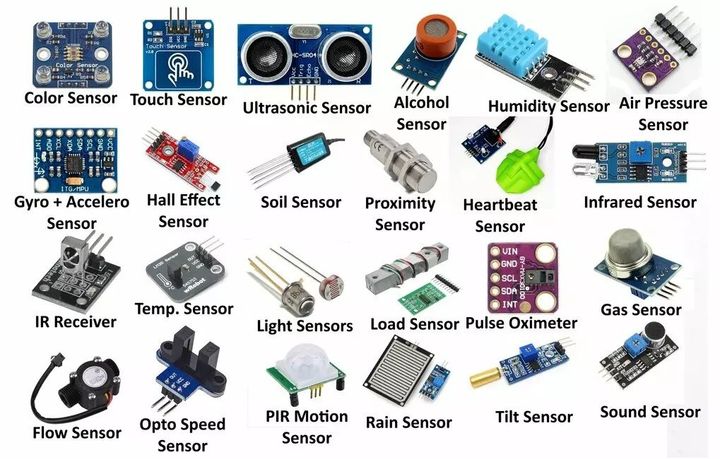
Industrial sensors come in many forms depending on the parameter being measured.
Temperature Sensors
Temperature sensors measure heat levels in industrial environments.
Common examples include:
- Thermocouples
- Resistance Temperature Detectors (RTDs)
- Infrared temperature sensors
These sensors are widely used in manufacturing plants, power generation facilities, and chemical processing environments.
Pressure Sensors
Pressure sensors measure force exerted by liquids, gases, or steam.
Applications include:
- Hydraulic systems
- Pneumatic systems
- Industrial pipelines
- Water treatment facilities
Pressure monitoring helps maintain system stability and equipment performance.
Proximity Sensors
Proximity sensors detect the presence or absence of objects without direct contact.
Popular types include:
- Inductive sensors
- Capacitive sensors
- Ultrasonic sensors
- Photoelectric sensors
These sensors are frequently used in conveyor systems and robotic production lines.
Important Subsection 1: Motion and Position Sensors
Motion and position sensors track movement, location, and orientation.
Examples include:
- Encoders
- Accelerometers
- Gyroscopes
- Position transmitters
These sensors help robotic systems achieve accurate movement and positioning.
Important Subsection 2: Flow Sensors
Flow sensors measure the movement of liquids and gases through industrial systems.
Industries use them for:
- Water management
- Chemical processing
- Fuel distribution
- Energy production
Accurate flow measurement helps maintain process consistency.
Important Subsection 3: Level Sensors
Level sensors determine the amount of material stored inside tanks, containers, and silos.
They can measure:
- Liquids
- Powders
- Granules
- Bulk materials
These sensors help monitor inventory and process conditions.
How It Works
Industrial sensors operate through a straightforward process.
Step 1: Detection
The sensing element detects a physical change such as temperature, pressure, motion, or light.
Step 2: Signal Conversion
The sensor converts the detected condition into an electrical signal.
Step 3: Signal Processing
Internal electronics process and refine the signal.
Step 4: Data Transmission
The processed signal is transmitted to industrial control systems.
Step 5: System Response
The automation system analyzes the information and initiates appropriate actions if necessary.
This process happens continuously and often within fractions of a second.
Core Components and Features
Most industrial sensors contain several important elements.
Sensing Element
The sensing element interacts directly with the physical condition being measured.
Signal Conditioning Circuit
This component improves signal quality and accuracy.
Output Interface
The output interface transfers sensor data to monitoring or control equipment.
Housing and Protection
Industrial environments can be harsh. Protective enclosures shield sensors from:
- Dust
- Moisture
- Vibration
- Extreme temperatures
Communication Capability
Modern smart sensors support communication technologies such as:
- Ethernet
- Wireless communication
- Fieldbus networks
- Industrial communication protocols
Benefits and Advantages
Industrial sensors provide many practical advantages.
Improved Accuracy
Sensors provide precise measurements that support reliable operations.
Enhanced Automation
Automation systems depend on sensor data to make informed decisions.
Better Safety
Sensors help identify abnormal conditions before they become serious issues.
Increased Efficiency
Continuous monitoring reduces waste and improves resource utilization.
Real-Time Monitoring
Operators gain immediate visibility into system performance and operating conditions.
Predictive Maintenance Support
Sensor data can help identify early signs of equipment wear and performance degradation.
Real-World Examples and Applications
Industrial sensors are used across numerous sectors.
Manufacturing Facilities
Factories use sensors to monitor machinery, assembly lines, and production quality.
Industrial Robotics
Robots rely on sensors to navigate, position components, and perform tasks accurately.
Energy and Utilities
Power generation facilities use sensors to monitor turbines, transformers, pipelines, and electrical systems.
Oil and Gas Operations
Pressure, flow, and temperature sensors help maintain safe operations and process control.
Logistics and Warehousing
Sensors assist with inventory tracking, automated storage systems, and material handling equipment.
Food Processing
Manufacturers use sensors to maintain temperature control, hygiene standards, and production consistency.
Important Factors to Understand
Several factors influence sensor performance.
Measurement Accuracy
Different applications require different accuracy levels.
Environmental Conditions
Heat, humidity, vibration, and contamination can affect sensor operation.
Response Time
Fast-moving industrial processes often require rapid sensor responses.
Installation Location
Proper placement helps ensure accurate data collection.
Maintenance Requirements
Regular inspection and calibration help maintain reliable measurements.
Compatibility
Sensors should integrate effectively with industrial automation and monitoring systems.
Common Challenges and Solutions
Industrial sensors can encounter operational challenges.
Signal Interference
Electrical noise may affect readings.
Solution:
- Use shielded cables
- Improve grounding practices
- Maintain proper installation standards
Harsh Operating Conditions
Dust, moisture, and vibration can impact performance.
Solution:
- Use industrial-grade protective enclosures
- Select sensors designed for challenging environments
Calibration Drift
Sensor accuracy may change over time.
Solution:
- Schedule periodic calibration checks
- Monitor measurement consistency
Data Integration Challenges
Large facilities often use multiple sensor technologies.
Solution:
- Standardize communication protocols
- Implement centralized monitoring architectures
Future Trends and Industry Insights
Industrial sensing technology continues to evolve rapidly.
Smart Sensors
Modern sensors increasingly include onboard processing capabilities.
These devices can analyze information before transmitting it to control systems.
Industrial Internet of Things (IIoT)
Connected sensors allow organizations to gather and analyze large volumes of operational data.
Artificial Intelligence Integration
AI-driven analytics can identify patterns and predict potential equipment issues.
Wireless Sensor Networks
Wireless communication reduces installation complexity and expands monitoring capabilities.
Edge Computing
Processing data closer to the source improves response times and reduces network traffic.
Digital Twin Technologies
Sensor data helps create virtual representations of physical systems for analysis and optimization.
Key Takeaways
- Industrial sensors measure physical and environmental conditions.
- They are essential components of industrial automation systems.
- Common sensor types include temperature, pressure, proximity, flow, motion, and level sensors.
- Sensors improve efficiency, accuracy, monitoring, and safety.
- Smart manufacturing increasingly depends on advanced sensing technologies.
- IIoT, AI, and wireless connectivity are shaping the future of industrial sensing.
- Proper selection and maintenance support long-term performance.
Frequently Asked Questions (FAQ)
What are industrial sensors used for?
Industrial sensors detect and measure physical conditions such as temperature, pressure, flow, motion, and position within industrial environments.
Why are industrial sensors important?
They provide real-time data that helps automation systems monitor and control industrial processes.
What is a smart sensor?
A smart sensor combines sensing capabilities with onboard processing and communication functions.
How do proximity sensors work?
Proximity sensors detect nearby objects without physical contact using electromagnetic, ultrasonic, or optical technologies.
What industries use industrial sensors?
Manufacturing, energy, logistics, oil and gas, food processing, water treatment, and robotics all rely heavily on industrial sensors.
What is IIoT in industrial sensing?
Industrial Internet of Things (IIoT) refers to connected industrial devices that collect and exchange operational data.
How often should industrial sensors be calibrated?
Calibration frequency depends on operating conditions, application requirements, and manufacturer recommendations.
Conclusion
Industrial sensors form the foundation of modern industrial automation and monitoring systems. They collect valuable information about physical processes and help organizations maintain efficient, accurate, and safe operations.
From temperature and pressure measurement to motion tracking and flow monitoring, sensors support countless industrial activities. As technologies such as IIoT, wireless connectivity, artificial intelligence, and smart manufacturing continue to advance, industrial sensors will play an even greater role in shaping the future of industrial operations.