Lab-grown diamonds are diamonds created in controlled laboratory environments using advanced technology that replicates the natural diamond formation process. In nature, diamonds form deep inside the Earth under intense heat and pressure over millions of years. Scientists discovered that similar conditions could be reproduced in laboratories, making it possible to create diamonds with the same physical, chemical, and optical properties as natural diamonds.
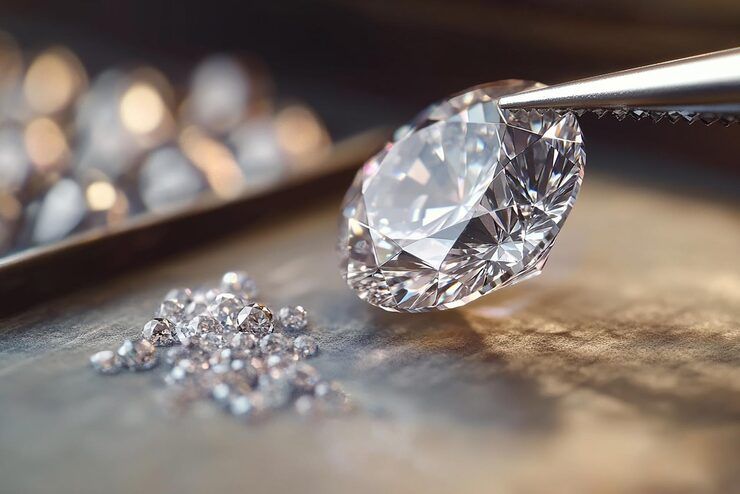
The development of laboratory-created diamonds began in the mid-20th century when researchers experimented with ways to produce synthetic gemstones for industrial use. Early diamonds produced in laboratories were mainly used in manufacturing tools because of their hardness and durability. Over time, improvements in technology made it possible to produce high-quality diamonds suitable for jewelry and other decorative purposes.
Two main scientific methods are commonly used to produce these diamonds:
-
High Pressure High Temperature (HPHT) – This method simulates the extreme conditions found deep within the Earth’s mantle.
-
Chemical Vapor Deposition (CVD) – This technique uses carbon-rich gas in a vacuum chamber, allowing carbon atoms to gradually build a diamond crystal layer by layer.
Both processes create diamonds that are structurally identical to natural diamonds. Because of this, specialized gemological equipment is often needed to distinguish them from mined diamonds.
In recent years, the topic of lab-grown diamonds has gained significant attention due to advances in technology, environmental awareness, and growing interest in alternative gemstone production methods.
Why Lab-Grown Diamonds Matter Today
Lab-grown diamonds have become an important topic in discussions about sustainable materials, technological innovation, and modern jewelry trends. They are relevant to a wide range of people, including consumers interested in sustainable products, researchers working in materials science, and industries that rely on advanced materials.
Several factors explain why lab-grown diamonds have become more widely discussed in recent years.
One important factor is sustainability awareness. Traditional diamond mining can involve large-scale excavation and environmental disruption. Laboratory diamond production uses controlled environments that generally require less land disturbance. Because of this, lab-grown diamonds are often included in discussions about environmentally conscious materials.
Another reason is technological advancement. The ability to create high-quality diamonds in laboratories demonstrates progress in fields such as materials science, engineering, and advanced manufacturing. These technologies are also applied in other industries including electronics, medical equipment, and precision cutting tools.
Lab-grown diamonds are also important in the gemstone certification and diamond grading industry. Laboratories that evaluate diamonds use detailed analysis methods to determine diamond origin, clarity, color, and structure. These evaluation processes contribute to transparency and consumer understanding in the gemstone market.
Industries and fields influenced by lab-grown diamonds include:
-
Jewelry design and gemstone grading
-
Materials science and nanotechnology research
-
Precision manufacturing and industrial cutting tools
-
Sustainable materials development
-
Technology innovation and crystal growth research
Because of these factors, lab-grown diamonds represent more than just an alternative gemstone. They reflect broader changes in how advanced materials are produced and used in modern industries.
Recent Updates and Industry Trends
The past year has seen several developments related to laboratory-created diamonds, including technological improvements, market expansion, and updated classification standards.
In 2024, advancements in chemical vapor deposition techniques allowed manufacturers to produce larger and higher-quality diamond crystals with improved clarity. Researchers continue to experiment with methods that enhance diamond growth efficiency and consistency.
Industry reports published in 2024 and early 2025 also highlight a growing global interest in lab-grown diamonds in both jewelry and industrial applications. Improvements in crystal growth technology have helped laboratories produce diamonds with fewer structural imperfections.
Another trend observed in 2024 involves expanded gemstone certification systems. Gemological institutions continue refining their methods for identifying whether diamonds are natural or laboratory-created. These developments help maintain transparency in gemstone grading and documentation.
Technological research has also expanded the potential uses of lab-grown diamonds beyond jewelry. In 2025, research organizations are studying diamond materials for applications such as:
-
High-performance semiconductor technology
-
Quantum computing experiments
-
Advanced thermal management systems
-
Precision optical components
The increasing interest in diamond-based materials demonstrates the role of laboratory diamond production in both scientific research and modern manufacturing.
The following table summarizes key recent developments.
| Year | Development | Impact |
|---|---|---|
| 2024 | Improved CVD diamond growth technology | Higher clarity crystals and improved consistency |
| 2024 | Enhanced diamond identification tools | Better distinction between natural and lab-created diamonds |
| 2025 | Research into diamond semiconductor materials | Potential use in high-performance electronics |
| 2025 | Increased research in quantum technology | Diamond crystals used in experimental quantum sensors |
These developments show how lab-grown diamonds continue to evolve as both a technological innovation and a topic of scientific interest.
Laws, Regulations, and Industry Policies
Lab-grown diamonds are influenced by various regulations and guidelines related to gemstone labeling, certification, and trade transparency. These rules are designed to ensure accurate representation of diamond origin and to protect consumers from misleading information.
One widely recognized organization involved in diamond terminology guidelines is the Federal Trade Commission (FTC) in the United States. The FTC updated its jewelry guidelines in 2018 to clarify that laboratory-created diamonds must be clearly described using terms such as “lab-grown,” “laboratory-created,” or “synthetic.”
Internationally, gemstone classification standards are also maintained by organizations such as the International Organization for Standardization (ISO) and global gemological laboratories that establish grading frameworks for diamonds.
Several policies affect the diamond industry:
-
Transparent labeling requirements to identify lab-grown diamonds
-
Gemstone certification standards for grading clarity, color, and cut
-
Import and export documentation for gemstone trade
-
Consumer protection rules preventing misleading marketing claims
Some countries have also introduced guidelines for sustainable gemstone sourcing and traceability in supply chains. These initiatives are part of broader efforts to ensure responsible mineral production and transparent global trade practices.
Regulations continue evolving as laboratory-created gemstones become more common in the global market.
Tools and Resources for Understanding Lab-Grown Diamonds
Various digital tools and educational resources help people learn more about diamond grading, gemstone identification, and diamond formation processes. These resources are useful for students, researchers, and individuals interested in understanding the science behind diamonds.
Common tools and resources include:
Gemological learning platforms
-
Online gemstone education websites that explain diamond grading systems
-
Diamond clarity and cut charts used in gemology training
Diamond grading references
-
Diamond color scale charts
-
Clarity grading diagrams used in gemstone evaluation
Scientific databases
-
Materials science research databases covering crystal growth technologies
-
Publications on chemical vapor deposition and high-pressure materials
Educational software and calculators
-
Diamond cut proportion calculators
-
Gemstone measurement tools used in gemology training
The table below highlights examples of commonly used diamond grading factors.
| Diamond Factor | Description |
|---|---|
| Cut | Quality of the diamond’s proportions and light reflection |
| Color | Degree of colorlessness in the diamond |
| Clarity | Presence of internal or surface imperfections |
| Carat | Measurement of diamond weight |
These evaluation factors are widely used in both natural and lab-grown diamond assessment.
Frequently Asked Questions
What is the difference between lab-grown diamonds and natural diamonds?
Lab-grown diamonds and natural diamonds share the same chemical composition and crystal structure. The main difference is how they are formed. Natural diamonds develop deep inside the Earth over millions of years, while lab-grown diamonds are created in controlled laboratory environments using advanced technology.
How are lab-grown diamonds created in laboratories?
Two primary techniques are used. High Pressure High Temperature replicates the intense conditions inside the Earth, while Chemical Vapor Deposition grows diamonds from carbon-rich gases inside specialized chambers.
Can lab-grown diamonds be distinguished from natural diamonds?
In many cases, specialized laboratory equipment is required to identify differences. Gemological laboratories analyze crystal growth patterns, trace elements, and microscopic characteristics to determine the origin of a diamond.
Are lab-grown diamonds used outside of jewelry?
Yes. Laboratory-created diamonds are widely used in industrial applications such as cutting tools, medical equipment, optical systems, and advanced electronics research.
Do lab-grown diamonds last as long as natural diamonds?
Yes. Because they share the same physical and chemical structure, lab-grown diamonds have the same durability and hardness as natural diamonds.
Conclusion
Lab-grown diamonds represent a fascinating intersection of science, technology, and modern materials research. By recreating the natural diamond formation process in laboratories, scientists have developed methods that produce diamonds with the same structural characteristics as those found in nature.
The topic has gained attention due to advancements in crystal growth technology, increased sustainability awareness, and expanding research applications. In addition to jewelry, lab-grown diamonds are being studied for use in electronics, quantum technologies, and industrial manufacturing.
Regulations and gemstone certification systems play an important role in ensuring transparency and accurate labeling. These policies help maintain trust and clarity within the diamond industry as laboratory-created gemstones become more common.
With ongoing technological improvements and scientific research, lab-grown diamonds continue to demonstrate how innovation in materials science can influence multiple industries and reshape the way advanced materials are produced and understood.