Powder machines are industrial machines designed to process materials in powdered or granular form. These machines handle tasks such as grinding, mixing, drying, classifying, conveying, and packaging powders. They exist because many industries rely on powders as raw materials or intermediate products due to their ease of handling, uniformity, and suitability for controlled processing.
Historically, powder processing began with simple manual grinding and mixing methods. As industrial production expanded, these methods became insufficient for maintaining consistency, scale, and safety. Mechanical powder machines were developed to process materials more efficiently while maintaining predictable particle size and composition.
Today, powder machines are used across sectors such as food processing, pharmaceuticals, chemicals, construction materials, cosmetics, and agriculture. Their role is to transform raw materials into consistent powder forms that meet technical, safety, and quality requirements. Understanding powder machines helps explain how modern manufacturing achieves precision in material preparation.
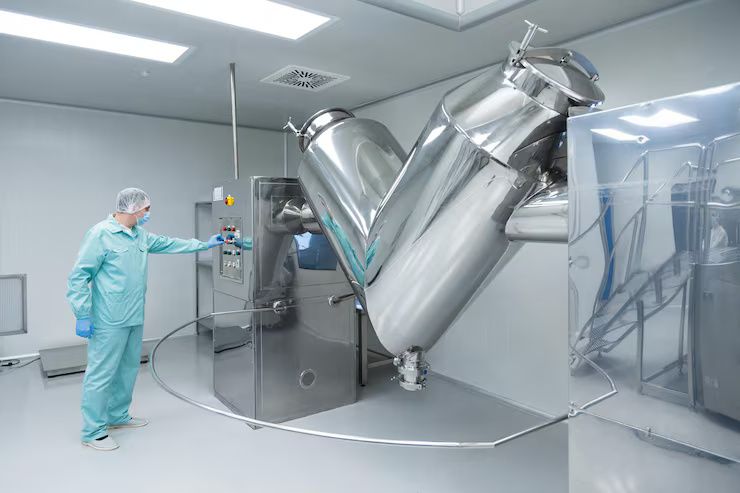
Importance: Why Powder Machines Matter Today
Powder machines matter today because powdered materials are central to many modern products. From construction materials and packaged foods to advanced chemical formulations, powder processing supports large-scale and specialized manufacturing.
This topic matters because powder machines:
-
Enable consistent particle size and composition
-
Improve efficiency in material handling and processing
-
Support automation and large-scale production
-
Reduce variability in industrial processes
Powder machines affect engineers, production planners, quality teams, and regulatory bodies. For manufacturers, these machines help solve problems such as uneven mixing, material loss, and contamination risks. For regulators, standardized powder processing supports safety and quality assurance.
In industries where precision matters, powder machines are essential for maintaining repeatable and controlled production outcomes.
Recent Updates: Powder Processing Trends in the Past Year
During 2024 and early 2025, powder machine development reflected broader industrial automation and efficiency trends. In early 2024, discussions increasingly focused on improved dust control and enclosed processing systems. These updates aimed to enhance workplace safety and reduce airborne particulate exposure.
In mid-2024, digital monitoring gained attention. Powder machines integrated sensors to track parameters such as particle size distribution, flow rate, and temperature. This supported better process visibility and data-driven adjustments during production.
By late 2024 and into 2025, energy efficiency became a more prominent topic. Manufacturers explored designs that reduce power consumption during grinding, mixing, and drying stages without compromising output quality.
Another notable update involved modular machine design. Powder machines increasingly adopted modular components, allowing easier cleaning, configuration changes, and maintenance across different production batches.
Laws and Policies: Regulations Affecting Powder Machines
Powder machines are subject to industrial safety, quality, and environmental regulations. These policies ensure that machines operate safely and that powder processing does not pose risks to workers or surrounding environments.
International technical and safety standards are often aligned with guidelines from the International Organization for Standardization, which provides frameworks for machinery safety, quality management, and process consistency.
In India, industrial machinery guidelines and safety practices are influenced by national standards and workplace safety regulations. These rules address areas such as machine guarding, dust control, electrical safety, and operational training.
Environmental regulations also influence powder processing, particularly in relation to emissions, waste handling, and energy use. Together, these policies shape how powder machines are designed, installed, and operated in industrial settings.
Tools and Resources: Understanding Powder Machines
A range of technical and educational resources help explain how powder machines function and how they are selected for specific applications. These tools focus on learning and process understanding rather than promotion.
Helpful tools and references include:
-
Powder flowability and particle size charts
-
Process flow diagrams for powder handling
-
Machine specification comparison tables
-
Industrial safety and dust control guidelines
-
Technical manuals and engineering handbooks
The table below outlines common powder machine types and their primary role:
| Powder Machine Type | Core Function | Typical Application Area |
|---|---|---|
| Grinding mills | Reduce material to fine powder | Minerals, chemicals |
| Mixers and blenders | Combine powders uniformly | Food, pharmaceuticals |
| Dryers | Remove moisture from powders | Chemicals, agriculture |
| Classifiers | Separate particles by size | Advanced materials |
| Conveying systems | Transfer powders safely | Manufacturing plants |
These resources help learners understand how different machines fit into a complete powder processing line.
Frequently Asked Questions About Powder Machines
What materials are commonly processed using powder machines?
Materials include minerals, food ingredients, chemicals, pharmaceutical compounds, and construction materials.
Why is particle size important in powder processing?
Particle size affects flow behavior, mixing quality, and final product performance.
Are powder machines fully automated?
Many modern powder machines include automation features, though manual oversight is still important.
What are common challenges in powder processing?
Challenges include dust control, uneven mixing, moisture sensitivity, and equipment cleaning.
How do regulations influence powder machine design?
Regulations require safety features, controlled emissions, and standardized operating practices.
Conclusion: Understanding Powder Machines in Modern Manufacturing
Powder machines play a vital role in industrial production by enabling precise and controlled processing of powdered materials. From grinding and mixing to conveying and classification, these machines support consistent output across a wide range of industries.
By understanding the context, importance, recent developments, regulatory environment, and technical resources related to powder machines, readers gain a clearer view of their role in modern manufacturing. Powder machines are not just mechanical tools; they are integral systems that support efficiency, safety, and quality in today’s industrial processes.