Lighting Small Rooms: Ultimate Guide to Design & Placement
Lighting plays a major role in how a room looks and feels.
In small rooms, proper lighting can make a space appear brighter, larger, and more comfortable. Poor lighting, on the other hand, can make even a well-designed room feel cramped and uninviting.
Whether you're working with a small bedroom, studio apartment, home office, reading nook, or compact living room, understanding lighting design principles can help you maximize available space and improve visual comfort.
This guide explores lighting strategies, fixture placement, room design techniques, and practical tips for creating a bright and balanced environment in small spaces.
Understanding the Importance of Lighting in Small Rooms
Lighting affects more than visibility. It influences mood, comfort, productivity, and the perceived size of a room.
In smaller spaces, strategic lighting can:
- Create a sense of openness
- Highlight important design features
- Reduce dark corners
- Improve functionality
- Enhance visual balance
A well-planned lighting layout helps distribute light evenly throughout the room rather than concentrating it in a single area.
Quick Facts About Small Room Lighting
| Lighting Factor | Purpose |
|---|---|
| Ambient Lighting | General room illumination |
| Task Lighting | Supports specific activities |
| Accent Lighting | Highlights features |
| Wall Lighting | Creates visual depth |
| Ceiling Lighting | Provides overall brightness |
| Natural Light | Enhances openness |
| Layered Lighting | Improves flexibility |
| Light Color Temperature | Influences room atmosphere |
What Is Layered Lighting?
Layered lighting combines multiple light sources to create balanced illumination.
Rather than relying on one fixture, layered lighting uses different lighting categories to support various functions within the room.
Main Lighting Layers
| Lighting Layer | Function |
|---|---|
| Ambient Lighting | General illumination |
| Task Lighting | Activity-focused lighting |
| Accent Lighting | Decorative highlighting |
| Decorative Lighting | Visual enhancement |
Layered lighting is considered one of the most effective approaches for small-room design because it helps eliminate shadows and adds depth.
Small Room Lighting Architecture
Understanding how light moves through a room can improve placement decisions.
Ceiling Layer
Provides primary room illumination.
Wall Layer
Adds visual depth and reduces flatness.
Furniture Layer
Supports activities such as reading or working.
Accent Layer
Highlights artwork, shelves, or architectural features.
Natural Light Layer
Works alongside artificial lighting during daytime hours.
Types of Lighting for Small Rooms
Ambient Lighting
Ambient lighting serves as the primary source of illumination.
Common examples include:
- Ceiling fixtures
- Recessed lighting
- Flush-mount fixtures
- LED ceiling panels
Task Lighting
Task lighting supports specific activities.
Examples include:
- Desk lamps
- Reading lights
- Vanity lighting
- Under-cabinet lighting
Accent Lighting
Accent lighting draws attention to focal points.
Examples include:
- Wall sconces
- Picture lighting
- Shelf lighting
- Display lighting
Decorative Lighting
Decorative fixtures contribute to room aesthetics while providing illumination.
Best Lighting Fixtures for Small Rooms
| Fixture Type | Suitable Application |
|---|---|
| Flush-Mount Ceiling Lights | General illumination |
| Recessed Lights | Space-saving design |
| Wall Sconces | Vertical lighting |
| Table Lamps | Reading and ambiance |
| Floor Lamps | Corner illumination |
| LED Strip Lighting | Accent lighting |
| Pendant Lights | Decorative focal points |
Ceiling Light Placement Strategies
Center Placement
A centrally positioned ceiling light can provide balanced room illumination.
Multiple Small Fixtures
Several smaller fixtures often provide better distribution than one oversized fixture.
Recessed Lighting Layout
Recessed lighting can reduce visual clutter while maintaining brightness.
Avoid Overcrowding
Too many fixtures can make a small room feel visually busy.
Wall Lighting Placement
Wall lighting helps create depth and reduce shadows.
Wall Sconces
Wall sconces can free up floor and table space.
Vertical Lighting
Lighting positioned vertically helps draw the eye upward, making ceilings appear higher.
Mirror Lighting
Lighting near mirrors reflects light and can make a room feel larger.
Window and Natural Light Strategies
Natural light remains one of the most effective tools for enhancing small spaces.
Maximize Window Exposure
Avoid blocking windows with bulky furniture.
Use Light Window Treatments
Sheer curtains allow daylight to enter while maintaining privacy.
Position Mirrors Strategically
Mirrors reflect both natural and artificial light throughout the room.
Keep Window Areas Clear
Open window areas contribute to a brighter environment.
Lighting Color Temperature Guide
Color temperature influences how a room feels.
| Color Temperature | Appearance | Common Uses |
|---|---|---|
| Warm White | Cozy and inviting | Bedrooms, living rooms |
| Neutral White | Balanced appearance | Multipurpose rooms |
| Cool White | Crisp and bright | Workspaces, kitchens |
| Daylight | Highly bright appearance | Task-focused areas |
Small Room Lighting by Room Type
Small Bedroom Lighting
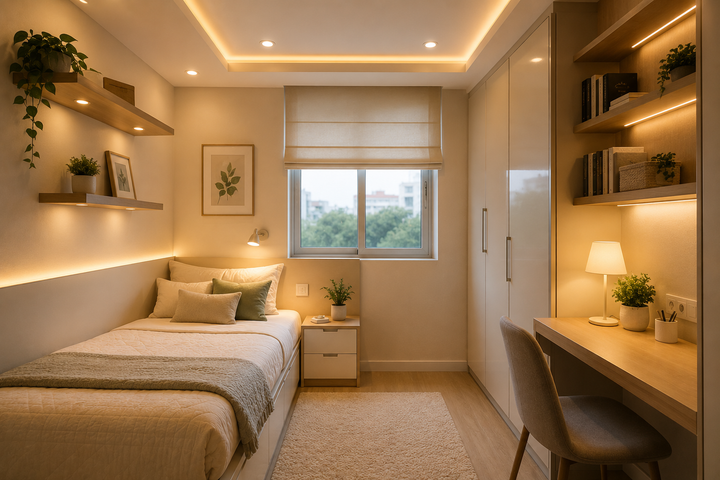
A balanced combination of ceiling lighting, bedside lamps, and accent lighting often works well.
Small Living Room Lighting
Layered lighting helps support multiple activities.
Small Home Office Lighting
Task lighting is particularly important for work-related activities.
Compact Kitchen Lighting
Under-cabinet lighting and ceiling illumination can improve visibility.
Small Bathroom Lighting
Mirror lighting and overhead illumination help create a functional environment.
Furniture and Lighting Coordination
Proper coordination between furniture placement and lighting improves usability.
Reading Areas
Position task lighting close to seating areas.
Workspaces
Ensure desk lighting minimizes shadows.
Storage Areas
Accent lighting can improve shelf visibility.
Multipurpose Spaces
Flexible lighting solutions support different activities throughout the day.
Common Lighting Design Mistakes
| Mistake | Impact |
|---|---|
| Using One Light Source | Uneven illumination |
| Ignoring Task Lighting | Reduced functionality |
| Overlighting | Visual discomfort |
| Poor Fixture Placement | Dark areas |
| Blocking Natural Light | Reduced brightness |
| Using Incorrect Color Temperature | Unbalanced atmosphere |
Benefits of Proper Lighting Design
Improved Visual Comfort
Balanced lighting reduces eye strain.
Better Room Appearance
Good lighting highlights room features.
Increased Functionality
Task-oriented lighting improves usability.
Enhanced Spaciousness
Strategic lighting can make rooms feel larger.
Greater Flexibility
Multiple lighting layers support different activities.
Small Room Lighting Layout Example
| Area | Recommended Lighting |
|---|---|
| Ceiling | Ambient lighting |
| Reading Corner | Task lamp |
| Shelving | Accent lighting |
| Work Desk | Focused task lighting |
| Mirror Area | Reflective lighting |
| Window Zone | Natural light enhancement |
Environmental Considerations
Modern lighting design increasingly focuses on energy efficiency and sustainability.
LED Lighting
LED fixtures consume less energy and generally last longer than traditional lighting technologies.
Smart Lighting Controls
Timers and sensors can help manage energy usage.
Daylight Utilization
Maximizing natural light reduces reliance on artificial lighting.
Efficient Fixture Selection
Selecting appropriately sized fixtures can improve lighting efficiency.
Smart Lighting Technology
Adjustable Brightness
Dimmable lighting supports multiple room activities.
Motion Sensors
Sensors can automate lighting activation.
Scheduling Features
Smart systems allow lighting schedules for convenience.
Connected Home Integration
Many modern lighting systems can integrate with connected home environments.
Safety Considerations
Avoid Glare
Proper fixture placement reduces visual discomfort.
Maintain Clear Pathways
Lighting should support safe movement throughout the room.
Use Suitable Fixtures
Choose fixtures appropriate for each environment.
Follow Installation Guidelines
Proper installation helps maintain safe operation.
Expert Insights
Interior lighting specialists often recommend focusing on light distribution rather than simply increasing brightness. A combination of ambient, task, and accent lighting generally creates a more balanced and visually appealing environment.
For small rooms, vertical lighting, reflective surfaces, and layered illumination are commonly used strategies to enhance the perception of space.
Frequently Asked Questions
Why is lighting important in small rooms?
Lighting influences comfort, functionality, and the perceived size of a room.
What is layered lighting?
It combines ambient, task, accent, and decorative lighting.
Which fixture works well in small rooms?
Flush-mount fixtures, recessed lights, and wall sconces are commonly used.
How can a room appear larger?
Strategic lighting, mirrors, and proper fixture placement can enhance spaciousness.
What color temperature is suitable for bedrooms?
Warm white lighting is commonly used for comfortable bedroom environments.
Why is task lighting important?
It supports specific activities such as reading or working.
Can mirrors improve lighting?
Yes, mirrors reflect light and increase perceived brightness.
What lighting works best for a home office?
A combination of ambient and task lighting is generally effective.
How does natural light help?
Natural light improves brightness and openness.
What is the role of accent lighting?
Accent lighting highlights decorative or architectural features.
Future Trends in Small Room Lighting
Smarter Lighting Controls
Connected lighting systems continue to expand.
Adaptive Lighting
Future systems may automatically adjust brightness and color temperature.
Improved LED Technology
LED efficiency and performance continue to improve.
Integrated Design Solutions
Lighting is increasingly integrated into furniture and architectural elements.
Personalized Lighting Experiences
Future lighting systems may adapt to user preferences and daily routines.
Conclusion
Lighting is one of the most effective design tools for transforming small rooms. By combining ambient, task, accent, and natural lighting, homeowners can create spaces that feel brighter, more functional, and visually larger.
Thoughtful fixture placement, layered illumination, and strategic use of reflective surfaces can dramatically improve comfort and aesthetics. As lighting technology continues to evolve, small-room lighting solutions are becoming more flexible, efficient, and adaptable to modern living environments.