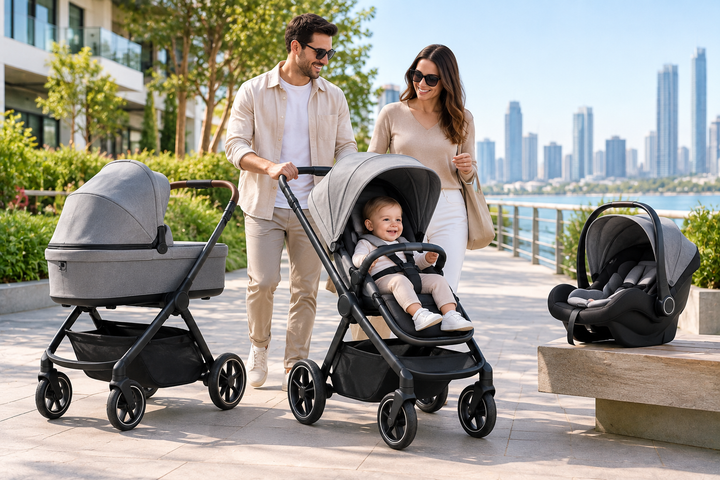
Convertible Baby Strollers: Design & Performance Guide
Convertible baby strollers have become a popular choice among parents because they adapt to a child's changing needs.
Instead of using separate transportation solutions during different growth stages, a convertible stroller can often transition between multiple configurations.
Modern stroller designs focus on safety, comfort, maneuverability, and long-term usability. Many models support newborn, infant, and toddler stages through adjustable seating systems, reclining positions, and modular components.
Understanding how convertible baby strollers are designed and how they perform in everyday situations can help parents make informed decisions about child mobility and comfort.
Quick Facts About Convertible Baby Strollers
| Feature | Description |
|---|---|
| Primary Purpose | Transport infants and toddlers |
| Seating Options | Reclining, upright, reversible |
| Common Configurations | Pram, stroller, travel system |
| Safety Features | Harness, brakes, locking mechanisms |
| Wheel Options | Three-wheel or four-wheel designs |
| Foldability | Compact storage capability |
| Age Adaptability | Multiple growth stages |
| Typical Usage | Daily travel and outdoor activities |
What Is a Convertible Baby Stroller?
A convertible baby stroller is a mobility system designed to support multiple seating and positioning arrangements as a child grows. These strollers may transition from a fully reclined infant position to a more upright toddler configuration.
Many designs also accommodate bassinet attachments, reversible seats, and travel system compatibility.
This adaptability makes convertible strollers suitable for families seeking a long-term transportation solution that evolves alongside a child's developmental stages. Combination stroller systems commonly provide upright, semi-reclined, and fully reclined seating positions.
Understanding the Design Concept
The primary goal of a convertible stroller is flexibility.
Rather than focusing on a single age group, designers create systems that accommodate various growth stages while maintaining safety and comfort.
Key design priorities include:
- Adaptability
- Stability
- Comfort
- Safety
- Maneuverability
- Storage efficiency
- Durability
Key Types of Convertible Baby Strollers
Full-Size Convertible Strollers
Designed for daily use and long-term versatility.
Features
- Larger wheels
- Adjustable seating
- Storage baskets
- Enhanced comfort
Travel System Strollers
These systems integrate stroller functionality with infant carrier compatibility.
Features
- Easy transition between vehicle and stroller
- Flexible seating arrangements
- Modular construction
Reversible Seat Strollers
Allow children to face either the parent or the surrounding environment.
Features
- Parent-facing mode
- Forward-facing mode
- Adjustable seating positions
Convertible Pram-Stroller Systems
These designs transition between a pram configuration and a traditional stroller.
Features
- Fully reclined newborn position
- Upright toddler seating
- Multiple adjustment settings
Convertible Stroller Components
| Component | Function |
|---|---|
| Frame | Structural support |
| Seat Unit | Child seating area |
| Harness System | Occupant restraint |
| Wheels | Mobility and maneuverability |
| Suspension System | Ride comfort |
| Braking System | Movement control |
| Canopy | Weather protection |
| Storage Basket | Carrying essentials |
Convertible Baby Stroller Architecture
Frame Structure
The frame serves as the foundation of the stroller and supports all major components.
Seating System
The seat adjusts to accommodate different positions and developmental stages.
Harness Assembly
Most modern strollers utilize multi-point restraint systems designed to help secure occupants safely. Safety authorities commonly recommend five-point harness systems.
Wheel System
Wheels influence maneuverability, stability, and ride quality.
Suspension Mechanism
Suspension helps absorb bumps and uneven surfaces.
Folding Mechanism
Allows convenient storage and transportation.
How Convertible Baby Strollers Work
Step 1: Select Configuration
Parents choose the appropriate configuration based on the child's age and requirements.
Step 2: Adjust the Seat
The seating system can be reclined, raised, or repositioned.
Step 3: Secure the Harness
The child is secured using the restraint system.
Step 4: Lock Safety Mechanisms
All adjustment points and folding locks should be properly engaged.
Step 5: Operate the Stroller
The stroller is pushed using the handle system while wheels and suspension support movement.
Convertible Stroller Configuration Comparison
| Configuration | Suitable Stage | Main Purpose |
|---|---|---|
| Full Recline | Newborn | Resting and comfort |
| Semi-Recline | Young Infant | Transitional support |
| Upright Seat | Toddler | Active exploration |
| Parent-Facing | Early Development | Parent interaction |
| Forward-Facing | Older Child | Environmental engagement |
Wheel Design and Performance
Wheel design significantly influences stroller performance.
| Wheel Type | Characteristics |
|---|---|
| Three-Wheel Design | Enhanced maneuverability |
| Four-Wheel Design | Improved stability |
| Swivel Front Wheels | Easier turning |
| Lockable Wheels | Better directional control |
| Large Wheels | Improved performance on uneven terrain |
Suspension and Ride Comfort
Suspension systems help improve comfort by reducing the impact of rough surfaces.
Benefits of Suspension
- Smoother movement
- Reduced vibration
- Improved comfort
- Better control on uneven terrain
Safety Features and Performance
Safety remains one of the most important considerations in stroller design.
Five-Point Harness
A five-point harness helps secure the child at the shoulders, waist, and between the legs. Safety organizations commonly recommend this design.
Parking Brakes
Strollers commonly include parking brakes designed to prevent unintended movement. Brake performance is addressed within recognized stroller safety requirements.
Folding Locks
Folding mechanisms include locks designed to reduce accidental collapse.
Stability Features
Wide bases and balanced frame geometry help improve stability.
Performance Factors to Evaluate
Maneuverability
How easily the stroller turns and navigates obstacles.
Stability
Resistance to tipping during use.
Weight Distribution
Balanced weight improves handling and comfort.
Folding Efficiency
Ease of folding and transportation.
Durability
Long-term resistance to wear and repeated use.
Convertible Stroller Weight Capacity Overview
| Category | Typical Usage |
|---|---|
| Infant Mode | Newborn transportation |
| Transitional Mode | Growing infants |
| Toddler Mode | Older children |
| Multi-Stage Mode | Extended usability |
Storage and Portability Features
Modern convertible strollers often include:
- Under-seat storage baskets
- Compact folding systems
- Carry handles
- Lightweight frame materials
- Travel-friendly configurations
Environmental Considerations
Manufacturers increasingly focus on durability and efficient material usage.
Long-Term Product Use
Convertible designs may reduce the need for multiple transportation products throughout early childhood.
Durable Materials
Long-lasting materials can support extended product lifecycles.
Resource Efficiency
Multi-stage functionality allows one product to support several developmental phases.
Industry Standards and Safety
Several recognized safety requirements influence stroller design and testing.
Structural Integrity
Strollers are tested for durability and load performance.
Stability Testing
Testing evaluates resistance to tipping and loss of control.
Occupant Retention
Harness systems are evaluated to help maintain child security.
Brake Performance
Parking brake systems undergo testing to verify functionality.
Folding Mechanism Safety
Standards include requirements related to folding systems and prevention of pinching hazards.
Recognized Safety Standards
Convertible strollers are commonly evaluated under standards such as ASTM F833 and related regulatory requirements addressing stability, brakes, restraints, durability, labeling, and occupant safety.
Real-World Applications
Daily Walks
Comfortable transportation for routine outdoor activities.
Urban Mobility
Useful for sidewalks, shopping areas, and city environments.
Travel
Foldable designs support transportation and storage.
Family Activities
Suitable for parks, community events, and recreational outings.
Multi-Child Households
Some systems support additional seating or adaptable configurations.
Common Challenges and Practical Solutions
| Challenge | Practical Solution |
|---|---|
| Limited Storage Space | Use compact-fold designs |
| Uneven Terrain | Choose larger wheels and suspension |
| Frequent Travel | Select lightweight frames |
| Stability Concerns | Verify proper loading and balance |
| Growth Stage Changes | Use adjustable configurations |
| Daily Transportation Needs | Choose versatile multi-stage designs |
Maintenance Schedule
| Maintenance Task | Frequency |
|---|---|
| Check Harness System | Weekly |
| Inspect Brakes | Weekly |
| Clean Frame | Monthly |
| Check Wheel Alignment | Monthly |
| Inspect Folding Mechanism | Monthly |
| Verify Fasteners | Monthly |
Best Practices
- Use the harness system during every outing.
- Engage brakes whenever stationary.
- Follow age and weight recommendations.
- Inspect moving parts regularly.
- Avoid hanging heavy items on handles.
- Verify folding locks are fully engaged.
Expert Insights
Child mobility specialists generally recommend focusing on safety, maneuverability, and long-term adaptability rather than selecting a stroller based solely on appearance.
Features such as five-point harness systems, reliable brakes, stable wheel designs, and age-appropriate recline options often provide the greatest practical value for everyday use.
Frequently Asked Questions
What is a convertible baby stroller?
A stroller designed to support multiple seating and positioning configurations as a child grows.
How is a convertible stroller different from a standard stroller?
It can adapt to multiple developmental stages through adjustable configurations.
Why is a five-point harness important?
It helps secure the child more effectively during use.
What is a travel system stroller?
A stroller designed to integrate with compatible infant carrier systems.
Why are larger wheels beneficial?
They generally perform better on uneven surfaces.
What role does suspension play?
Suspension helps improve ride comfort and control.
Are convertible strollers suitable for newborns?
Many models support newborn use through fully reclined or bassinet configurations.
Why is brake performance important?
Brakes help prevent unintended stroller movement.
How often should maintenance be performed?
Routine inspections are recommended to maintain safe operation.
What safety standards apply to strollers?
Standards such as ASTM F833 address safety, performance, and testing requirements.
Future Trends and Industry Insights
Advanced Suspension Systems
Future designs may provide improved ride comfort.
Lightweight Materials
Manufacturers continue exploring stronger and lighter materials.
Improved Folding Technology
More compact and efficient folding mechanisms are being developed.
Smart Safety Features
Future systems may include enhanced monitoring and safety technologies.
Modular Expansion
Greater adaptability and configuration flexibility are expected across future stroller designs.
Conclusion
Convertible baby strollers combine adaptability, comfort, and long-term usability in a single mobility solution. Their ability to transition between multiple configurations makes them suitable for supporting children through different stages of development.
By understanding design architecture, safety features, wheel systems, suspension technologies, and performance characteristics, parents can better evaluate stroller functionality and make informed decisions based on their family's needs. As stroller technology continues to evolve, future models are likely to deliver even greater flexibility, safety, and convenience.