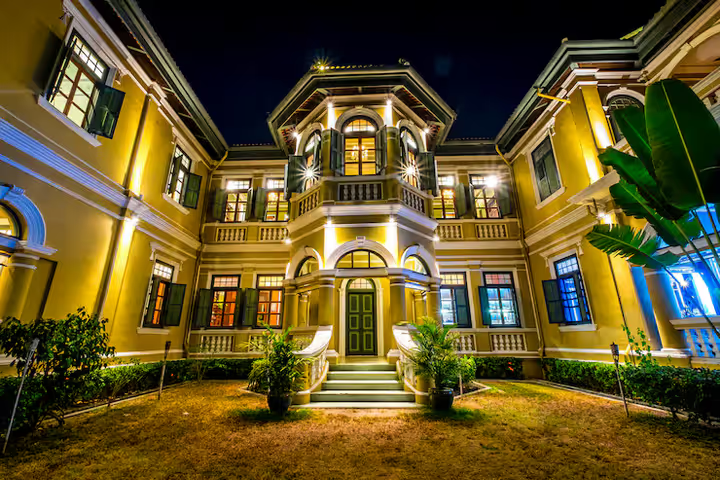
Luxury 5BHK Villa Guide: Floor Plans, Amenities, Interiors, and Architecture
A luxury 5BHK villa is a spacious residential property designed around privacy, comfort, larger living areas, and multiple bedrooms. A luxury 5 bedroom villa may include private outdoor areas, landscaped spaces, entertainment rooms, parking areas, and modern home systems.
Depending on its location and design, the category can also include premium 5BHK villas, waterfront luxury villas, and luxury villas with private pool. Understanding the planning, construction, ownership, and regulatory aspects of these properties helps readers evaluate them from a practical perspective.
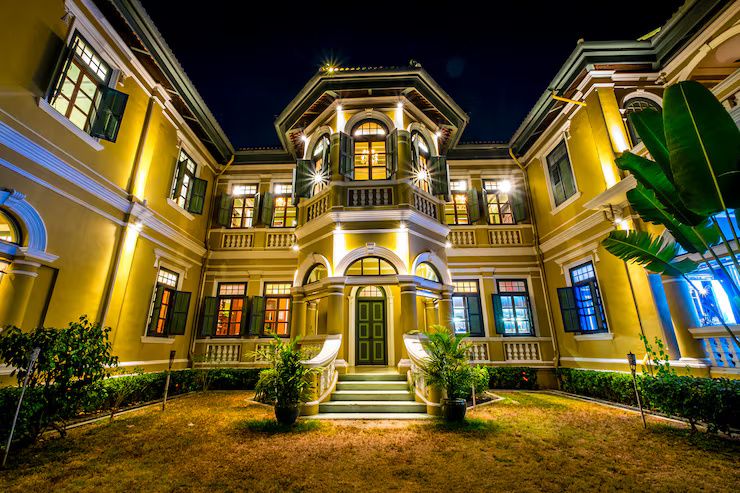
Context
What Is a Luxury 5BHK Villa?
In India, the term 5BHK generally refers to a home containing five bedrooms, along with a hall and kitchen. A villa is usually a standalone or semi-independent residential structure with its own entrance and may include private outdoor space.
The word "luxury" generally describes additional space, architectural detailing, higher-grade fixtures, private amenities, and a broader range of residential facilities. However, there is no single legal definition of a luxury villa, so features can vary considerably between properties.
A large villa may contain several interconnected areas, such as:
- Five bedrooms with attached or nearby bathrooms
- Living and family rooms
- Kitchen and utility areas
- Dining and entertainment spaces
- Balconies, terraces, or courtyards
- Private parking
- Gardens or landscaped areas
- Swimming pools in some designs
How Villa Planning Has Developed
Villa architecture has evolved from traditional independent houses toward layouts that combine indoor living with outdoor areas. Modern designs often use open-plan common spaces, larger windows, natural ventilation, energy-efficient equipment, and integrated home technology.
The five-bedroom format is particularly suited to larger households, multigenerational families, and people who require separate rooms for guests, work, study, or recreation. Floor plans can vary substantially depending on plot dimensions, local planning rules, climate, and architectural preferences.
Common Types of Luxury Villas
Luxury villas can be classified according to their location, layout, and amenities. Urban villas may emphasize privacy and efficient use of land, while resort-oriented properties can include larger gardens and recreational areas.
Waterfront luxury villas have additional considerations because their location may expose structures to humidity, flooding, erosion, or other environmental conditions. Properties with pools also require appropriate drainage, water management, electrical safety, and regular maintenance planning.
Importance
Why Larger Villas Matter to Modern Households
A five-bedroom villa provides more internal space than many conventional apartments. This can be useful for families that need separate bedrooms for children, older family members, visitors, or household activities.
The additional space can also support flexible use. One bedroom may function as a study, while another could be arranged as a guest room or hobby area without changing the primary sleeping arrangements.
Privacy and Functional Space
Independent villas can provide greater separation between indoor and outdoor areas. Private entrances, gardens, terraces, and parking areas can create distinct zones for different household activities.
The design of a villa also affects daily movement. A well-planned layout generally considers relationships between bedrooms, bathrooms, kitchens, living rooms, stairs, storage areas, and outdoor spaces rather than focusing only on visual appearance.
Property Planning Considerations
A large residential property involves several factors beyond the floor plan. These include land characteristics, building permissions, infrastructure access, construction standards, taxation, and ongoing maintenance requirements.
For anyone studying high value luxury property investment, these factors are particularly relevant because the financial characteristics of a property depend on its location, legal status, physical condition, demand, and broader market conditions. Property values can change, and past performance does not establish future outcomes.
Typical Feature Comparison
| Villa characteristic | Common planning consideration |
|---|---|
| Five bedrooms | Family size, guest accommodation, privacy |
| Private pool | Water management, safety, maintenance |
| Large garden | Drainage, landscaping, irrigation |
| Waterfront location | Flooding, humidity, environmental exposure |
| Smart-home systems | Connectivity, controls, electrical infrastructure |
| Large parking area | Vehicle capacity and site circulation |
| Multiple floors | Stair access, structural planning, ventilation |
| Outdoor entertainment area | Shade, drainage, lighting, privacy |
Recent Updates
Changing Expectations in Villa Design
Recent residential design trends have placed greater attention on energy efficiency, natural lighting, ventilation, and adaptable spaces. Rather than treating a large home as a collection of individual rooms, architects increasingly consider how different spaces work together throughout the day.
Home automation has also become more common. Lighting controls, security monitoring, climate management, access systems, and energy monitoring can be integrated through connected devices. The suitability of such systems depends on the home's electrical and communication infrastructure.
Energy and Environmental Considerations
Energy-efficient windows, insulation, efficient lighting, solar power systems, rainwater management, and water-efficient fixtures are increasingly considered during residential planning. Their suitability varies according to climate, building orientation, local regulations, and household requirements.
For villas with pools and extensive landscaping, water management is particularly relevant. Modern planning may incorporate rainwater collection, efficient irrigation, filtration systems, and appropriate drainage arrangements.
Flexible Interior Spaces
Another developing trend is the creation of adaptable rooms. A large villa may include spaces that can function as a home office, library, study room, entertainment area, or guest accommodation depending on household needs.
This flexibility can be particularly useful when family requirements change over time. Furniture layouts, electrical points, lighting, and storage can all influence how easily a room can be adapted.
Technology Integration
Connected residential systems are increasingly incorporated into new construction and renovation projects. Common applications include:
- Smart lighting controls
- Automated curtains and blinds
- Security cameras and access controls
- Energy monitoring
- Climate-control management
- Connected appliances
- Home networking systems
Technology should be considered as part of the overall building infrastructure rather than as a separate decorative feature.
Laws or Policies
Real Estate Regulation in India
For residential property in India, regulatory requirements can involve central, state, and local authorities. The Real Estate (Regulation and Development) Act, 2016, commonly known as RERA, established a framework for greater transparency in many real estate projects.
Projects covered by RERA generally involve requirements concerning registration, disclosures, project information, and buyer protections. The exact applicability depends on the project and circumstances.
Building Permissions
Villa construction is also subject to local development and building regulations. Depending on the location, approvals can relate to land use, building plans, setbacks, height, floor area, fire safety, environmental requirements, and infrastructure connections.
Before construction or major modification, the relevant municipal or planning authority determines which permissions apply. Requirements can differ between states, cities, development authorities, and special planning zones.
Property Documentation
Documentation is an important part of residential property ownership. Depending on the transaction and location, relevant documents may include title records, sanctioned building plans, occupancy documentation, property tax records, and applicable registration documents.
For properties located near coastlines, rivers, lakes, forests, or other environmentally sensitive areas, additional restrictions may apply. Waterfront development can therefore involve rules beyond ordinary residential construction requirements.
Tools and Resources
Property Research Tools
Several public and professional resources can help readers understand residential property information. State RERA portals can provide project-related regulatory information where applicable, while local authority websites may contain planning rules and building requirements.
Property tax portals can help with municipal records, and government land-record systems may provide access to location-specific land information depending on the state.
Planning and Financial Tools
Home-planning software can help visualize room arrangements, furniture placement, circulation paths, and outdoor areas. Architects and planners may also use computer-aided design and building-information tools for more detailed planning.
A property assessment worksheet can organize information such as:
- Plot dimensions
- Built-up area
- Number of bedrooms and bathrooms
- Parking capacity
- Outdoor area
- Utility connections
- Applicable taxes and registration charges
- Building approvals
- Maintenance requirements
These factors provide a structured way to compare properties without relying only on appearance or advertised specifications.
Professional and Government Resources
Government portals, municipal planning departments, RERA authorities, and officially published building regulations are useful sources for understanding applicable requirements. Property documentation should be interpreted according to the rules and circumstances relevant to the specific location.
FAQs
What is a luxury 5BHK villa?
A luxury 5BHK villa is generally a standalone residential property with five bedrooms, a hall, and a kitchen, along with additional space and amenities. The exact meaning of "luxury" varies because there is no universal legal definition for the term.
What features can a luxury 5 bedroom villa include?
A luxury 5 bedroom villa may include spacious living areas, multiple bathrooms, gardens, terraces, private parking, entertainment rooms, smart-home systems, and outdoor recreational areas. The actual features depend on the property's architecture and location.
Are luxury villas with private pool subject to additional requirements?
Yes. A private swimming pool can involve additional considerations related to structural design, water circulation, drainage, electrical safety, access control, and local regulations. Requirements vary according to the location and type of pool.
What should be considered when studying high value luxury property investment?
Location, legal documentation, property condition, infrastructure, local regulations, market conditions, taxes, maintenance requirements, and liquidity are relevant considerations. Property values can fluctuate, so investment outcomes cannot be assumed from a property's appearance or historical performance.
What are waterfront luxury villas?
Waterfront luxury villas are residential properties located near bodies of water such as oceans, rivers, lakes, or backwaters. Their planning may require additional attention to flooding, humidity, drainage, erosion, environmental restrictions, and local development regulations.
Conclusion
A luxury 5BHK villa combines five-bedroom residential planning with larger living areas, private spaces, and potentially additional amenities such as gardens, pools, or smart-home systems. Design, location, infrastructure, documentation, and local regulations all influence how such properties are planned and used. Recent villa design has increasingly incorporated energy efficiency, adaptable spaces, connected technology, and water-management considerations. Regulatory requirements in India can vary by state and locality, making the legal and planning context an important part of understanding these properties.