MEMS Sensors in IoT: Explore Tiny Technology Powering Smart Connected Devices
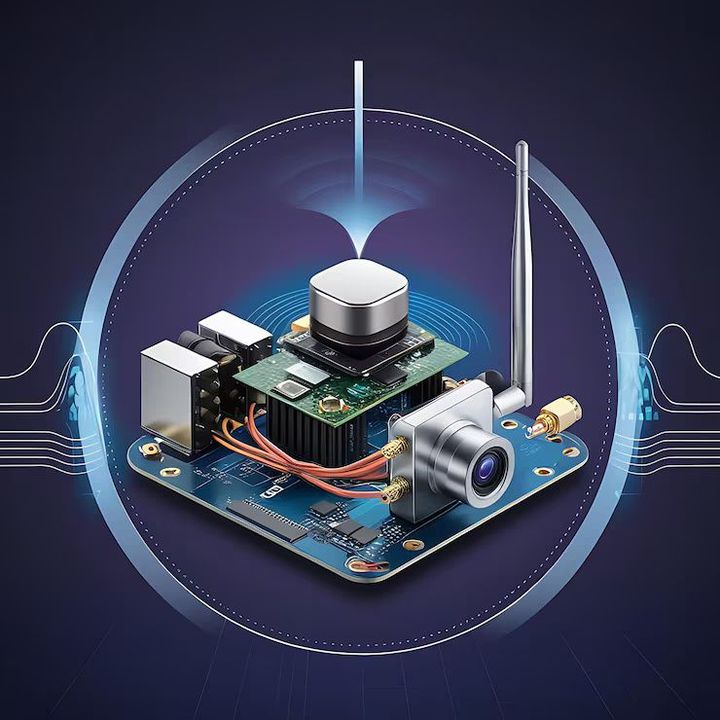
MEMS (Micro-Electro-Mechanical Systems) sensors are compact devices that combine mechanical and electrical components at a microscopic scale. These sensors are designed to detect changes in physical conditions such as motion, pressure, temperature, and humidity. When integrated into IoT (Internet of Things) systems, MEMS sensors act as the primary data collection layer, enabling devices to sense and respond to real-world environments.
The development of MEMS (Micro-Electro-Mechanical Systems) technology emerged from the need to miniaturize traditional mechanical systems while maintaining high precision and reliability.
Advancements in semiconductor fabrication have made these sensors smaller, more efficient, and widely used across industries. In IoT ecosystems, MEMS sensors are embedded in devices such as smartphones, wearables, industrial machines, and smart home systems.
They continuously gather data, which is transmitted to cloud or edge systems for analysis, enabling automation, monitoring, and intelligent decision-making in real time.
Why MEMS Sensors in IoT Matter Today
The importance of MEMS sensors has grown due to the increasing demand for connected devices and smart infrastructure.
Key Advantages
- Miniaturization and Efficiency: Small size allows integration without compromising performance
- Low Power Consumption: Ideal for battery-operated IoT devices like wearables and remote sensors
- High Accuracy: Precise measurements for healthcare monitoring, industrial automation, and smart devices
- Scalability: Suitable for large-scale deployments in smart cities and industrial IoT networks
Industry Applications
| Industry | Key Applications |
|---|---|
| Healthcare | Fitness trackers, medical monitoring, diagnostics |
| Automotive | Airbag systems, navigation, vehicle stability control |
| Consumer Electronics | Motion detection, screen rotation, gesture recognition |
| Industrial IoT | Machinery monitoring, fault detection, efficiency improvement |
These sensors solve critical challenges such as real-time monitoring, predictive maintenance, and environmental awareness.
Recent Updates and Trends (2025–2026)
The MEMS sensor industry has seen rapid innovation, driven by IoT, AI, and edge computing.
Key Developments
- AI Integration (2025): Sensors combined with AI algorithms for edge-based decision-making
- Improved Energy Efficiency (2025–2026): Ultra-low power designs extend IoT device lifespan
- Multi-Sensor Fusion: Integrates accelerometer, gyroscope, and magnetometer into one module
- Smart City Expansion: MEMS-based systems support traffic management, pollution monitoring, and infrastructure maintenance
- Healthcare Wearable Innovation: More accurate biometric tracking enables preventive care and remote monitoring
Trend Comparison
| Trend Area | Description | Impact on IoT Systems |
|---|---|---|
| AI Integration | Edge-based intelligent processing | Faster decision-making |
| Low Power Design | Energy-efficient sensor architecture | Longer device lifespan |
| Sensor Fusion | Multiple sensors in one module | Improved accuracy |
| Smart City Expansion | Urban monitoring systems | Better infrastructure control |
| Wearable Innovation | Advanced health tracking | Enhanced user insights |
These trends indicate a move toward smarter, autonomous IoT systems powered by advanced sensing technologies.
Laws and Policies Affecting MEMS Sensors in IoT
The use of MEMS sensors is influenced by regulations covering data privacy, safety, and environmental standards.
Key Considerations
- Data Protection Regulations: Compliance with privacy laws for personal or sensitive data
- Electronics and Safety Standards: Ensures reliable operation in healthcare, automotive, and industrial systems
- Environmental Policies: Encourage sustainable design and recycling of electronic devices
- Telecommunication Rules: IoT devices using wireless communication must follow spectrum and connectivity guidelines
In India, initiatives like smart cities and digital transformation programs promote MEMS-based IoT adoption.
Tools and Resources for MEMS Sensors in IoT
A variety of tools and platforms support the design, development, and deployment of MEMS sensors in IoT systems.
Common Tools and Platforms
-
Simulation Software:
- MATLAB for modeling sensor behavior
- COMSOL Multiphysics for MEMS design simulation
-
IoT Development Platforms:
- Arduino IDE for prototyping
- Raspberry Pi for edge computing applications
-
Cloud Platforms:
- AWS IoT for device connectivity and processing
- Microsoft Azure IoT Hub for scalable IoT solutions
-
Data Visualization Tools:
- Grafana for monitoring sensor data
- Power BI for analytics and reporting
-
Educational Resources:
- Online courses on embedded systems and IoT
- Manufacturer technical documentation
Example Sensor Data Flow
| Step | Description |
|---|---|
| Data Collection | MEMS sensor captures physical data |
| Transmission | Data sent via IoT network |
| Processing | Cloud or edge system analyzes data |
| Output | Insights or automated actions generated |
These tools simplify building and managing MEMS-powered IoT systems.
FAQs
What are MEMS sensors used for in IoT?
Detect physical parameters such as motion, pressure, and temperature, enabling devices to interact with their environment.
How do MEMS sensors work?
Combine mechanical elements and electrical circuits on a micro-scale to sense changes and convert them into electrical signals.
Why are MEMS sensors important for smart devices?
Their small size, low power consumption, and high accuracy make them ideal for connected devices.
Which industries use MEMS sensors?
Healthcare, automotive, consumer electronics, manufacturing, and smart infrastructure.
Are MEMS sensors reliable long-term?
Yes, they are designed for durability and stability, suitable for continuous monitoring applications.
Conclusion
MEMS sensors are a fundamental component of modern IoT systems. Their compact size, energy efficiency, and high accuracy enable devices to sense, analyze, and respond to real-world conditions.
With AI integration, sensor fusion, and ultra-low power designs, MEMS technology is shaping smarter, more autonomous IoT systems. As IoT adoption grows across industries, MEMS sensors will remain central to connected environments and digital transformation.
Understanding MEMS sensors provides insight into the technologies driving innovation in IoT and smart devices.