Mobile AR devices refer to smartphones, tablets, and wearable headsets that use augmented reality (AR) technology to overlay digital information onto the real world. Unlike virtual reality, which creates a fully digital environment, AR enhances physical surroundings using cameras, sensors, and advanced software.
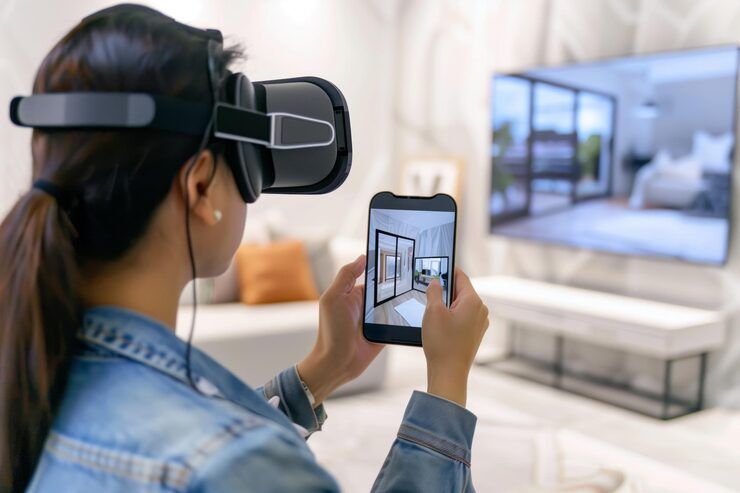
Modern AR systems rely on technologies such as computer vision, LiDAR sensors, AI processors, and cloud computing. Major platforms like Apple Inc. ARKit and Google LLC ARCore have made it easier for developers to build immersive mobile applications. Devices such as Apple Vision Pro and enterprise headsets from Microsoft Corporation continue to shape the AR hardware landscape.
Mobile AR devices exist to bridge digital content with real-world interaction. They are widely used in gaming, education, healthcare, retail visualization, industrial maintenance, and real estate marketing. As 5G connectivity expands globally, AR applications are becoming faster, more responsive, and more data-driven.
Importance
Mobile AR devices matter today because they are transforming how individuals and organizations interact with information. Instead of viewing data on flat screens, users can experience 3D visualizations in real space.
Key groups affected include:
-
Students using AR learning apps
-
Healthcare professionals visualizing medical models
-
Architects and engineers reviewing 3D building designs
-
E-commerce platforms offering virtual product previews
-
Manufacturing teams improving workflow accuracy
AR devices solve several practical challenges:
-
Improve remote collaboration with real-time overlays
-
Reduce errors in complex assembly tasks
-
Enhance digital marketing engagement
-
Provide immersive training simulations
-
Support data-driven decision-making
From an enterprise technology perspective, AR supports digital transformation strategies. It integrates with cloud infrastructure, IoT systems, and AI-based analytics, making it a valuable tool in smart manufacturing and Industry 4.0 initiatives.
Recent Updates
The past year has seen significant innovation in mobile AR devices and spatial computing.
In early 2025, Qualcomm Incorporated introduced upgraded Snapdragon AR chips with improved power efficiency and AI acceleration, supporting advanced spatial mapping and real-time rendering.
Cloud-based AR streaming gained traction, reducing processing load on devices by shifting computation to edge servers. This aligns with 5G expansion initiatives across Asia and Europe, enabling low-latency immersive experiences.
Enterprise adoption increased in 2024–2025, particularly in logistics and remote maintenance sectors. Companies are integrating AR with AI analytics to deliver contextual instructions to workers through wearable displays.
The following table summarizes recent technological developments:
| Year | Development Area | Key Improvement |
|---|---|---|
| 2024 | AR Hardware | Lighter wearable designs |
| 2024 | AI Integration | Real-time object recognition |
| 2025 | Edge Computing | Reduced latency for AR streaming |
| 2025 | Semiconductor Advances | Enhanced AR-specific chip performance |
A simplified trend illustration:
Enterprise AR Adoption Growth (2023–2025)
2023 ▓▓▓▓
2024 ▓▓▓▓▓▓▓
2025 ▓▓▓▓▓▓▓▓▓
The growth reflects broader interest in immersive enterprise solutions and spatial computing ecosystems.
Laws or Policies
Mobile AR devices operate within digital privacy, data protection, and telecommunications regulations.
In India, AR-enabled mobile applications must comply with the Digital Personal Data Protection Act, 2023. This law regulates how personal data, including camera-captured imagery and location data, is collected and processed.
Globally, AR systems deployed in Europe are subject to the General Data Protection Regulation (GDPR). Since AR devices capture environmental data, biometric patterns, and spatial information, developers must ensure transparent data handling practices.
Telecommunications policies related to 5G infrastructure also influence AR performance. Government-backed digital transformation programs in countries like India encourage adoption of emerging technologies in manufacturing and education sectors.
Organizations deploying AR devices should consider:
-
Data minimization principles
-
Secure cloud storage practices
-
User consent mechanisms
-
Cybersecurity compliance standards
These regulatory frameworks ensure responsible innovation without compromising user rights.
Tools and Resources
Several high-value digital tools and platforms support mobile AR development and usage:
-
ARKit and ARCore development kits
-
Unity and Unreal Engine for 3D content creation
-
Cloud computing platforms for AR data processing
-
AI-based object recognition APIs
-
3D modeling software such as Blender
Educational resources include:
-
Online spatial computing courses
-
AR developer documentation portals
-
Industry whitepapers on immersive technology
-
Open-source AR SDK repositories
These tools help developers, researchers, and enterprises integrate AR into practical workflows while maintaining compliance and performance standards.
FAQs
What is the difference between mobile AR and virtual reality?
Mobile AR overlays digital elements onto the real world using cameras and sensors, while virtual reality creates a completely immersive digital environment that blocks out physical surroundings.
Do mobile AR devices require 5G connectivity?
Not necessarily. AR can function on 4G or Wi-Fi networks, but 5G improves performance by reducing latency and enabling faster cloud-based rendering.
Are mobile AR devices secure?
Security depends on device design and software practices. Encryption, secure cloud storage, and compliance with data protection laws enhance security.
Can AR devices be used in education?
Yes. AR devices are widely used for interactive learning, 3D visualization of complex subjects, and immersive simulations in science and engineering.
Is AR technology suitable for small businesses?
AR can benefit businesses of various sizes, especially in product visualization, training, and customer engagement applications.
Conclusion
Mobile AR devices represent a major step forward in immersive digital interaction. By combining AI, cloud computing, and advanced sensors, they create practical solutions across industries such as healthcare, manufacturing, retail, and education.
Recent technological advancements in semiconductors and edge computing are improving device efficiency and performance. At the same time, regulatory frameworks such as data protection laws ensure responsible usage.
As spatial computing continues to evolve, mobile AR devices are becoming more integrated into daily life and enterprise ecosystems. Understanding their capabilities, limitations, and compliance requirements helps individuals and organizations make informed decisions in a rapidly changing digital environment.