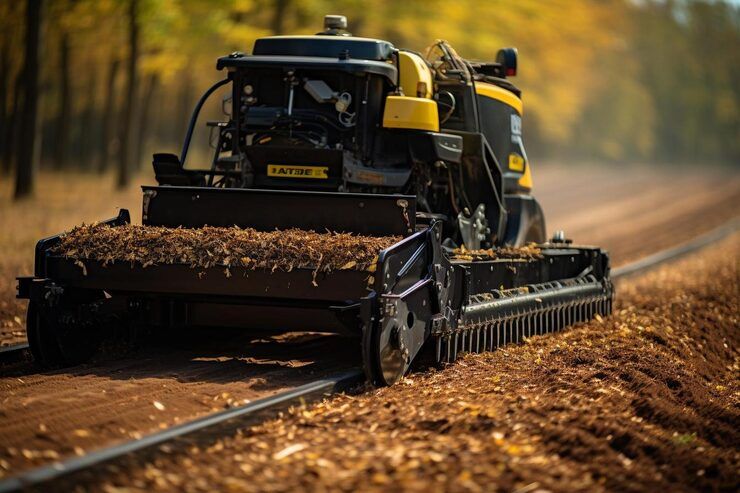
Mulching machines are specialized equipment designed to process vegetation such as trees, shrubs, and brush into small pieces called mulch. This mulch is then spread across the ground, where it can decompose naturally. The concept of mulching has been used for decades in agriculture and landscaping, but modern machines have expanded its use into forestry, construction, and land management.
Forestry mulching refers to the process of clearing land by grinding vegetation directly on-site, rather than removing it. This method is commonly used in areas where preserving soil structure is important. Over time, advancements in engineering have led to the development of industrial mulching machines and heavy duty mulcher systems capable of handling dense forests and large-scale projects.
Commercial mulching equipment is often mounted on tractors, skid steers, or excavators, making it adaptable to different terrains and project sizes. These machines are designed to handle various tasks, from clearing land for infrastructure development to maintaining trails and agricultural areas. Tree mulching equipment, in particular, focuses on breaking down larger trunks and branches efficiently.
Importance
Mulching machines play an important role in land management and environmental conservation. As urban areas expand and agricultural practices evolve, there is a growing need for efficient land clearing methods that minimize environmental impact.
One key advantage of land clearing mulching is that it reduces the need for burning or hauling away vegetation. Burning can release harmful emissions, while transporting debris requires additional resources. Mulching keeps organic material on-site, allowing it to decompose and enrich the soil.
These machines are used across multiple sectors. In agriculture, they help prepare fields for planting. In forestry, they assist with maintaining healthy ecosystems by removing invasive species or overgrown vegetation. In infrastructure development, they clear land for roads, pipelines, and construction projects.
Common challenges addressed by mulching machines include:
- Managing overgrown land in rural or urban fringe areas
- Reducing wildfire risk by clearing dry vegetation
- Maintaining utility corridors such as power lines and pipelines
- Supporting soil health by returning organic matter to the ground
Heavy duty mulcher systems are particularly useful in areas with dense vegetation, where manual clearing would be time-consuming and labor-intensive. By automating the process, these machines help improve efficiency while reducing physical strain on workers.
Recent Updates
Between 2024 and 2026, several trends have shaped the development and use of mulching machines. One notable trend is the integration of advanced technology into commercial mulching equipment. Many machines now include GPS tracking, remote monitoring, and automated controls that improve precision and safety.
Another development is the focus on fuel efficiency and reduced emissions. Manufacturers have been working to design engines that comply with stricter environmental standards. This is particularly relevant for industrial mulching machines used in large-scale operations.
There has also been increased interest in electric and hybrid-powered mulchers. While still in early stages, these models aim to reduce noise and emissions, making them suitable for use in environmentally sensitive areas.
Additionally, attachments and modular designs have become more common. Operators can now switch between different tools depending on the task, allowing a single machine to perform multiple functions. For example, a skid steer equipped with tree mulching equipment can be adapted for brush cutting or stump grinding.
Data-driven maintenance is another emerging trend. Sensors within the machine can monitor performance and alert operators to potential issues, helping to reduce downtime and improve reliability.
Laws or Policies
The use of mulching machines is influenced by environmental and safety regulations, which vary by country and region. In India, land clearing activities are subject to rules related to forest conservation and environmental protection.
For example, projects involving forestry mulching in designated forest areas may require approval under laws such as the Forest Conservation Act. These regulations aim to prevent unauthorized deforestation and protect biodiversity.
Air and noise pollution standards also affect the operation of industrial mulching machines. Equipment must comply with emission norms set by regulatory authorities. This has encouraged the development of cleaner and quieter machines.
Workplace safety regulations are another important factor. Operators of heavy duty mulcher systems are typically required to follow safety guidelines, including the use of protective equipment and proper training. These rules are designed to reduce the risk of accidents during operation.
In some regions, land clearing mulching projects may need environmental impact assessments, especially for large-scale developments. These assessments evaluate how the activity could affect soil, water, and local ecosystems.
Tools and Resources
Several tools and resources can help individuals and organizations understand and manage mulching operations more effectively. These resources are useful for planning, monitoring, and learning about different types of equipment.
Common tools include:
- Online land measurement calculators that estimate area and vegetation density
- Equipment selection guides that compare different types of commercial mulching equipment
- Government portals that provide information on environmental regulations and permits
- Maintenance checklists for industrial mulching machines to ensure proper operation
- Training materials and safety guidelines for operating heavy duty mulcher systems
Below is a simple comparison table of common mulching machine types:
| Machine Type | Typical Use Case | Key Feature |
|---|---|---|
| Skid Steer Mulcher | Small to medium land clearing | High maneuverability |
| Excavator Mulcher | Sloped or hard-to-reach areas | Extended reach |
| Tractor Mulcher | Agricultural and open fields | Versatility |
| Dedicated Mulcher | Large-scale forestry mulching | High power and efficiency |
Digital platforms also provide educational content about tree mulching equipment and its applications. These resources help users understand how different machines function and how to select the appropriate type for specific conditions.
FAQs
What is forestry mulching and how does it work?
Forestry mulching is a land clearing method that uses specialized machines to cut, grind, and spread vegetation on-site. The material is turned into mulch, which remains on the ground and decomposes naturally.
What types of commercial mulching equipment are commonly used?
Common types include skid steer mulchers, excavator attachments, tractor-mounted systems, and dedicated mulching machines. Each type is suited to different terrains and project sizes.
How is land clearing mulching different from traditional clearing methods?
Land clearing mulching processes vegetation in place, while traditional methods often involve cutting, removing, or burning debris. Mulching reduces waste and helps maintain soil quality.
What is a heavy duty mulcher used for?
A heavy duty mulcher is designed for dense vegetation and large-scale projects. It can handle thick trees, heavy brush, and challenging terrain more efficiently than smaller machines.
What should be considered when using tree mulching equipment?
Important factors include the type of vegetation, terrain conditions, machine compatibility, and safety requirements. Proper maintenance and operator training are also essential.
Conclusion
Mulching machines have become an important part of modern land management, offering an efficient way to process vegetation while supporting environmental goals. From forestry mulching to large-scale industrial applications, these machines serve a wide range of purposes. Ongoing developments in technology and regulation continue to shape how they are used. Understanding their functions, benefits, and limitations helps provide a clearer picture of their role in agriculture, forestry, and infrastructure projects.