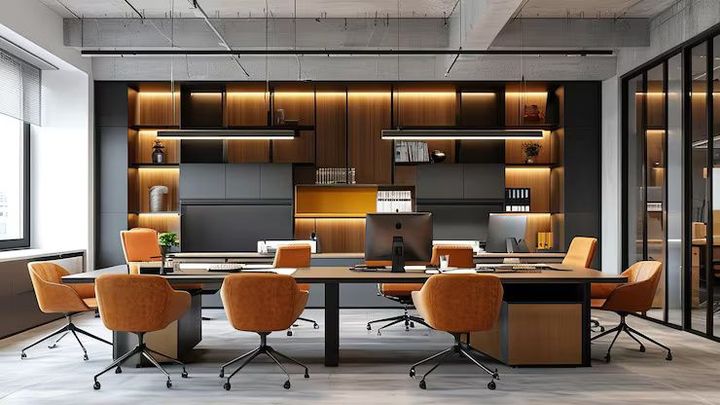
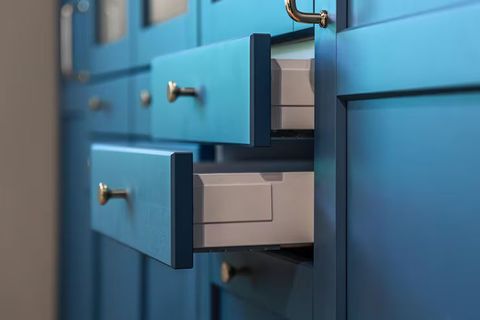
The purpose of office furniture is to create a functional, organized, and comfortable workspace that enables productivity and efficiency. Over time, it has evolved from basic wooden desks to ergonomic systems that support posture, movement, and digital workflows.
Modern office environments require furniture that aligns with both physical and technological needs. With the rise of remote work and hybrid setups, furniture now contributes to employee well-being and workspace optimization.
Common Categories of Office Furniture
Office furniture is available in various types, each designed for specific functional and spatial needs:
-
Workstations and desks (fixed, adjustable, modular)
-
Office chairs (ergonomic, executive, task chairs)
-
Storage solutions (filing cabinets, shelves)
-
Conference and meeting tables
-
Reception and lounge furniture
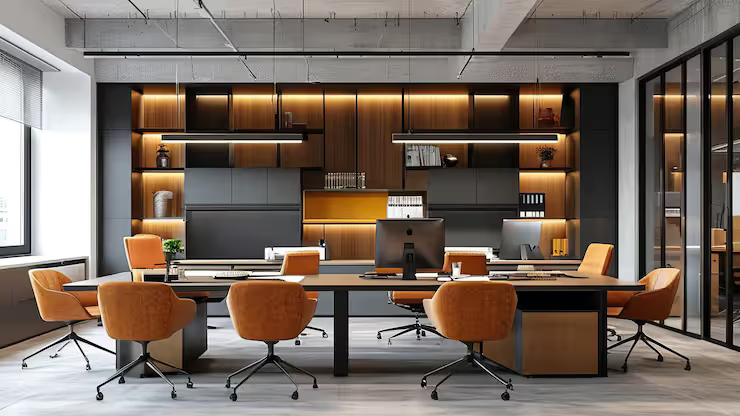
Why Office Furniture Matters in Today’s Work Environment
Office furniture plays a key role in shaping how people work, collaborate, and maintain health during long hours. It directly impacts productivity, comfort, and overall efficiency in the workplace.
Several modern workplace factors increase its importance:
-
Long working hours require ergonomic support
-
Hybrid work models demand flexible setups
-
Digital workspaces need cable management and integration
-
Collaborative environments require movable furniture
Effects of Poorly Designed Furniture
Poor office furniture can lead to multiple issues that affect both health and productivity:
-
Back pain and posture-related problems
-
Reduced focus and efficiency
-
Workspace clutter
-
Increased fatigue
Benefits of Well-Designed Furniture
Well-designed office furniture provides several advantages:
-
Supports proper posture and spinal alignment
-
Improves workspace organization
-
Enhances productivity and focus
-
Encourages collaboration and communication
Recent Trends and Developments in 2025
The office furniture industry has seen rapid changes due to evolving work culture and technological advancements. Ergonomic designs have become standard, with height-adjustable desks and lumbar-support chairs gaining popularity.
Hybrid workspace furniture is also on the rise, allowing flexibility between remote and office work. Sustainability and eco-friendly materials are increasingly important in manufacturing.
Key Technology Integrations
Modern office furniture now includes advanced features:
-
Built-in charging ports
-
Cable management systems
-
Smart desks with memory settings
-
Acoustic panels for noise control
-
Sensor-based lighting integration
Trends and Their Impact
| Trend | Impact on Workspaces |
|---|
| Ergonomic Design | Improved health and comfort |
| Hybrid Workspace Setup | Increased flexibility |
| Sustainable Materials | Reduced environmental impact |
| Smart Furniture Features | Enhanced productivity and efficiency |
Regulations and Workplace Guidelines
Office furniture must comply with workplace safety and health regulations. These guidelines ensure ergonomic support and safe working conditions for employees.
Common regulatory considerations include:
-
Proper chair height and lumbar support
-
Desk height aligned with monitor position
-
Adequate legroom and workspace clearance
-
Safe cable and equipment placement
Environmental Compliance
Environmental regulations also influence furniture production:
-
Use of non-toxic materials
-
Compliance with emission standards
-
Recycling and disposal guidelines
Organizations often follow international standards such as ISO guidelines for quality and environmental management.
Tools and Resources for Office Furniture Planning
Digital tools help individuals and businesses design efficient workspaces. These tools support layout planning, ergonomic assessment, and space optimization.
Useful Planning Tools
-
Workspace planning software
-
Ergonomic assessment tools
-
Room measurement apps
-
3D visualization tools
-
Productivity optimization platforms
Key Planning Considerations
-
Space dimensions and layout
-
Employee workflow and movement
-
Lighting and ventilation
-
Technology integration
Furniture Types and Use Cases
| Furniture Type | Primary Use | Key Feature |
|---|
| Adjustable Desk | Individual workstations | Height flexibility |
| Ergonomic Chair | Daily seating | Posture support |
| Modular Desk | Team collaboration | Reconfigurable design |
| Storage Cabinet | Document organization | Space-saving functionality |
Steps to Set Up an Efficient Workspace
-
Measure available space accurately
-
Choose furniture based on needs
-
Ensure ergonomic alignment
-
Organize cables and devices
-
Maintain clear movement pathways
Frequently Asked Questions
What is ergonomic office furniture?
Ergonomic office furniture is designed to support natural body posture, reducing strain and improving comfort during long working hours.
Why are adjustable desks popular?
Adjustable desks allow users to switch between sitting and standing positions, improving posture and reducing fatigue.
How does office furniture affect productivity?
Comfortable and organized furniture minimizes distractions and helps maintain focus and energy levels.
What materials are used in modern furniture?
Common materials include engineered wood, metal, glass, and eco-friendly composites for durability and sustainability.
How can small office spaces be optimized?
Using compact, multifunctional furniture and vertical storage solutions helps maximize limited space.
Additional Insights on Workplace Setup
Workplace setup goes beyond furniture placement. It involves creating an environment that supports both physical comfort and mental focus.
Key Elements of a Good Workspace
-
Proper lighting to reduce eye strain
-
Noise control using acoustic panels
-
Organized storage systems
-
Balanced layout for collaboration and privacy
Workspace Priorities
| Workspace Element | Importance Level |
|---|
| Ergonomics | High |
| Space Optimization | High |
| Aesthetic Design | Moderate |
| Technology Integration | High |
Conclusion
Office furniture plays a vital role in modern work environments. It supports daily tasks, enhances productivity, and contributes to employee well-being.
As work culture evolves, the demand for ergonomic, flexible, and sustainable solutions continues to grow. Understanding furniture types, trends, and planning strategies helps create efficient and future-ready workspaces.