Red Rubies Guide: Learn History, Symbolism, Quality Factors, and Market Insights
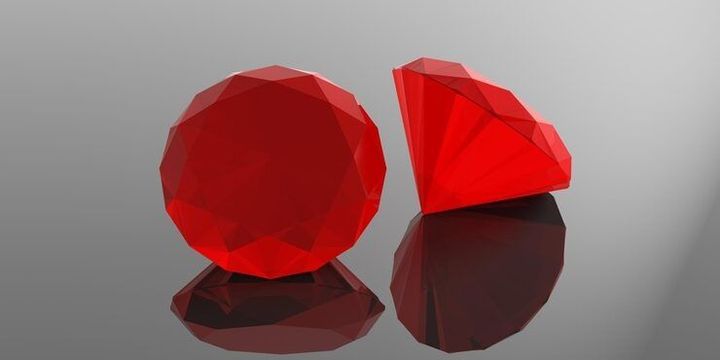
Red rubies are among the most recognized gemstones in the world. They belong to the mineral family called corundum, and their distinctive red color comes from trace amounts of chromium within the crystal structure. The name “ruby” originates from the Latin word ruber, meaning red.
Rubies have existed in human culture for thousands of years. Ancient civilizations valued them for their vibrant color and durability. Archaeological findings show their use in jewelry, ceremonial objects, and royal decorations across Southeast Asia, India, and the Middle East .
In geological terms, rubies form under intense heat and pressure within metamorphic rocks. Major deposits have been found in Myanmar, Thailand, Sri Lanka, and Madagascar. Each region produces stones with unique characteristics that help experts identify their origin .
Rubies have a hardness rating of 9 on the Mohs scale, making them one of the hardest natural gemstones after diamonds. This durability allows their use in both decorative and industrial applications. Over time, they have symbolized passion, vitality, protection, and prosperity .
Why Red Rubies Matter in Modern Gemstone and Jewelry Industries
Red rubies continue to play an important role in global gemstone markets and cultural traditions. Their significance extends beyond decoration into gemology, mineral science, and luxury design. They are widely studied for grading, identification, and valuation.
Gemologists use rubies to understand key gemstone characteristics such as color saturation, transparency, and inclusions. These factors help distinguish between natural and synthetic stones.
Key Industry Contributions
Rubies influence multiple industries and research areas:
- Jewelry design and craftsmanship for high-value creations
- Gemological laboratories developing grading standards
- Historical research into trade routes and cultural artifacts
- Luxury goods like watches and premium accessories
Ruby Quality Factors (4Cs)
Modern gemstone evaluation focuses on four key quality factors:
| Quality Factor | Description |
|---|---|
| Color | Intensity and hue of red |
| Clarity | Presence of inclusions |
| Cut | Shape and polishing quality |
| Carat Weight | Size and mass |
Among these, color is the most critical factor. Deep, vivid red stones are highly valued due to optimal light absorption and reflection.
Rubies are also central to discussions on ethical sourcing, sustainable mining, and transparency in global gemstone trade.
Recent Developments and Trends in the Ruby Industry
Recent years have seen major advancements in gemstone research and technology. Reports from 2024 and early 2025 highlight growing use of advanced identification techniques.
One key trend is the use of spectroscopy and AI-assisted analysis. These technologies help laboratories accurately distinguish between natural, treated, and synthetic rubies.
Emerging Trends
- Digital certification systems improving gemstone traceability
- Geological studies in Madagascar and Mozambique
- Increased use of synthetic rubies in technology
- Greater focus on sustainable mining practices
Synthetic rubies are now widely used in lasers, optical components, and precision instruments. At the same time, environmental responsibility is becoming a priority in mining regions.
Regulatory Framework and Policies Affecting Ruby Trade and Mining
The ruby industry operates under international regulations and certification standards. These ensure transparency, environmental protection, and consumer safety.
National mining laws regulate gemstone extraction. These laws cover land use, worker safety, environmental protection, and export documentation.
Key Regulatory Guidelines
- Responsible Jewellery Council (RJC) standards for ethical sourcing
- OECD Due Diligence Guidance for responsible supply chains
- Kimberley Process principles influencing traceability practices
Countries like Myanmar and Madagascar enforce mining regulations through national authorities. Environmental policies also require sustainable practices such as land restoration and water management.
Gemstone certification laboratories follow standardized grading systems to maintain consistency in evaluation.
Useful Tools and Resources for Learning About Rubies
Various tools help gemologists and researchers analyze rubies effectively. These instruments provide insights into gemstone structure, composition, and authenticity.
Common Gemological Tools
- Spectroscopes for analyzing light absorption
- Refractometers for measuring refractive index
- Microscopes for studying inclusions
- UV lamps for fluorescence testing
Digital Resources
- Online gemstone databases
- Gemology training platforms
- Mineral identification apps
- Interactive grading simulators
Gemstone Evaluation Tools Table
| Tool | Purpose |
|---|---|
| Refractometer | Measures refractive index |
| Gem Microscope | Identifies inclusions |
| Spectroscope | Analyzes light patterns |
| Digital Databases | Provides reference data |
Researchers also rely on scientific journals and mineral databases for deeper insights into ruby formation and classification.
Frequently Asked Questions About Red Rubies
What gives rubies their red color?
Rubies get their red color from trace amounts of chromium in the corundum crystal structure. This interaction produces the gemstone’s distinctive red hue.
Are all red corundum gemstones rubies?
Generally, red corundum is classified as ruby. Other colors of corundum are categorized as sapphires.
What are common natural sources of rubies?
Major sources include Myanmar, Sri Lanka, Thailand, Madagascar, and Mozambique. Each region produces stones with unique characteristics.
What are synthetic rubies?
Synthetic rubies are lab-created stones with the same chemical and physical properties as natural rubies. They are widely used in industrial and technological applications.
How do gemologists identify natural rubies?
Gemologists examine inclusions, refractive index, fluorescence, and crystal structure using specialized tools to determine authenticity.
Ruby Quality Factors and Evaluation Criteria
Gemologists use several criteria to evaluate ruby quality. The most important factors include color consistency, clarity, and transparency.
Evaluation Criteria Table
| Evaluation Factor | Relative Importance |
|---|---|
| Color Quality | Very High |
| Clarity | Moderate |
| Cut Precision | Moderate |
| Carat Weight | Moderate |
Color remains the most important factor in determining a ruby’s visual appeal. Stones with strong red saturation and balanced brightness are considered ideal.
Clarity is also significant, although natural rubies often contain inclusions known as “silk.” These inclusions can help confirm authenticity.
Conclusion
Red rubies have maintained their cultural, scientific, and industrial importance for centuries. Their durability, rarity, and striking color make them one of the most studied gemstones.
Modern advancements in technology have improved gemstone analysis and traceability. At the same time, global regulations and ethical sourcing practices are shaping the future of the ruby industry.
Understanding ruby history, quality factors, and industry developments provides valuable insight into their lasting significance. Rubies continue to hold a strong position in the global gemstone landscape.