Sanitary Pad Manufacturing: Machines, Production Process & Quality Standards
Industrial sanitary pad manufacturing is the process of producing disposable feminine hygiene products using automated machinery, specialized raw materials, and strict quality control procedures. Modern production systems are designed to manufacture large quantities of sanitary pads while maintaining consistent size, absorbency, comfort, and hygiene.
The industry has evolved significantly over the past few decades due to improvements in manufacturing technology, changing consumer awareness, higher hygiene standards, and growing demand across developed and developing regions. Today's manufacturing facilities use advanced automation to reduce manual handling, improve production efficiency, and maintain product consistency.
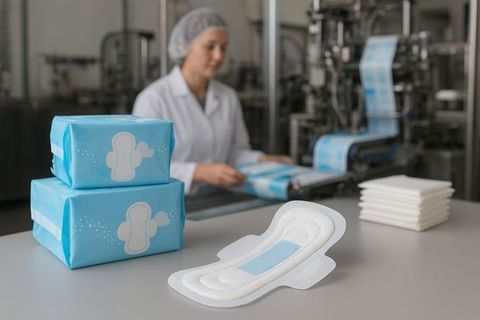
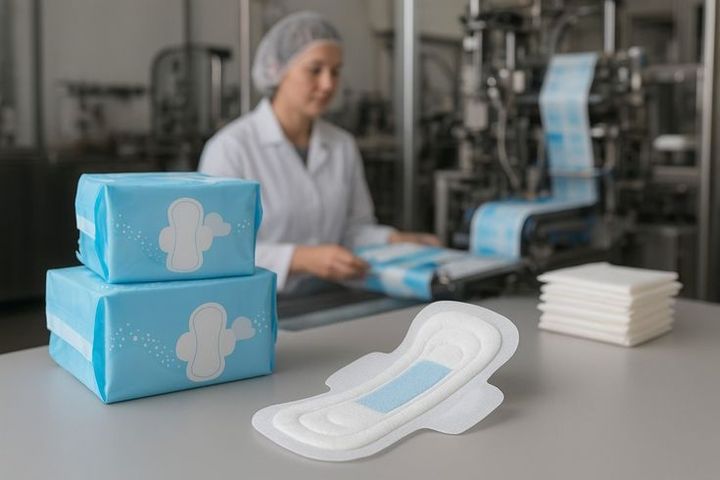
A typical sanitary pad consists of several layers, including a soft top sheet, absorbent core, distribution layer, waterproof back sheet, adhesive layer, release paper, and protective packaging. Every component plays an important role in ensuring comfort, leak protection, and skin safety.
Manufacturing facilities also focus on maintaining clean production environments, reducing material waste, improving energy efficiency, and following internationally recognized quality management practices.
Why Industrial Sanitary Pad Manufacturing Matters
The sanitary pad manufacturing industry plays an important role in public health, personal hygiene, and healthcare awareness. Reliable manufacturing processes help ensure that hygiene products meet safety expectations while supporting consistent product performance.
The industry influences many sectors, including:
- Healthcare and hygiene
- Manufacturing and automation
- Packaging technology
- Material science
- Environmental sustainability
- Supply chain management
The manufacturing process also addresses several important challenges:
| Manufacturing Objective | Industry Benefit |
|---|---|
| Consistent absorbency | Reliable product performance |
| Automated production | Higher production efficiency |
| Quality inspection | Reduced manufacturing defects |
| Hygienic production | Improved product safety |
| Material optimization | Better resource utilization |
| Standardized packaging | Product protection during transportation |
As awareness of menstrual hygiene continues to grow worldwide, manufacturers increasingly focus on producing products that balance comfort, performance, and environmental responsibility.
Industrial Sanitary Pad Manufacturing Machines
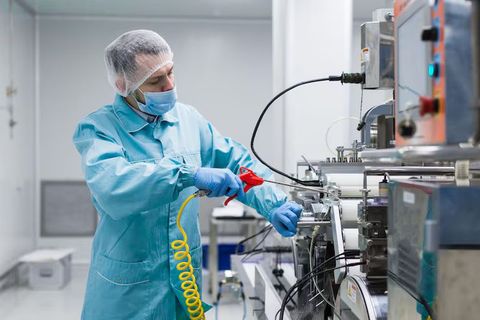
Modern manufacturing plants use multiple automated systems that work together throughout production.
Common machines include:
- Raw material feeding systems
- Air-laid absorbent core forming machines
- Top sheet lamination equipment
- Back sheet bonding machines
- Adhesive application units
- Wing forming systems
- Ultrasonic sealing equipment
- Cutting and shaping machines
- Automatic counting systems
- Individual packaging machines
- Carton packing equipment
- Quality inspection systems
- Conveyor automation systems
Many production lines integrate programmable controls, digital sensors, and real-time monitoring to improve manufacturing accuracy.
Industrial Production Process
The manufacturing process follows a carefully controlled sequence to maintain product quality.
Raw Material Preparation
Manufacturers inspect incoming materials such as absorbent pulp, super absorbent polymers, nonwoven fabrics, polyethylene films, adhesives, and packaging materials before production begins.
Absorbent Core Formation
Specialized equipment mixes absorbent pulp with super absorbent particles to create the core responsible for fluid absorption.
Layer Assembly
Multiple layers are combined using automated lamination systems. These include:
- Top sheet
- Distribution layer
- Absorbent core
- Waterproof back sheet
Each layer must align accurately to achieve consistent product quality.
Adhesive Application
Pressure-sensitive adhesive is applied to the back of the sanitary pad to allow secure attachment during use.
Cutting and Shaping
High-speed rotary cutters shape each pad according to design specifications while maintaining uniform dimensions.
Quality Inspection
Automated vision systems inspect products for:
- Size consistency
- Material alignment
- Seal quality
- Missing components
- Surface defects
Any products outside quality standards are removed from the production line.
Packaging
Finished products are individually wrapped before being grouped into retail packs and shipping cartons.
Quality Standards in Manufacturing
Quality standards help manufacturers produce hygienic and consistent products while minimizing production defects.
Important quality considerations include:
- Raw material verification
- Clean manufacturing environment
- Automated inspection systems
- Dimensional accuracy
- Absorbency testing
- Adhesive strength testing
- Packaging integrity
- Microbiological monitoring
- Product traceability
- Batch documentation
Many facilities operate quality management systems based on internationally recognized manufacturing standards to improve consistency and process control.
Recent Industry Updates and Trends
The sanitary hygiene manufacturing industry has experienced several important developments during 2025 and early 2026.
Growing environmental awareness has encouraged manufacturers to explore biodegradable materials, recyclable packaging, and lower-waste production methods.
Artificial intelligence and machine vision have become increasingly common in automated inspection systems. These technologies improve defect detection while reducing production interruptions.
Smart manufacturing practices have also expanded, allowing production equipment to collect operational data in real time for predictive maintenance and process optimization.
Another significant trend is the increasing adoption of energy-efficient production equipment that helps reduce electricity consumption while maintaining production capacity.
Digital manufacturing systems are also improving production planning, inventory management, and quality documentation across modern facilities.
These developments continue to improve manufacturing efficiency while supporting higher product quality and sustainability objectives.
Laws and Regulatory Frameworks
Industrial sanitary pad manufacturing is affected by various regulations that focus on product safety, manufacturing quality, environmental responsibility, and worker protection.
Depending on the country, manufacturers may follow regulations related to:
- Product safety requirements
- Consumer protection laws
- Factory safety regulations
- Occupational health standards
- Environmental protection policies
- Waste management requirements
- Packaging and labeling guidelines
- Quality management systems
Many countries encourage manufacturers to implement documented quality procedures, regular inspections, traceability systems, and proper hygiene practices throughout production.
Environmental regulations are also becoming increasingly important as governments promote responsible waste management and sustainable manufacturing practices.
Compliance with applicable regulations helps improve consumer confidence while supporting safer manufacturing operations.
Helpful Tools and Resources
Several general resources can support learning and production planning within the sanitary pad manufacturing industry.
Useful categories include:
- Production planning templates
- Manufacturing workflow diagrams
- Quality inspection checklists
- Preventive maintenance schedules
- Material consumption calculators
- Production efficiency calculators
- Inventory management software
- Statistical quality control templates
- Manufacturing documentation forms
- Process flow charts
- Safety audit checklists
- Equipment maintenance logs
- Manufacturing training materials
These resources help manufacturers improve organization, documentation, and operational consistency.
Industry Process Overview
| Manufacturing Stage | Primary Purpose | Expected Outcome |
| Material Inspection | Verify raw materials | Consistent input quality |
| Core Formation | Create absorbent layer | High absorbency |
| Layer Assembly | Combine components | Product structure |
| Adhesive Application | Secure attachment | Reliable positioning |
| Cutting | Uniform dimensions | Consistent appearance |
| Quality Inspection | Detect defects | Product reliability |
| Packaging | Protect finished products | Safe distribution |
Production Flow Diagram
Raw Materials
       │
       ▼
Material Inspection
       │
       ▼
Core Formation
       │
       ▼
Layer Assembly
       │
       ▼
Adhesive Application
       │
       ▼
Cutting & Shaping
       │
       ▼
Quality Inspection
       │
       ▼
Packaging
       │
       ▼
Finished Products
Frequently Asked Questions
What materials are commonly used in sanitary pad manufacturing?
Most sanitary pads use nonwoven fabrics, absorbent pulp, super absorbent polymers, waterproof films, pressure-sensitive adhesives, release paper, and protective packaging materials.
Why is quality control important during manufacturing?
Quality control helps ensure consistent absorbency, product dimensions, hygiene, material integrity, and packaging quality while reducing manufacturing defects.
How does automation improve sanitary pad production?
Automation improves production speed, accuracy, consistency, material handling, inspection, packaging, and process monitoring while reducing manual intervention.
What environmental trends are influencing the industry?
Manufacturers are increasingly exploring biodegradable materials, recyclable packaging, energy-efficient equipment, and waste reduction practices to support sustainability goals.
Which manufacturing stages require the most attention?
Material inspection, absorbent core formation, layer assembly, automated inspection, packaging, and documentation are among the most important stages for maintaining consistent product quality.
Conclusion
Industrial sanitary pad manufacturing combines engineering, hygiene, automation, and quality management to produce reliable feminine hygiene products for millions of people worldwide. Modern production facilities use advanced machinery, automated inspection systems, and standardized manufacturing procedures to improve efficiency while maintaining product consistency.
Disclaimer: The information provided in this article is for informational purposes only. We do not make any claims or guarantees regarding the accuracy, reliability, or completeness of the information presented. The content is not intended as professional financial, investment, tax, or legal advice and should not be relied upon as such. Readers are encouraged to conduct their own research and consult with appropriate professionals (such as financial advisors, investment specialists, tax consultants, or attorneys) before making any financial decisions based on the information provided in this article. All investments and financial strategies carry risks, including potential loss of principal. Past performance is not indicative of future results. Your financial situation is unique, and what works for others may not be suitable for you.