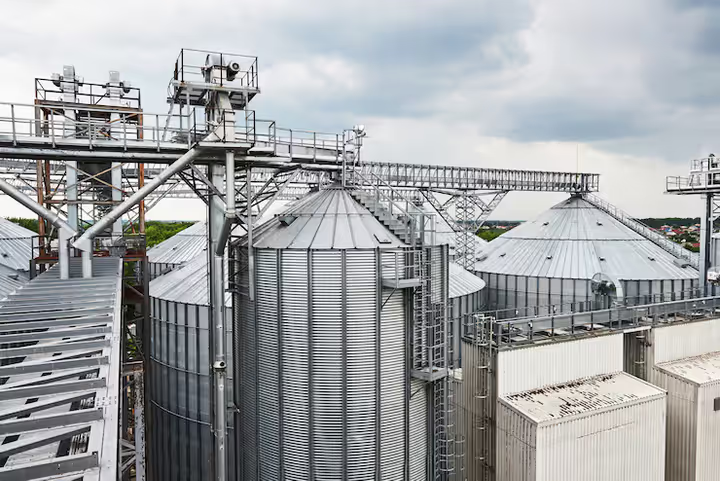
Seed Processing Machines: A Guide to Seed Cleaning, Grading and Sorting
Seed processing machines are used to clean, separate, grade, treat, and prepare harvested seeds for storage, planting, or further agricultural use. Industrial seed processing machines, commercial seed processing equipment, and seed processing machinery combine mechanical operations such as screening, aspiration, gravity separation, and sorting.
As agricultural production becomes more organized and quality requirements become more structured, seed processing plants increasingly use specialized equipment and automation systems to handle different seed varieties and processing volumes.
Context
What Are Seed Processing Machines?
Seed processing machines are mechanical and electronic systems designed to remove unwanted materials and separate seeds according to physical characteristics. Harvested seed lots can contain dust, stones, plant fragments, immature seeds, broken particles, and other materials.
The processing stage helps create a more uniform seed lot. Depending on the crop and intended use, processing may include cleaning, drying, grading, sorting, treating, weighing, and packaging.
Seed processing machinery ranges from relatively simple cleaning units to integrated processing lines containing multiple machines. The appropriate arrangement depends on seed type, moisture level, contamination, required separation, and processing capacity.
How Seed Processing Works
A typical seed processing line may follow several stages. Incoming material is first inspected and may pass through a pre-cleaner to remove larger foreign materials. Seed cleaning machines then separate smaller impurities through screens, air movement, or other mechanisms.
After initial cleaning, seed grading machines can divide seeds according to dimensions, weight, density, or other physical characteristics. Seed sorting machines may then perform more precise separation based on factors such as color, shape, or surface appearance.
A simplified processing sequence is:
- Receiving and inspection
- Pre-cleaning
- Fine cleaning
- Grading
- Gravity separation
- Optical or electronic sorting
- Optional seed treatment
- Final inspection
- Weighing and packaging
Not every facility requires every stage. The configuration is normally determined by the characteristics of the crop and the intended application.
Common Equipment Used
Industrial seed cleaning equipment can use perforated screens, rotating drums, air channels, aspirators, and vibrating mechanisms. These components separate materials according to differences in size, weight, aerodynamic behavior, or density.
Commercial seed processing equipment may also include elevators, conveyors, dryers, gravity separators, de-stoners, magnetic separators, color sorters, and packaging equipment. Each machine performs a specific role within the larger processing sequence.
| Equipment | Primary Function | Typical Separation Principle |
|---|---|---|
| Pre-cleaner | Removes large foreign material | Size |
| Air aspirator | Separates light particles | Air resistance |
| Screen cleaner | Removes particles by size | Screen openings |
| De-stoner | Separates stones and dense material | Density and air flow |
| Grader | Divides seeds into size groups | Dimensions |
| Gravity separator | Separates seeds by density | Density |
| Optical sorter | Separates visible differences | Image and color |
| Conveyor | Moves material between stages | Mechanical transport |
Importance
Improving Seed Lot Uniformity
Seed lots can naturally contain considerable variation. Differences in size, density, maturity, and physical condition can affect how seeds move through processing equipment and how they are handled afterward.
Seed grading machines help divide material into defined groups. More consistent physical characteristics can make subsequent handling and packaging more systematic.
Processing does not, by itself, determine the biological quality of a seed. Germination, genetic characteristics, moisture, storage conditions, and other factors also influence seed performance.
Removing Unwanted Material
Harvested seeds may contain soil particles, stones, stems, leaves, husks, dust, and other foreign material. Removing these materials can make storage and transportation more manageable.
Seed cleaning machines use different separation principles depending on the material being removed. For example, screens are useful when contaminants differ in size, while air separation can distinguish lighter particles from heavier seeds.
Supporting Agricultural Operations
Seed processing affects farmers, seed producers, agricultural laboratories, processors, and storage facilities. Properly processed seed can be easier to handle, inspect, package, and store.
Industrial seed processing machines are particularly relevant where large quantities must move through multiple processing stages. Mechanized systems reduce the need for repeated manual separation and allow processing parameters to be controlled more consistently.
Reducing Unnecessary Material Movement
An integrated seed processing plant can connect cleaning, grading, sorting, and conveying operations. This arrangement can reduce repeated handling between individual stages.
Seed processing automation systems can also coordinate conveyors, sensors, machine controls, and monitoring functions. Automation does not eliminate the need for inspections because equipment settings, seed condition, and contamination levels still require human oversight.
Recent Updates
Increased Use of Optical Sorting
A notable trend from 2024 through 2026 has been the wider use of machine vision and optical sorting in agricultural processing. Optical systems use cameras, lighting, image analysis, and automated mechanisms to identify visible differences between seeds and unwanted material.
Seed sorting machines using optical technology can assess characteristics such as color, shape, surface appearance, and visible defects. The actual separation capability depends on crop type, seed characteristics, equipment configuration, and operating conditions.
More Integrated Processing Lines
Modern processing facilities increasingly combine individual machines into connected production lines. Instead of operating each machine independently, control systems can coordinate material movement and monitor selected operating conditions.
Industrial seed processing machines may now incorporate sensors that provide information about flow rates, equipment status, temperature, vibration, or other operating parameters. These systems can help operators identify process changes and equipment conditions.
Data-Based Process Monitoring
Digital monitoring is becoming more common in agricultural processing. Processing plants may collect information from sensors and control systems to examine throughput, equipment operation, and process consistency.
Data collection can also support maintenance planning. However, automated measurements need appropriate calibration and interpretation, particularly when seed properties vary naturally between batches.
Greater Focus on Energy and Material Efficiency
Manufacturers and processing facilities are also examining energy consumption and material movement. Equipment designs increasingly consider airflow management, motor efficiency, variable-speed drives, and improved material handling.
These developments reflect a broader movement toward more connected agricultural processing systems rather than a single technological change.
Laws or Policies
Agricultural Seed Regulation in India
In India, seed quality and marketing are influenced by the Seeds Act, 1966, the Seeds Rules, 1968, and the Seeds (Control) Order, 1983. These frameworks establish requirements concerning notified seeds, standards, labeling, and regulatory controls.
The Seeds Act provides a legal framework for regulating the quality of certain seeds offered for agricultural purposes. The associated rules provide additional requirements relating to certification, labeling, and seed testing.
Seed Certification and Testing
The Indian seed system includes agencies and laboratories involved in seed testing and certification. The requirements can vary depending on the crop, seed category, and intended activity.
Seed processing equipment does not itself establish whether a seed lot complies with a particular legal quality standard. Laboratory testing and applicable certification procedures remain separate parts of the regulatory system.
Plant Quarantine and Movement
The Plant Quarantine (Regulation of Import into India) Order, 2003, is relevant to the import of plants and plant materials, including certain seeds. Import requirements can involve inspection, documentation, phytosanitary measures, and other conditions.
Facilities handling imported or exported seed should consider the applicable requirements for the particular crop and movement route. Regulations can change, so official government sources should be consulted for current requirements.
Tools and Resources
Seed Testing Resources
Seed testing laboratories and agricultural institutions provide information about parameters such as germination, purity, moisture, and physical characteristics. These measurements can help determine appropriate processing requirements.
The International Seed Testing Association publishes internationally recognized resources related to seed testing methods and laboratory practices. These materials can provide technical background for people working with seed quality assessment.
Agricultural Government Resources
In India, useful sources include:
- Ministry of Agriculture and Farmers Welfare
- Department of Agriculture and Farmers Welfare
- Indian Council of Agricultural Research
- State agricultural universities
- Central Seed Testing Laboratory
- State seed testing laboratories
- Seed certification agencies
- Directorate of Plant Protection, Quarantine & Storage
Processing and Calculation Tools
Processing facilities may use moisture meters, weighing systems, grain and seed analyzers, sieve sets, airflow measurement instruments, and digital control systems. Equipment manuals and processing templates can also help operators document machine settings and batch information.
When selecting processing parameters, measurements should be based on the specific crop and equipment because different seeds respond differently to airflow, vibration, screen size, and mechanical handling.
FAQs
What are industrial seed processing machines used for?
Industrial seed processing machines are used to clean, grade, separate, and prepare large quantities of seeds. A processing line may combine several machines according to the characteristics of the seed and the intended application.
How do seed cleaning machines remove impurities?
Seed cleaning machines use methods such as screening, aspiration, vibration, and density separation. Different methods are selected according to the size, weight, shape, and aerodynamic properties of the seed and unwanted materials.
What is the role of seed grading machines?
Seed grading machines divide seeds into groups based on characteristics such as size, weight, or density. Grading can create more uniform physical groups for subsequent handling and processing.
How do seed sorting machines work?
Seed sorting machines can use mechanical or optical methods. Optical systems use cameras and image analysis to identify visible differences, after which an automated mechanism separates selected material.
What are seed processing automation systems?
Seed processing automation systems connect equipment, sensors, conveyors, and control software to coordinate processing operations. They can monitor selected conditions and manage machine sequences while operators remain responsible for oversight and quality checks.
Conclusion
Seed processing machines combine cleaning, grading, separation, sorting, and material-handling technologies to prepare harvested seed lots for subsequent agricultural use. Industrial seed processing machines can range from individual cleaning units to integrated facilities containing automated controls and optical sorting systems. Recent developments have focused on machine vision, connected equipment, data monitoring, and more coordinated processing lines. In India, seed processing activities are influenced by seed-quality, certification, testing, and plant-quarantine regulations.