Servo Motors Overview Covering Motor Types, Components, and Control Systems
Servo motors are an important part of modern automation, robotics, manufacturing, and precision machinery.
Unlike basic motors that primarily rotate when electrical power is supplied, servo motors are designed to provide controlled movement based on specific requirements for position, speed, and torque.
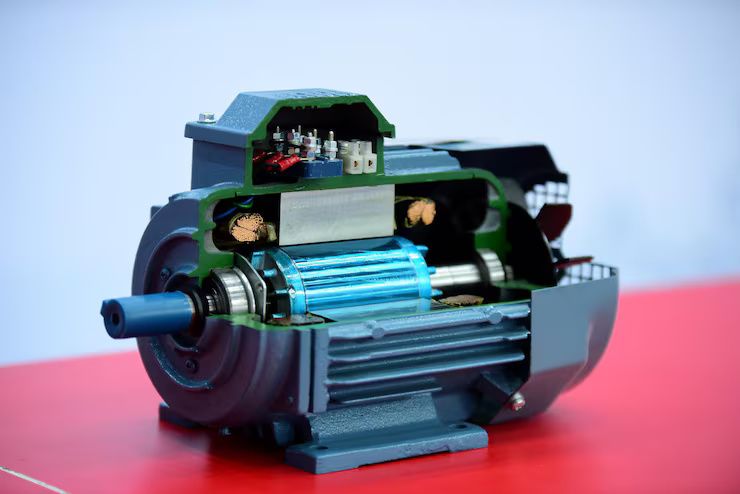
Their ability to deliver precise and repeatable motion makes them valuable in applications where accurate movement is essential. From robotic arms and CNC machines to packaging equipment and automated production lines, servo motor systems help machines perform complex movements with a high level of control.
This guide explains what servo motors are, how they work, the major types and components, and how servo motor controllers support accurate motion control in modern industrial environments.
What Is a Servo Motor?
A servo motor is a motor used within a closed-loop control system to achieve precise control over movement. The system continuously monitors the motor's actual performance and compares it with the desired position, speed, or torque.
When a difference is detected, the controller adjusts the motor's operation to reduce the error.
A typical servo system includes:
- Servo motor
- Motor controller or servo drive
- Feedback device
- Control software
- Mechanical load
This combination allows servo motors to respond accurately to changing operating conditions.
Unlike conventional motors that may run continuously at a selected speed, servo motors are designed for controlled and dynamic movement.
How Servo Motor Systems Work
A servo motor system operates through continuous communication between the motor, feedback device, and controller.
The process generally follows this sequence:
- A control system sends a motion command.
- The servo controller interprets the command.
- The motor receives the required electrical signals.
- The motor moves the connected mechanical system.
- A feedback device measures the actual movement.
- The controller compares the actual result with the desired command.
- The system adjusts operation when necessary.
This feedback loop allows the system to maintain accurate performance even when the mechanical load changes.
The ability to continuously correct movement is one of the defining characteristics of servo motion control.
Major Types of Servo Motors
Servo motors are available in different designs, with each type suited to particular applications.
AC Servo Motors
AC servo motors are widely used in industrial automation because of their efficiency, reliability, and ability to operate at high speeds.
They are commonly found in:
- CNC machinery
- Robotics
- Packaging equipment
- Automated production systems
- Industrial positioning applications
Many modern industrial servo motors use permanent magnet technology to provide efficient and precise operation.
DC Servo Motors
DC servo motors were widely used in earlier control systems and remain relevant in certain applications.
They can provide good speed and position control, although advances in AC technology have made AC servo systems increasingly common in modern industrial automation.
Brushless Servo Motors
Brushless servo motors eliminate mechanical brushes and commutators, reducing physical wear and maintenance requirements.
They are often selected for applications requiring:
- High reliability
- Efficient operation
- Low maintenance
- Precise speed control
Brushed Servo Motors
Brushed servo motors use mechanical brushes to transfer electrical current. Their relatively simple design can be suitable for certain applications, although brush wear may require periodic maintenance.
Key Components of a Servo Motor System
A servo system consists of several components that work together to achieve accurate motion.
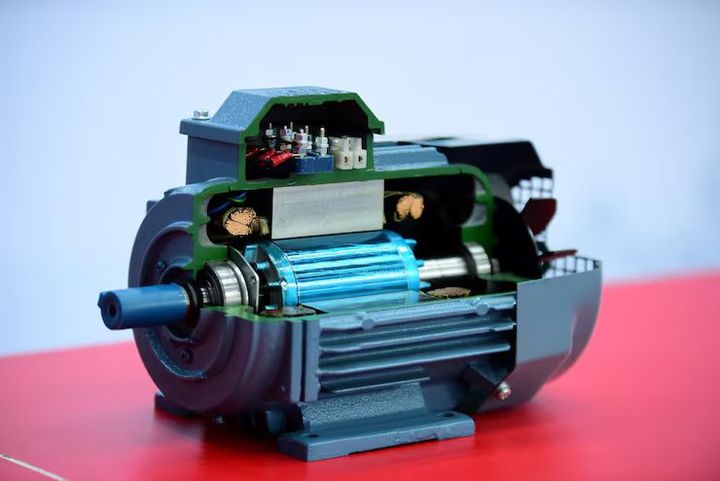
Motor
The motor generates mechanical movement by converting electrical energy into rotational motion.
The motor's characteristics determine factors such as speed, torque, acceleration, and overall system performance.
Feedback Device
Feedback devices provide information about the motor's actual position, speed, or movement.
Common feedback technologies include:
- Encoders
- Resolvers
- Hall-effect sensors
Encoders are particularly common in precision servo applications because they can provide detailed information about shaft position and movement.
Servo Motor Controller
A servo motor controller processes motion commands and manages motor operation.
The controller determines how the motor should respond to the desired movement and works with feedback information to maintain accuracy.
Servo Drive
The servo drive acts as the power interface between the controller and motor.
It regulates electrical power delivered to the motor based on control commands and feedback signals.
Mechanical Load
The mechanical load includes the machinery or equipment connected to the motor.
The load affects the required torque, acceleration, and overall system response.
Understanding Servo Motor Controllers
Servo motor controllers are central to modern motion control systems.
They interpret commands from a programmable logic controller, industrial computer, or specialized automation system and convert those commands into precise motion instructions.
Depending on the application, controllers may manage:
- Position
- Speed
- Torque
- Acceleration
- Deceleration
- Coordinated movement
Advanced controllers can coordinate multiple servo motors simultaneously, allowing complex machinery to perform synchronized operations.
Servo Motion Control Explained
Servo motion control refers to the methods used to regulate motor movement accurately.
The three primary control modes are position control, speed control, and torque control.
Position Control
Position control directs the motor to move to a specific location.
It is commonly used in:
- Robotic arms
- CNC machines
- Automated assembly systems
- Pick-and-place equipment
Speed Control
Speed control maintains a desired rotational speed.
This is useful when machinery must operate at a consistent rate despite changes in load.
Torque Control
Torque control regulates the rotational force produced by the motor.
It is useful in applications where controlled mechanical force is more important than exact position.
Many advanced servo motor systems combine multiple control modes depending on machine requirements.
Comparing Servo Motors With Conventional Motors
| Feature | Servo Motors | Conventional Motors |
|---|---|---|
| Position Control | Highly precise | Generally limited |
| Feedback | Commonly integrated | Often absent |
| Speed Regulation | Highly controlled | Basic to moderate |
| Dynamic Response | Fast | Application dependent |
| Motion Accuracy | High | Usually lower |
| Typical Use | Automation and robotics | General mechanical operation |
The primary distinction is not simply the motor itself but the complete closed-loop system that allows continuous monitoring and correction.
Applications of Industrial Servo Motors
Industrial servo motors are used across many sectors where accurate movement is required.
Common applications include:
Robotics
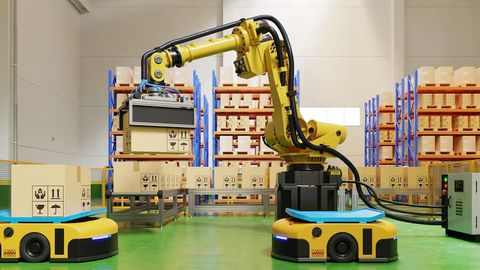
Robotic systems use servo motors to control joint movement and tool positioning.
CNC Machinery
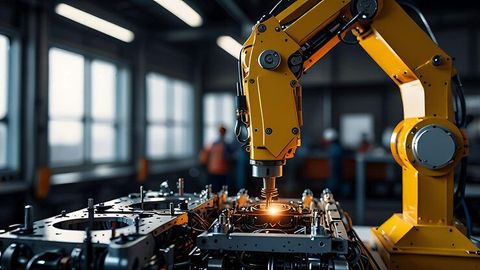
Computer-controlled machining equipment relies on precise servo motion to position cutting tools and workpieces accurately.
Packaging Equipment
Servo systems control conveyor movement, filling operations, labeling, sealing, and cutting processes.
Printing Machinery
Servo motors help synchronize rollers and material movement during high-speed printing operations.
Automated Assembly
Assembly machines use servo systems to position components accurately during manufacturing.
Semiconductor and Electronics Manufacturing
Precision motion is essential when handling small components and performing highly controlled manufacturing processes.
Advantages of Servo Motor Systems
Servo motor systems provide several technical advantages.
Precision
Closed-loop feedback allows the system to continuously monitor movement and correct deviations.
Fast Response
Servo motors can accelerate and decelerate quickly, making them suitable for dynamic applications.
Repeatability
The system can perform the same movement repeatedly with consistent results.
Flexible Control
Servo controllers can manage position, speed, and torque according to application requirements.
Energy Efficiency
Modern servo systems can adjust power delivery according to actual motion demands, improving efficiency in suitable applications.
Factors to Consider When Selecting a Servo System
Choosing a servo system requires an understanding of the application's mechanical and control requirements.
Important factors include:
- Required torque
- Operating speed
- Acceleration and deceleration
- Load characteristics
- Position accuracy
- Duty cycle
- Environmental conditions
- Feedback requirements
- Controller compatibility
- Available installation space
Correct system selection begins with understanding the machine's actual motion profile rather than focusing only on motor specifications.
Common Servo System Challenges
Although servo technology provides precise control, proper integration is essential.
Potential challenges include:
Incorrect Sizing
An improperly sized motor may struggle with the required load or operate inefficiently.
Poor Tuning
Servo systems require appropriate control parameters to achieve stable and responsive movement.
Feedback Problems
Incorrect encoder installation or signal issues can affect motion accuracy.
Mechanical Issues
Backlash, vibration, misalignment, and excessive friction can reduce overall system performance even when the servo motor itself is functioning correctly.
Electrical Interference
Industrial environments may expose control systems to electrical noise that can affect communication and feedback signals.
Future Trends in Servo Motion Control
Servo technology continues to evolve as industrial automation becomes more connected and intelligent.
Emerging developments include:
- AI-assisted motion optimization
- Predictive maintenance
- Integrated drive and controller architectures
- Industrial networking
- Advanced real-time communication
- Compact high-performance motors
- Energy-efficient motion systems
- Digital monitoring and diagnostics
These technologies are helping manufacturers create more flexible and data-driven automation environments.
Frequently Asked Questions
What is a servo motor?
A servo motor is a motor used in a closed-loop control system to achieve precise control over position, speed, or torque.
What is the purpose of a servo motor controller?
A servo motor controller interprets motion commands and manages motor operation while using feedback information to maintain accurate movement.
What is servo motion control?
Servo motion control is the process of regulating motor movement through feedback and control systems to achieve accurate position, speed, or torque.
Where are industrial servo motors used?
Industrial servo motors are commonly used in robotics, CNC machinery, packaging equipment, printing systems, automated assembly, and precision manufacturing.
What is the difference between a servo motor and a regular motor?
The primary difference is the control system. Servo motors typically operate with feedback and closed-loop control, allowing precise movement and continuous correction, while conventional motors often operate without integrated position feedback.
Conclusion
Servo motors are fundamental components of modern precision automation. Their combination of motors, feedback devices, servo drives, controllers, and software enables machines to perform accurate and repeatable movements across a wide range of industrial applications.
From robotics and CNC equipment to packaging and automated assembly, servo motor systems provide the control needed for complex motion requirements. As industrial automation becomes increasingly connected, servo motor controllers and advanced servo motion control technologies are expected to play an even greater role in improving machine flexibility, precision, efficiency, and predictive maintenance.
Understanding the relationship between the motor, feedback system, controller, and mechanical load is essential for appreciating how modern servo technology works. Together, these elements create a coordinated motion platform capable of responding accurately to the demands of today's automated industrial environments.